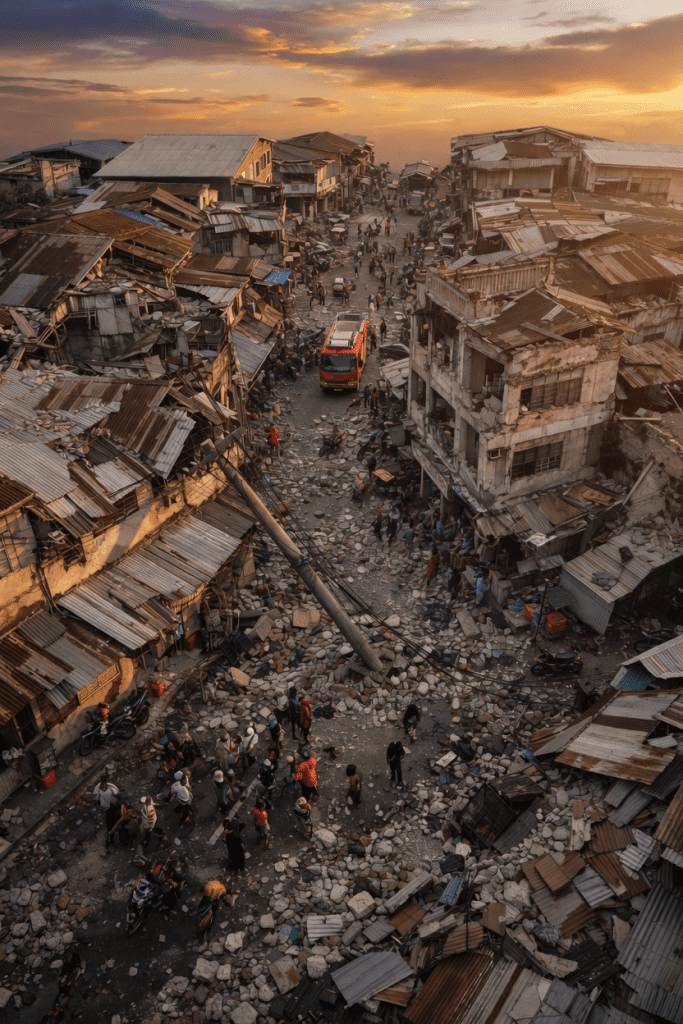
A significant 6.4 magnitude earthquake struck off the coast of Davao Oriental in the southern Philippines, sending strong tremors through Davao City and surrounding areas of Mindanao. The quake, which occurred during daylight hours, prompted residents to rush outdoors and brought momentary panic as buildings swayed and aftershocks were anticipated.
While no major damage or casualties have been widely reported so far, the event serves as a stark reminder of the Philippines’ position along the seismically active Pacific Ring of Fire.
What We Know About the Earthquake
According to the Philippine Institute of Volcanology and Seismology (PHIVOLCS) and the United States Geological Survey (USGS), the 6.4 magnitude earthquake struck at approximately 11:02 a.m. local time. The epicenter was located offshore, roughly 27–55 kilometers east of towns in Davao Oriental, at a depth of around 23–58 kilometers depending on the reporting agency.
The quake was felt strongly in Davao City, Davao Oriental, and nearby provinces. Many residents described the shaking as intense enough to cause chandeliers to sway and objects to fall from shelves. In one notable moment, a live press conference in Davao was interrupted as attendees sought safety.
An official statement urged calm: “Residents are urged to remain calm, stay away from damaged structures, and remain alert for possible aftershocks.”
PHIVOLCS has recorded numerous aftershocks following the main event, a common occurrence after a quake of this magnitude. As of the latest reports, only minor damage — such as a small chapel in Davao Oriental — has been noted, with no immediate reports of widespread destruction or injuries.
Life on the Ring of Fire: Why the Philippines Experiences Frequent Earthquakes
The Philippines sits on the volatile Pacific Ring of Fire, where several tectonic plates meet. This makes it one of the most earthquake-prone countries in the world, with thousands of tremors recorded annually. Davao and Mindanao are no strangers to seismic activity, though major destructive quakes are relatively infrequent.
Earthquakes in this region are typically tectonic in origin, caused by the movement of the Philippine Sea Plate. A 6.4 magnitude event is considered strong and can cause moderate damage in populated areas, especially to older or poorly constructed buildings. Fortunately, because this quake was offshore and at a moderate depth, the impact appears to have been limited.
Immediate Response and Safety Measures
Local authorities and first responders have begun assessing infrastructure. Residents have been advised to:
- Stay away from weakened or damaged buildings
- Prepare for potential aftershocks, which can sometimes be nearly as strong as the original quake
- Have emergency kits ready with water, food, flashlights, batteries, first-aid supplies, and important documents
- Listen to official updates from PHIVOLCS and local government units
No tsunami alert was issued, as the quake’s characteristics did not indicate a significant risk of generating a destructive wave.
Communities across Davao City, Davao Oriental, and other parts of Mindanao are checking on neighbors and ensuring vulnerable populations — the elderly, children, and those in remote areas — are safe.
Earthquake Preparedness: Lessons for Everyone
Even though this event caused limited damage, it offers valuable reminders for people living in earthquake-prone zones worldwide, including parts of California, Alaska, and the Pacific Northwest in the United States.
Key Preparedness Tips:
- Secure heavy furniture and appliances to walls
- Know your building’s earthquake safety spots (under sturdy tables, away from windows)
- Practice “Drop, Cover, and Hold On”
- Maintain a family emergency communication plan
- Retrofit older homes if possible, especially in high-risk areas
In the Philippines, the government runs regular drills and has strict building codes in many urban areas. However, rural communities and older structures remain more vulnerable.
The Human Element: Resilience in the Face of Uncertainty
Stories are already emerging of people helping one another — neighbors checking on each other, businesses offering temporary shelter, and local radio stations providing continuous updates. This spirit of bayanihan (communal unity) is a hallmark of Filipino culture during disasters.
For many residents, today’s quake was a frightening but manageable experience. Still, the psychological impact of sudden strong shaking should not be underestimated. Mental health support and counseling may be needed in the coming days for those who felt intense fear.
Broader Context: Seismic Activity in 2026
2026 has seen several notable seismic events globally. The Philippines, in particular, continues to experience regular activity due to its geography. Scientists monitor these events closely using advanced seismographs and satellite data to better understand patterns and improve early warning systems.
While today’s 6.4 quake was significant, it pales in comparison to some of the country’s historic disasters, such as the 2013 Bohol earthquake or the 2023 magnitude 7.6 event. Each incident helps authorities refine response strategies.
Looking Ahead: Monitoring and Recovery
PHIVOLCS will continue to monitor the situation for stronger aftershocks. Residents are encouraged to remain vigilant but not to panic. Most aftershocks are weaker than the mainshock, though they can still cause additional minor damage.
If you or someone you know is in the affected area, the best actions are to follow official guidance, avoid spreading unverified information on social media, and support local relief efforts if needed.
A Call for Awareness and Compassion
Natural disasters like this earthquake remind us how unpredictable life can be. Even a relatively moderate event can disrupt daily routines and cause anxiety. Our thoughts are with the communities and first responders across Davao City, Davao Oriental, and all of Mindanao as they navigate the hours and days ahead.
For those outside the Philippines, this is an opportunity to learn more about earthquake safety and to appreciate the resilience of people living in high-risk zones every day.
Stay safe, stay informed, and check on your loved ones — whether they are in Mindanao or anywhere else in the world.
This article is based on official reports from PHIVOLCS, USGS, and verified news sources regarding the 6.4 magnitude earthquake near Davao City in 2026. Information may evolve as assessments continue.