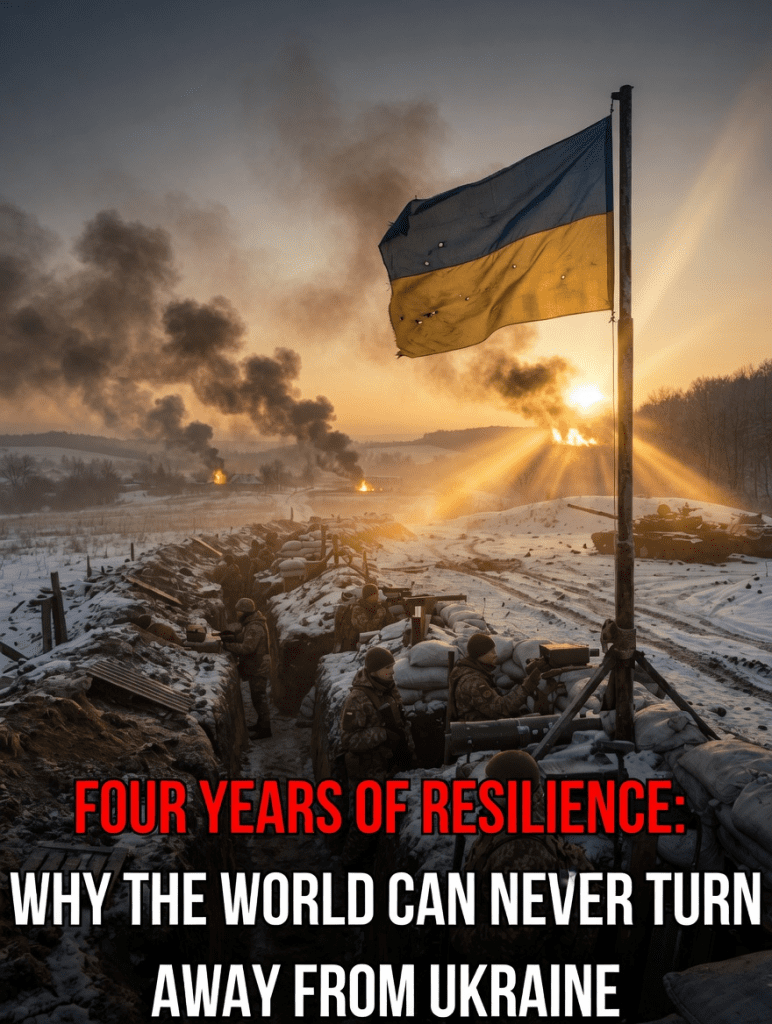
Today marks four years since the beginning of Russia’s full-scale invasion of Ukraine on February 24, 2022. What began as a rapid military operation has evolved into one of the largest and most devastating conflicts in Europe since World War II. As we reach this somber milestone, the human, economic, and geopolitical costs continue to mount, while hopes for a sustainable resolution remain elusive.
The war has profoundly affected millions of lives, reshaped European security architecture, and tested the international community’s commitment to sovereignty and international law.
The Scale of the Conflict
Over the past four years, the fighting has been intense and unrelenting. Ukrainian forces have mounted a determined defense, supported by significant international assistance, while Russian forces have pursued territorial objectives through sustained military pressure.
Casualty figures remain difficult to verify independently due to the fog of war and restricted information from both sides. Various estimates from Western intelligence agencies, open-source analysts, and media organizations suggest substantial losses on both sides. Ukrainian civilian deaths have been reported in the tens of thousands, with many more injured or displaced. Russian military losses are also reported to be heavy, though exact numbers vary widely across sources.
The conflict has caused the largest displacement crisis in Europe since World War II, with millions of Ukrainians forced to flee their homes. Infrastructure destruction — including homes, schools, hospitals, and energy facilities — has been widespread, particularly in eastern and southern Ukraine.
Strategic and Military Developments
The war has seen significant evolution in military tactics and technology. Both sides have relied heavily on drones, artillery, electronic warfare, and precision munitions. Ukraine has demonstrated remarkable innovation in unmanned systems, while Russia has leveraged numerical advantages in manpower and certain categories of heavy equipment.
Key flashpoints have included:
- Intense fighting in Donetsk Oblast, particularly around cities like Pokrovsk and Bakhmut
- Operations in Zaporizhzhia and Kharkiv regions
- Repeated strikes on infrastructure in rear areas, including energy facilities and logistical hubs
- Naval and aerial activity in the Black Sea region
The conflict has become a testing ground for modern warfare, with lessons on drone technology, air defense, logistics, and electronic warfare being studied by militaries worldwide.
The Human Cost
Behind the strategic headlines lies an immense human tragedy. Families have been torn apart, children have grown up knowing only war, and entire communities have been devastated. The psychological toll — including trauma, grief, and long-term mental health challenges — will require generations to address.
Civilian infrastructure such as hospitals, schools, and residential buildings has suffered extensive damage. Access to electricity, clean water, and healthcare remains limited in many frontline and recently liberated areas. Humanitarian organizations continue to provide critical aid, but the scale of need far exceeds available resources.
On both sides of the border, ordinary people bear the burden of a conflict that has lasted far longer than most anticipated in early 2022.
Geopolitical and International Dimensions
The war has reshaped European security. NATO has strengthened its eastern flank, Finland and Sweden have joined the alliance, and many countries have increased defense spending. Energy markets have been disrupted, contributing to global inflation and food security challenges, particularly in developing nations.
The United States and its allies have provided substantial military, financial, and humanitarian support to Ukraine. This assistance has been the subject of ongoing political debate in Washington and European capitals, with discussions focusing on effectiveness, costs, and long-term strategy.
Russia has faced extensive international sanctions, isolation from many Western institutions, and strengthened ties with countries outside the Western alliance. The conflict has deepened global divisions and complicated cooperation on other pressing issues such as climate change and nuclear non-proliferation.
Paths Toward Resolution
As the war enters its fifth year, calls for diplomatic engagement continue. Any sustainable resolution will likely need to address core issues including:
- Territorial integrity and sovereignty
- Security guarantees for Ukraine
- Humanitarian concerns and reconstruction
- Regional stability in the Black Sea area
Meaningful negotiations remain challenging due to deeply entrenched positions on both sides. However, history shows that even the most intractable conflicts eventually require political solutions. International mediators and organizations continue to explore avenues for dialogue, ceasefire agreements, and eventual peace talks.
The Importance of Strength and Diplomacy
Supporting Ukraine’s right to self-defense while pursuing diplomatic pathways remains a central challenge for the international community. Many policymakers argue that credible defense capabilities are essential for any meaningful negotiations. Others emphasize the urgent need to reduce human suffering through de-escalation and humanitarian initiatives.
A stable and secure Ukraine is widely viewed as critical for European and global security. At the same time, finding ways to reduce hostilities and protect civilian lives must remain a priority.
Looking Forward
Four years after the full-scale invasion began, the resilience of the Ukrainian people and the determination of both sides to continue fighting are evident. The war has exacted an enormous price, but it has also highlighted themes of courage, innovation, and international solidarity.
As we reflect on this milestone, the focus must remain on supporting affected communities, protecting civilians, and working toward conditions where a just and lasting peace becomes possible. Reconstruction, accountability, and security arrangements will be essential elements of any post-conflict future.
The coming months and years will test the resolve of nations and leaders. The hope shared by many around the world is that wisdom, diplomacy, and compassion will ultimately prevail over continued destruction.
The situation remains fluid and complex. Information from active conflict zones should always be approached with caution and cross-checked with multiple credible sources.
This article is a reflective overview based on publicly available reports, international assessments, and statements from various parties as of May 2026. Casualty figures and operational details are estimates and are inherently difficult to verify independently. Our thoughts remain with all civilians and families affected by the ongoing war. We continue to hope for a peaceful resolution that upholds international law and prioritizes human lives.