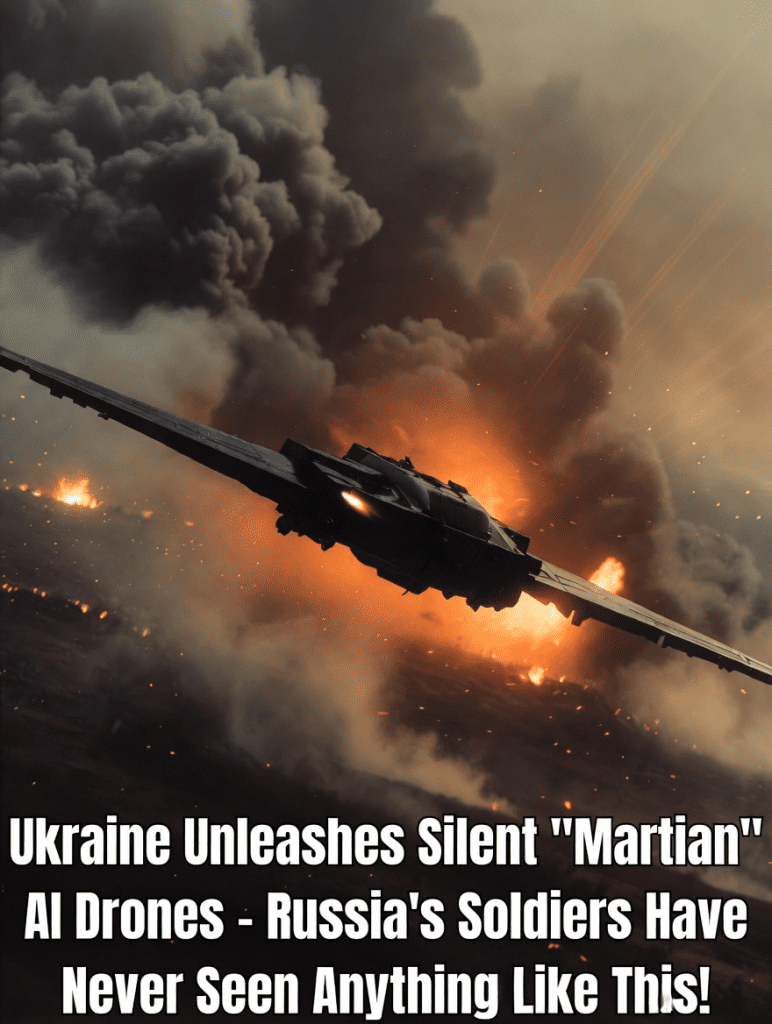
Reports from multiple sources indicate that Ukrainian forces have introduced advanced AI-powered drones, referred to as “Martians,” into operational use. These systems are designed for near-silent flight until the final approach phase, utilizing autonomous guidance, low-altitude terrain-hugging flight paths, and AI-driven target recognition.
This development reflects Ukraine’s continued efforts to innovate in unmanned aerial systems amid the evolving technological demands of the Russia-Ukraine conflict.
Characteristics of the “Martians” Drones
According to available descriptions, the “Martians” drones feature several advanced capabilities:
- Near-silent operation during most of their flight profile, reducing acoustic detection
- Low-altitude terrain-hugging navigation to evade radar systems
- AI target recognition for improved accuracy and autonomous decision-making in the terminal phase
- Resistance to conventional electronic warfare through a combination of autonomous modes and advanced guidance systems
These features reportedly make the drones more difficult to detect and intercept compared to earlier generations of Ukrainian UAVs. Russian monitoring channels and officials have expressed concern over their effectiveness, particularly in contested areas such as Avdiivka and other sectors of Donetsk Oblast.
The drones build upon earlier Ukrainian autonomous technologies and draw conceptual inspiration from various international unmanned systems programs, though specific technical details remain limited due to operational security considerations.
Role in Current Operations
Ukrainian forces have integrated these systems into a broader strategy that combines reconnaissance, strike missions, and attrition tactics. The “Martians” are reportedly used to target high-value assets, including Russian artillery positions, command nodes, and logistical targets, while minimizing risk to Ukrainian personnel.
In areas like Avdiivka, where fighting has been particularly intense, such drones are said to provide Ukrainian units with enhanced situational awareness and precision strike options. This allows defenders to respond more effectively to Russian advances without relying solely on traditional manned systems or large-scale ground engagements.
The deployment aligns with Ukraine’s emphasis on technological adaptation to offset numerical disadvantages in manpower and certain categories of heavy equipment.
Broader Evolution of Drone Warfare
The introduction of the “Martians” is part of a larger trend in the Russia-Ukraine conflict, where unmanned systems have become central to operations for both sides. Since 2022, both Russia and Ukraine have dramatically scaled up drone production and innovation:
- Ukraine has focused on low-cost, attritable systems, rapid prototyping, and integration of AI and autonomous features.
- Russia has expanded production of long-range Shahed-type drones and various tactical UAVs, while investing heavily in electronic warfare and counter-drone technologies.
The conflict has accelerated advancements in areas such as:
- AI-assisted targeting and autonomous flight
- Low-observable (stealth-like) designs
- Resistance to jamming and electronic countermeasures
- Swarm tactics and coordinated multi-drone operations
Military analysts worldwide are closely studying these developments, recognizing that lessons learned in Ukraine will likely influence future conflicts and defense procurement decisions globally.
Challenges and Limitations
Despite their advanced features, systems like the “Martians” face operational constraints:
- Vulnerability during the final approach phase when acoustic signature increases
- Dependence on reliable intelligence for effective targeting
- Production and maintenance challenges under wartime conditions
- Russian countermeasures, including improved electronic warfare and kinetic interceptors
Russia continues to adapt by dispersing assets, enhancing air defenses, and developing its own next-generation drones. The technological arms race remains dynamic, with each new capability quickly met by countermeasures.
Strategic Implications
The growing role of advanced drones affects battlefield dynamics in several ways:
- Reduced effectiveness of traditional massed assaults
- Increased importance of rear-area security and electronic warfare
- Higher consumption rates of equipment, driving the need for robust production capacity
- Greater emphasis on innovation and rapid adaptation rather than sheer numerical superiority
For Ukraine, these systems help maintain defensive resilience and conduct precision strikes despite resource limitations. For Russia, countering such threats requires significant investment in detection, jamming, and interception capabilities.
Humanitarian and Civilian Impact
The intensified use of drones increases risks for civilian populations. Precision strikes, while intended for military targets, can still cause collateral damage when conducted near populated areas or dual-use infrastructure. Both sides have reported civilian casualties from aerial operations.
Communities near the front lines in Donetsk, Zaporizhzhia, and other regions continue to face daily threats from drones, artillery, and unexploded ordnance. The prolonged conflict has displaced millions and caused widespread destruction of homes, schools, hospitals, and critical infrastructure.
International humanitarian organizations emphasize the need for all parties to adhere to international humanitarian law and take maximum precautions to protect non-combatants. Humanitarian needs remain substantial, including medical care, shelter, and long-term reconstruction support.
International Observations
The international community continues to monitor technological developments in the conflict closely. The deployment of advanced AI-powered drones is noted for its potential to influence future military strategies and arms control discussions.
Many governments and organizations have called for de-escalation and renewed diplomatic efforts to reduce civilian suffering. While periodic discussions about ceasefires occur, significant differences persist on core issues such as territorial integrity, security guarantees, and accountability.
Global attention also focuses on the conflict’s wider effects on energy markets, food security, and international stability.
Economic and Logistical Dimensions
Advanced drone programs require substantial investment in research, production, and training. For Ukraine, scaling such systems depends on domestic innovation and international partnerships. For Russia, countering these threats adds to the overall economic burden of the war.
Both economies face challenges from the high consumption of equipment and munitions. Economic resilience and industrial capacity are becoming increasingly important factors in sustaining long-term operations.
Looking Ahead
As the conflict continues into its fifth year, the role of unmanned systems is expected to grow further. Summer 2026 conditions may facilitate increased drone activity as weather improves operational windows.
Both sides will likely continue adapting their tactics and technologies. The technological competition in the aerial domain remains one of the most dynamic aspects of the war.
The shared hope among many civilians and international observers is for eventual de-escalation and a negotiated resolution that can reduce suffering and address underlying security concerns while prioritizing civilian protection and long-term recovery.
This article is based on reports from Ukrainian military sources, open-source analyses, Russian monitoring channels, and international media coverage as of May 2026. Information from active conflict zones is often contested and should be cross-checked with multiple credible sources. Our thoughts remain with all civilians and families affected by the ongoing war in Ukraine and Russia.