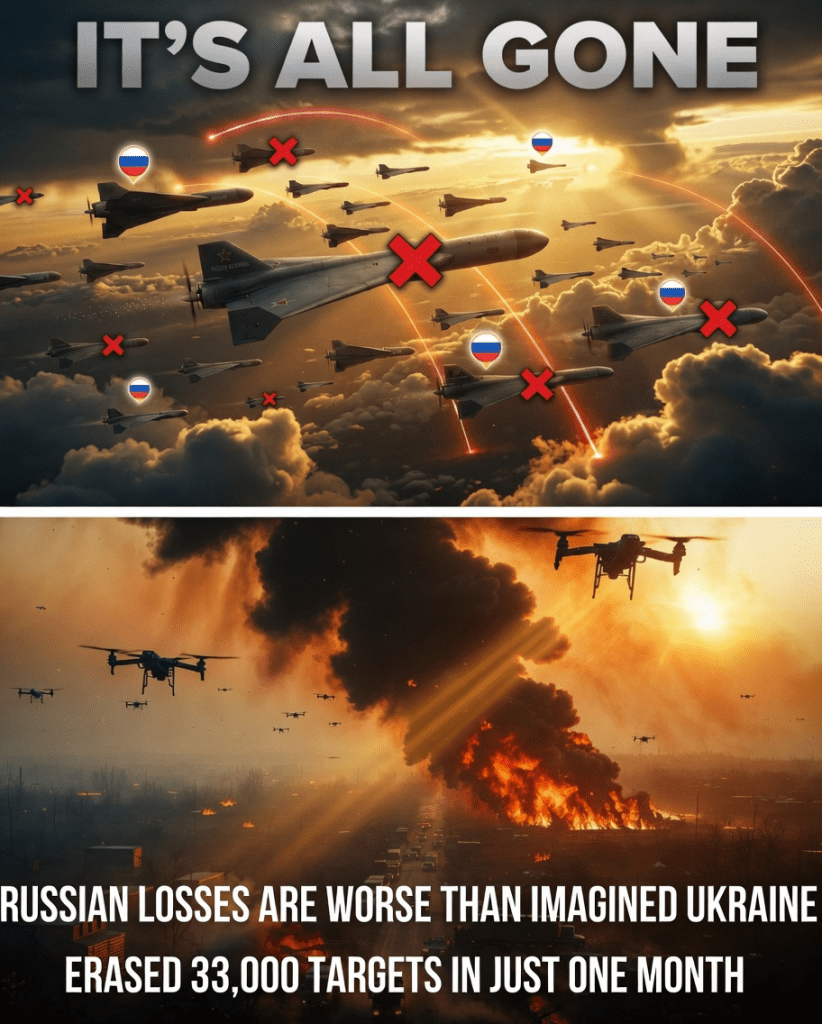
In March 2026, Ukrainian forces reportedly achieved a significant increase in the number of Russian aerial targets destroyed, with some Ukrainian sources claiming over 33,000 intercepts or destructions during the month. This figure, if confirmed, represents a sharp rise compared to previous periods and underscores the growing role of unmanned aerial systems and interceptor drones in the ongoing Russia-Ukraine conflict.
The development highlights rapid advancements in Ukraine’s domestic drone production and the increasing importance of cost-effective air defense solutions on the modern battlefield.
Reported Surge in Aerial Interceptions
According to statements from Ukrainian military officials and defense industry representatives, Ukrainian interceptor drones destroyed or neutralized more than 33,000 Russian aerial targets in March 2026 alone. This number reportedly includes various types of Russian unmanned aerial vehicles (UAVs), ranging from reconnaissance drones to strike platforms and decoys.
The sharp increase is attributed to the expanded deployment of low-cost interceptor drones such as the Sting and P1-SUN systems. These platforms are designed for high-speed engagements, equipped with advanced thermal cameras and AI-assisted targeting capabilities. Their relatively low production cost compared to traditional surface-to-air missiles allows Ukraine to field them in large numbers.
Ukraine’s “Brave 1” defense innovation platform has played a key role in accelerating the development and mass production of these systems. Thousands of interceptor units are reportedly being manufactured each month, supported by a network of Ukrainian engineers, volunteer groups, and international technology partnerships.
Tactical and Operational Impact
The increased effectiveness of Ukrainian air defenses has several potential implications for Russian operations:
- Reduced effectiveness of Russian reconnaissance and targeting drones
- Decreased accuracy and frequency of Russian artillery and missile strikes that rely on drone correction
- Greater challenges for Russian forces in maintaining air superiority in certain sectors
- Pressure on Russian drone production and deployment strategies
Russian forces have attempted to adapt by introducing faster drones, decoys, and improved electronic warfare systems. However, Ukraine’s ability to rapidly iterate on designs and deploy new countermeasures appears to be creating ongoing difficulties for Russian aerial operations.
Military analysts note that drone-versus-drone combat has become one of the most dynamic aspects of the current conflict. The high volume of engagements reflects a shift toward mass, low-cost unmanned systems rather than reliance on expensive traditional aircraft or missiles.
The Rise of Affordable Drone Technology
Ukraine’s success in this domain stems from several factors:
- Decentralized innovation model involving private companies and volunteers
- Rapid prototyping and field testing cycles
- Integration of commercial technologies with military applications
- Strong emphasis on AI-assisted targeting and autonomous features
The Sting and P1-SUN interceptors are capable of operating at high speeds and altitudes, using thermal imaging to detect and engage targets even in challenging conditions. Their low unit cost allows Ukrainian forces to engage large numbers of incoming threats without depleting expensive missile stockpiles.
This approach has drawn international attention. Several countries and defense companies are now studying Ukraine’s model of drone warfare for potential applications in their own military modernization programs.
Broader Context of Aerial Warfare in 2026
As of May 2026, both sides continue to rely heavily on drones across all fronts. Russia maintains a large inventory of Shahed/Geran drones and other strike platforms, while Ukraine has scaled up both offensive and defensive unmanned systems.
The conflict has become a major testing ground for modern drone tactics, with lessons being applied far beyond Eastern Europe. Key trends include:
- Proliferation of low-cost, attritable systems
- Growing importance of electronic warfare and counter-drone measures
- Integration of AI for target recognition and autonomous engagement
- Shift toward massed drone operations rather than individual high-value assets
The high consumption rate of drones on both sides has created a sustained demand for production capacity, supply chains, and skilled operators. This has placed significant pressure on industrial resources and training programs.
Challenges and Limitations
Despite reported successes, Ukraine faces its own challenges, including:
- Vulnerability of production facilities to Russian strikes
- Need for continuous technological improvement to counter Russian adaptations
- Dependence on international components and funding
- Training sufficient numbers of operators for complex systems
Russia, meanwhile, continues to invest in domestic drone production and layered air defense networks. The competition between the two sides’ unmanned capabilities remains intense and is likely to evolve rapidly in the coming months.
Humanitarian and Civilian Impact
The expansion of drone warfare has increased risks for civilian populations. Drones can operate in urban and rural areas alike, sometimes leading to unintended strikes on civilian infrastructure or populated zones. Both sides have reported civilian casualties and damage from aerial operations.
Power outages, transportation disruptions, and psychological stress affect millions of people across Ukraine. In Russian border regions and rear areas, Ukrainian long-range strikes have also created new security concerns for local communities.
International humanitarian organizations continue to call for all parties to adhere to international humanitarian law and take maximum precautions to protect civilians. The prolonged nature of the conflict has created substantial humanitarian needs, including medical care, shelter, and reconstruction support.
Strategic Implications for Modern Conflict
The reported surge in Ukrainian drone interceptions in March 2026 offers broader lessons about the future of warfare:
- Cost asymmetry favors mass-produced unmanned systems over traditional high-value platforms
- Rapid innovation cycles can offset numerical or industrial disadvantages
- Control of the aerial domain increasingly depends on software, sensors, and production capacity rather than just aircraft numbers
- Logistical and technological resilience may prove more decisive than traditional measures of military power
Many defense experts compare the current drone revolution to earlier transformative technologies, such as precision-guided munitions or early unmanned systems. However, the scale and speed of adoption in Ukraine mark a new chapter in military history.
International Partnerships and Technology Transfer
Ukraine’s defense technology partnerships with Western countries have contributed to advancements in drone capabilities. Collaborative projects involving AI, sensors, and communications systems have accelerated development timelines. Several allies have increased funding and technical support for Ukraine’s drone initiatives.
These partnerships are viewed not only as immediate military assistance but also as opportunities to test and refine technologies that may shape future global defense strategies.
Looking Ahead
Summer 2026 is expected to bring continued high levels of drone activity across the front lines and rear areas. Both sides are likely to introduce new models and countermeasures as the technological arms race intensifies.
The situation remains highly fluid. While Ukrainian forces report significant successes in aerial interceptions, the overall strategic picture continues to be shaped by factors including manpower, logistics, international support, and economic sustainability.
Diplomatic efforts for de-escalation and peace negotiations remain limited, with significant differences persisting on core issues. The human and economic costs of the conflict continue to mount, reinforcing the urgent need for efforts that prioritize civilian protection and long-term stability.
This article is based on reports from Ukrainian military and defense industry sources, open-source analyses, and international media coverage as of May 2026. Claims regarding exact numbers of destroyed targets are difficult to independently verify in real time and should be treated with appropriate caution. The situation on the ground and in the aerial domain remains dynamic and subject to rapid change. Our thoughts remain with all civilians and families affected by the ongoing war.