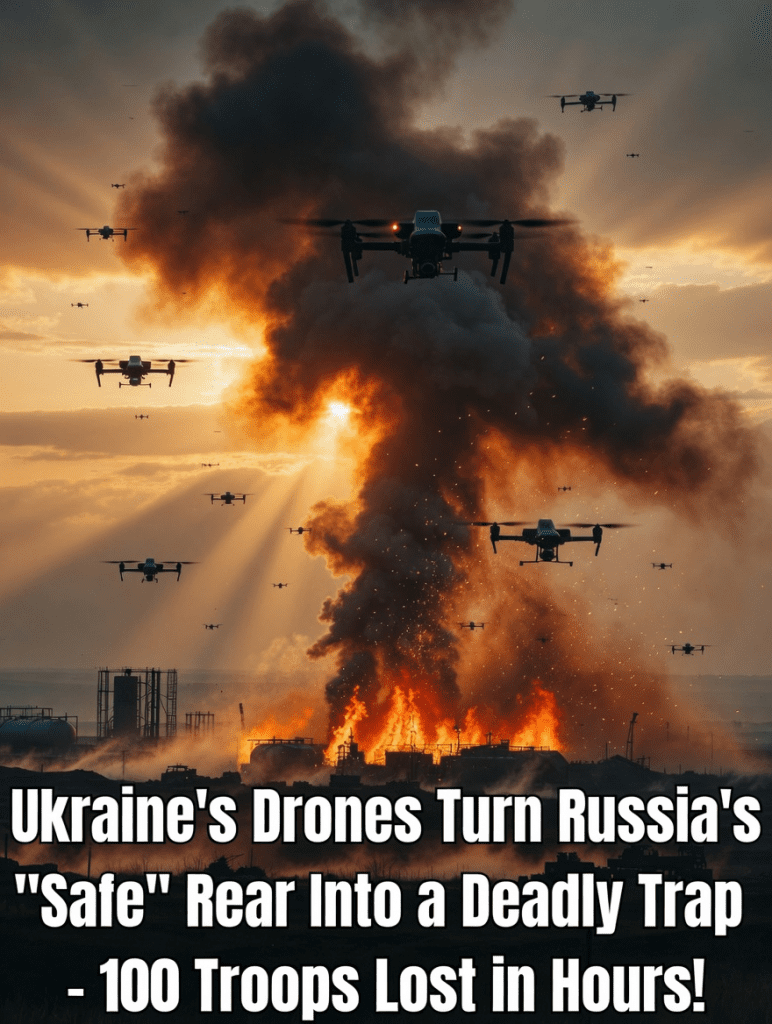
Ukrainian forces have intensified the use of unmanned aerial vehicles (UAVs) to target Russian rear-area positions, logistical convoys, and support infrastructure in eastern Ukraine. Recent operations have reportedly resulted in significant losses for Russian units, including personnel and high-value assets such as air defense systems, fuel depots, and rear facilities.
These strikes highlight the expanding role of reconnaissance and strike drones in disrupting enemy sustainment and coordination far from the immediate frontline.
Scope of Recent Ukrainian Drone Activity
According to Ukrainian military reporting, coordinated drone operations in a recent period destroyed or damaged over a dozen high-value targets, including air defense installations, fuel storage sites, and logistical facilities. Some Ukrainian sources also claimed approximately 100 Russian personnel losses in connected strikes during intense operational windows.
The tactics typically involve a combination of reconnaissance drones for real-time intelligence gathering and FPV (First-Person View) strike drones for precision attacks. Reconnaissance UAVs identify patterns of movement, convoy routes, and defensive positions, while strike drones execute targeted engagements on revealed assets.
This approach allows Ukrainian forces to pressure Russian supply lines, force air defense systems to activate and reveal their locations, and disrupt the flow of ammunition, fuel, and reinforcements needed for sustained operations.
Strategic Impact on Russian Rear Areas
Russian rear zones, once considered relatively secure, have become increasingly vulnerable due to the extended range and improved effectiveness of Ukrainian drones. Strikes on logistical convoys and support facilities can create cascading effects:
- Reduced availability of fuel and ammunition for frontline units
- Delayed reinforcement and rotation of troops
- Increased resource allocation for air defense and convoy protection
- Disruption of command and coordination between units
Military analysts note that degrading rear-area capabilities is a key component of attritional warfare. Even if territorial gains are limited, consistent pressure on logistics can slow or halt offensive momentum and force an opponent to operate with reduced efficiency.
Russia has responded by increasing the use of electronic warfare, dispersing supply depots, using decoys, and enhancing convoy protection. However, the high volume of Ukrainian drone operations continues to challenge these defensive measures.
Evolution of Drone Tactics in the Conflict
Drone warfare has become one of the most dynamic aspects of the Russia-Ukraine conflict. Both sides deploy thousands of unmanned systems monthly, but Ukraine has shown particular effectiveness in integrating reconnaissance and strike capabilities at scale.
Key developments include:
- Improved FPV drones with better range, payload, and resistance to jamming
- Use of “drone teams” — reconnaissance drones feeding targeting data to strike units in real time
- Expanded production through domestic initiatives and volunteer networks
- Adaptation to Russian countermeasures, such as fiber-optic guidance systems and AI-assisted targeting
These innovations allow Ukraine to conduct operations with relatively low-cost assets, creating favorable cost asymmetry against more expensive traditional military equipment.
Russia has also expanded its drone programs, particularly with long-range Shahed-type systems and various tactical UAVs. The aerial domain has turned into a continuous cycle of innovation, counter-innovation, and high consumption of equipment.
Challenges for Both Sides
Despite Ukrainian successes with drones, the conflict remains extremely challenging for both parties:
- Russia maintains advantages in manpower, artillery volume, and certain industrial capacities
- Ukraine faces ongoing difficulties with manpower rotation, ammunition supply, and protection of its own rear areas
- High daily consumption of drones and munitions strains production and logistics on both sides
- Electronic warfare remains a critical and rapidly evolving battlefield
The war has settled into a pattern of grinding attrition where technological adaptation, logistical resilience, and manpower management are decisive factors.
Humanitarian and Civilian Impact
Intensified drone operations increase risks for civilian populations. Strikes on logistical targets near populated areas or dual-use infrastructure can cause collateral damage, power disruptions, and civilian casualties. Both Ukrainian and Russian authorities have reported civilian impacts from the other side’s strikes.
The prolonged conflict has created one of the largest humanitarian crises in Europe in recent decades. Millions remain displaced, and many communities near the front lines and in rear areas face daily threats from drones, artillery, and unexploded ordnance. Access to healthcare, electricity, and basic services remains limited in many regions.
International humanitarian organizations continue to provide aid where possible, but active combat zones severely restrict delivery. Protecting civilians and adhering to international humanitarian law remain critical priorities.
Broader Context in May 2026
The reported drone operations occur amid ongoing high-intensity fighting, particularly in Donetsk Oblast. Both sides report daily engagements involving infantry, artillery, and extensive drone activity. Summer weather conditions are expected to improve ground mobility and potentially increase the overall tempo of operations.
Russia continues efforts to maintain pressure in eastern Ukraine, while Ukraine focuses on defensive stability, technological innovation, and deep strikes to degrade Russian capabilities. The conflict has evolved into a high-tech war of attrition with significant human and economic costs on both sides.
International Observations
The international community continues to monitor battlefield developments closely. The increasing role of drones and their impact on logistics and rear-area security are of particular interest to defense analysts worldwide. Many countries are studying the conflict to inform their own military modernization programs and strategies for future conflicts.
Diplomatic efforts for de-escalation and peace negotiations remain limited, with significant differences persisting on core issues. Global attention also focuses on the conflict’s wider effects on energy markets, food security, and international stability.
Economic and Logistical Dimensions
Strikes on logistical infrastructure add to the overall costs of sustaining military operations. Repair work, enhanced security measures, and asset dispersal require significant resources. Both economies face challenges from the prolonged high consumption of equipment and munitions.
Economic resilience, industrial capacity, and the ability to protect critical supply networks are becoming increasingly important factors in the conflict’s long-term dynamics.
Looking Ahead
The situation on the battlefield remains highly dynamic. Ukrainian drone operations continue to pressure Russian rear areas, while Russia adapts its tactics and invests in countermeasures. Summer 2026 may bring increased activity as weather conditions improve mobility across multiple fronts.
The technological competition in unmanned systems is expected to intensify, with both sides introducing new capabilities and responses. The shared hope among many civilians and international observers is for eventual de-escalation and a negotiated resolution that can reduce suffering and address underlying security concerns while prioritizing civilian protection and long-term recovery.
This article is based on reports from Ukrainian military sources, Russian official statements, open-source analyses, and international media coverage as of May 2026. Claims regarding specific losses and operational results in active conflict zones are often difficult to independently verify and should be treated with appropriate caution. The situation remains fluid and subject to rapid change. Our thoughts remain with all civilians and families affected by the ongoing war in Ukraine and Russia.