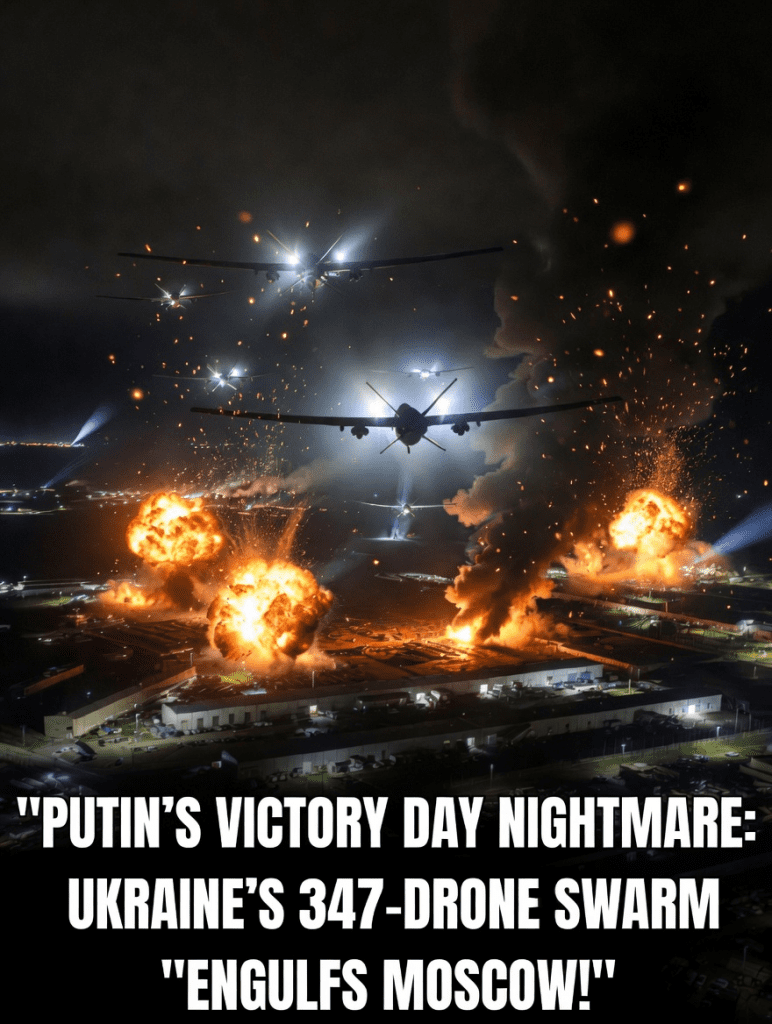
In the days leading up to Russia’s Victory Day celebrations on May 9, 2026, Ukrainian forces reportedly launched large-scale drone operations targeting military and logistical sites across multiple Russian regions. According to Ukrainian sources, one coordinated wave involved hundreds of drones striking facilities in at least 20 regions, including areas near Moscow.
Russian authorities confirmed intercepting numerous drones and reported damage at several sites. The incidents contributed to heightened security measures across Russia, resulting in a significantly scaled-back Victory Day parade in Moscow and restrictions in other cities.
Details of the Reported Drone Operations
Ukrainian military officials stated that the operations involved long-range strike drones targeting logistical complexes, air defense systems, and other military infrastructure. One notable wave was described as involving a large number of drones, with some reaching areas close to the Russian capital.
Russian defense authorities reported activating air defenses across multiple regions and claimed to have intercepted the majority of incoming threats. However, they acknowledged that some drones caused damage to facilities, including fires at logistical sites. Independent verification of the full scope and exact damage remains limited due to information controls in Russia.
The timing of these operations, just before Victory Day — Russia’s major annual commemoration of the Soviet victory in World War II — added symbolic significance to the events. In response, Russian officials implemented strict security protocols, including flight restrictions, increased patrols, and a reduction in the scale of public military displays.
Victory Day Celebrations Under Tight Security
The 2026 Victory Day parade in Moscow was noticeably more restrained than in previous years. Reports indicate a reduction in heavy military equipment displays and large public gatherings. Similar adjustments were made in other Russian regions, with some local events canceled or held under enhanced security.
Mobile internet restrictions were reportedly imposed in certain areas as a precautionary measure. These steps reflect the challenges of conducting major public events amid ongoing long-range drone threats.
Victory Day remains an important national holiday in Russia, traditionally featuring large military parades and public commemorations. The scaled-back format this year highlights the practical impact of the extended conflict on domestic life and national symbolism.
Ukraine’s Expanding Long-Range Drone Capabilities
The reported strikes demonstrate continued progress in Ukraine’s development of long-range unmanned systems. Over the past year, Ukraine has significantly increased its production capacity and technological sophistication in drone warfare, supported by domestic innovation initiatives and international partnerships.
Key elements of these operations include:
- Use of decoy drones to overwhelm air defense systems
- Improved navigation and targeting for deep strikes
- Coordination of multiple waves across wide geographic areas
- Focus on logistical and military infrastructure targets
These capabilities allow Ukraine to project force deep into Russian territory, aiming to disrupt supply lines, maintenance facilities, and operational planning without relying on large-scale ground offensives.
Russia has responded by reinforcing air defenses, dispersing assets, and conducting its own long-range strikes on Ukrainian territory. The mutual pattern of deep strikes has become a central feature of the current phase of the conflict.
Strategic and Logistical Implications
Targeting rear-area logistical hubs can create significant disruptions for military operations. Damage to facilities supporting fuel, ammunition, or equipment transport forces rerouting, increases costs, and diverts resources from frontline activities.
For Russia, protecting vast territories and critical infrastructure presents substantial challenges. The incidents near Moscow and in other regions illustrate that even areas previously considered relatively secure are now within operational range of Ukrainian systems.
Military analysts note that this shift is compelling both sides to invest heavily in air defense, electronic warfare, and infrastructure hardening. The high consumption rate of drones and defensive systems adds to the overall economic burden of the war.
Broader Context of the Conflict in May 2026
The drone operations occur amid ongoing fighting across multiple fronts in Ukraine, with particularly intense activity in Donetsk Oblast. Both sides report daily engagements involving infantry, artillery, drones, and missile systems.
The war has evolved into a prolonged contest of attrition, where logistics, technological adaptation, and economic sustainability play critical roles. Russia maintains advantages in manpower and certain areas of industrial production, while Ukraine benefits from rapid innovation in unmanned systems and continued international support.
Summer conditions in 2026 are expected to improve mobility and potentially increase operational tempo across the theater.
Humanitarian and Civilian Safety Concerns
As drone operations extend into deeper rear areas and urban zones, risks to civilian populations increase. Strikes near populated regions or dual-use infrastructure can cause collateral damage, power outages, and disruption of essential services.
Both Ukrainian and Russian authorities have reported civilian casualties and impacts from the other side’s strikes. Protecting civilians remains a major humanitarian priority. International humanitarian organizations continue to call for adherence to international humanitarian law, including the principles of distinction and proportionality in attacks.
Millions of people across Ukraine and affected regions of Russia continue to live with the daily threat of aerial attacks. The psychological and economic toll of the prolonged conflict remains substantial.
International Monitoring and Diplomatic Outlook
The international community is closely watching developments in the conflict. Incidents involving strikes near major cities raise concerns about potential escalation and broader security implications. Many governments and organizations have reiterated calls for de-escalation and renewed diplomatic efforts to reduce civilian suffering.
While periodic discussions about ceasefires and peace negotiations take place, significant differences persist on core issues such as territorial control, security guarantees, and accountability. Global attention remains focused on the humanitarian situation and the conflict’s wider effects on energy markets, food security, and international stability.
The Evolving Nature of Modern Warfare
The reported deep strikes highlight several key trends in contemporary conflict:
- Extension of the battlefield through long-range unmanned systems
- Increasing importance of rear-area security and critical infrastructure protection
- Cost asymmetry favoring mass-produced drones over traditional high-value assets
- Rapid cycle of technological innovation and counter-innovation
These developments are being studied by defense analysts worldwide and are likely to influence military strategies and procurement decisions in many countries for years to come.
Economic and Human Costs
The ongoing war continues to impose enormous economic and human costs on both sides. Strikes on infrastructure add to repair expenses, disrupt supply chains, and divert resources from civilian needs. Sustaining high-intensity operations requires massive quantities of equipment and munitions, placing strain on national budgets and industrial capacities.
Behind every military report are human stories of loss, resilience, and uncertainty. Families on both sides have been profoundly affected, with millions displaced and communities fragmented. The long-term societal and psychological impacts will require sustained attention and support.
Looking Ahead
The situation following the latest drone operations remains fluid. Russian authorities are expected to maintain heightened security measures in the coming period, while Ukraine continues to develop and deploy new unmanned capabilities.
As summer 2026 progresses, operational activity may increase across multiple fronts. The technological competition in the aerial domain is likely to intensify, with both sides adapting rapidly to emerging threats.
The shared hope among many civilians and international observers is for eventual de-escalation and a negotiated resolution that can reduce suffering and address underlying security concerns while prioritizing civilian protection and regional recovery.
This article is based on reports from Ukrainian military sources, Russian official statements, and international media coverage as of May 2026. Information from active conflict zones is often contested and should be cross-checked with multiple credible sources. Our thoughts remain with all civilians and families affected by the ongoing war in Ukraine and Russia.