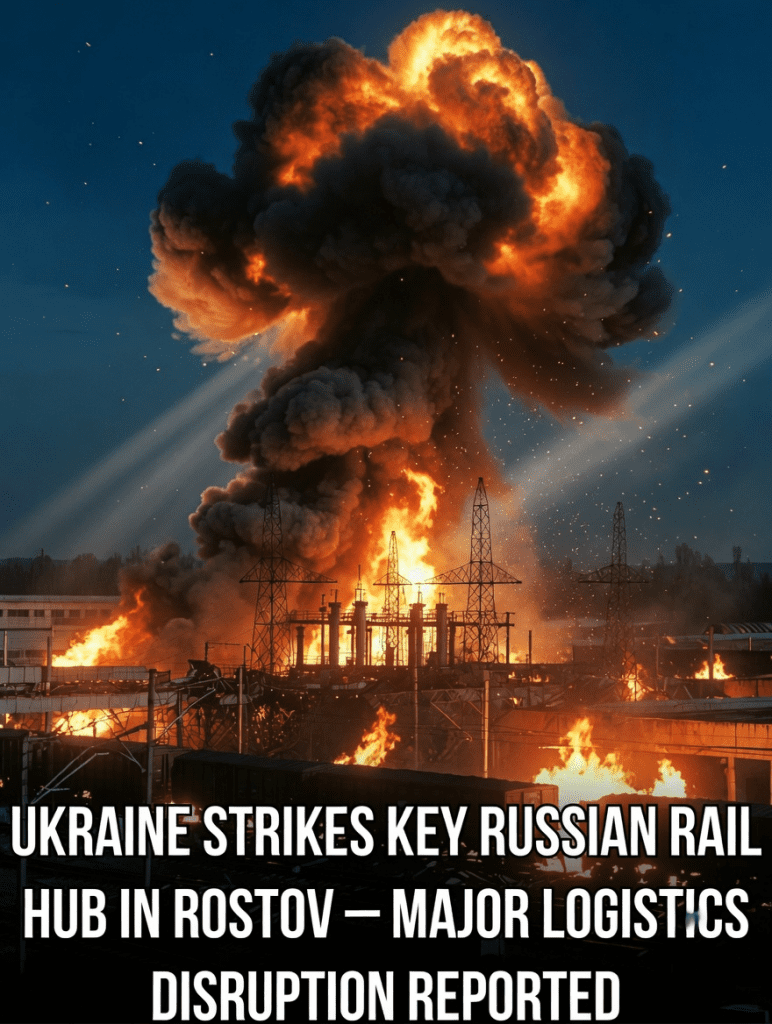
In a nighttime operation in May 2026, Ukrainian forces conducted a long-range drone strike on the TR-14 power substation at Russia’s Rostov railway hub. The attack caused significant damage, triggering a large fire and explosion that temporarily halted electric train operations in a key logistical area supporting Russian military activities in Donetsk and Zaporizhzhia regions.
This incident highlights the growing emphasis on targeting rear-area infrastructure and logistical chokepoints using unmanned aerial systems in the ongoing Russia-Ukraine conflict.
Details of the Strike on Rostov Railway Hub
According to available reports, the strike involved coordinated drone operations, including the use of decoy drones to saturate Russian air defenses. Precision strikes reportedly hit the TR-14 substation, leading to a major power outage. The resulting fire and explosion disrupted electric train services critical for transporting fuel, ammunition, and other military supplies.
Russian authorities confirmed the attack and stated that air defense systems engaged multiple incoming threats. Restoration efforts for the substation and affected rail infrastructure are expected to take several days, with temporary measures being implemented to reroute some traffic. The full extent of damage and operational impact is still being assessed.
Rostov-on-Don serves as an important transportation and logistics center in southern Russia, playing a significant role in supporting operations in occupied areas of eastern Ukraine. Disruptions here can affect the flow of materials needed for sustained military activities in Donetsk and Zaporizhzhia.
Strategic Importance of Railway Infrastructure
Railways remain a backbone of military logistics in the region due to their ability to move large volumes of heavy equipment, fuel, and ammunition efficiently. The Rostov hub connects multiple lines that supply Russian forces in southern and eastern Ukraine. Targeting power substations that support electrified rail networks offers a way to create widespread disruption with relatively precise strikes.
Such attacks force the targeted side to divert resources toward repair, air defense reinforcement, and alternative transport methods, which are often slower and more vulnerable. This approach aligns with a broader strategy of logistical attrition rather than direct large-scale ground confrontations.
Tactical Evolution: Drone Swarms and Precision Strikes
The reported use of drone swarms as decoys combined with precision strike elements demonstrates increasing sophistication in Ukrainian unmanned operations. This tactic aims to overwhelm radar systems and air defense operators, increasing the likelihood that at least some drones reach their intended targets.
Both Russia and Ukraine have rapidly advanced their drone capabilities since 2022. Ukraine has focused on domestic innovation, producing a wide range of systems from low-cost FPV drones to longer-range platforms. Russia has expanded production and incorporated electronic warfare systems to counter these threats.
The Rostov strike adds to a pattern of Ukrainian operations targeting rear-area logistical and energy infrastructure. Russia has conducted similar strikes on Ukrainian power grids and rail networks, creating a mutual cycle of infrastructure attacks that affects both military and civilian sectors.
Challenges in Protecting Critical Infrastructure
Defending vast railway networks and power substations presents significant difficulties:
- Large geographic area requiring coverage
- High cost of maintaining constant readiness
- Sophisticated decoy and low-altitude tactics
- Need to balance military and civilian infrastructure protection
Many countries are studying these events to improve resilience of their own critical infrastructure against drone threats. The incident at TR-14 underscores how modern conflicts can disrupt operations far from the actual front lines.
Broader Context of the Conflict in May 2026
The strike occurs amid ongoing fighting across multiple fronts, particularly in Donetsk Oblast, where both sides report intense daily engagements involving infantry, artillery, and drones. Operations in Zaporizhzhia and other southern regions also continue at a steady pace.
The war has evolved into a prolonged contest characterized by high consumption of resources, technological adaptation, and logistical challenges. Russia maintains advantages in manpower and certain areas of industrial output, while Ukraine relies on innovation, asymmetric tactics, and sustained international support.
Summer weather conditions in 2026 are expected to improve mobility for ground forces and potentially increase the tempo of drone and missile operations. Both sides face the challenge of sustaining operations while managing economic pressures and manpower issues.
Humanitarian and Civilian Impact
Attacks on power and railway infrastructure inevitably affect civilian populations. Disruptions in Rostov and surrounding areas can lead to power outages, delays in civilian transport, and economic impacts on local communities. In Ukraine, similar Russian strikes on energy facilities have caused widespread blackouts and hardship for millions of residents.
The prolonged conflict has created one of the largest humanitarian crises in Europe in recent decades. Millions remain displaced, and access to basic services such as electricity, water, and healthcare remains limited in many frontline and rear areas. International humanitarian organizations continue efforts to provide aid, though active combat zones severely restrict operations.
Protecting civilian infrastructure and minimizing harm to non-combatants remains a critical concern under international humanitarian law. Both sides have reported civilian casualties and damage from the other’s strikes throughout the conflict.
Economic and Logistical Dimensions
Each successful strike on logistical infrastructure imposes costs beyond immediate physical damage. Repair work, rerouting of supplies, and enhanced security measures add to the overall economic burden of the war. For Russia, maintaining supply lines to occupied territories requires significant resources, especially as Ukraine improves its long-range strike capabilities.
The high operational tempo consumes large quantities of fuel, ammunition, and equipment on both sides. Sustaining these efforts places strain on defense industries, supply chains, and national budgets. Analysts note that logistical resilience may prove as important as battlefield performance in determining long-term outcomes.
Technological Innovation and Future Trends
The events at Rostov exemplify broader trends in modern warfare:
- Proliferation of affordable, effective drone technology
- Increasing importance of critical infrastructure protection
- Extension of the battlefield deep into rear areas
- Rapid cycle of innovation and counter-innovation
Military experts worldwide are closely studying the Russia-Ukraine conflict for insights into future conflicts. The effectiveness of drone swarms, decoys, and precision strikes against defended targets is of particular interest to defense planners globally.
International Monitoring and Diplomatic Context
The international community continues to monitor developments in the conflict closely. Strikes on infrastructure such as the Rostov railway hub are noted for their potential impact on regional stability and broader security dynamics. While periodic discussions about ceasefires and peace initiatives occur, significant obstacles remain on key issues including territorial control and security guarantees.
Global energy markets, food security, and economic stability continue to feel indirect effects from the ongoing war. Many nations express hope for de-escalation and a negotiated resolution that can reduce suffering and address underlying concerns.
The Human Reality of the Conflict
Behind every report of strikes and logistical disruptions are human stories. Soldiers, railway workers, engineers, and civilians on both sides face daily challenges and risks. Families continue to endure separation, loss, and uncertainty after more than three years of full-scale war.
The psychological and societal impacts of the conflict will require long-term attention and support. Humanitarian needs remain substantial, and efforts to rebuild damaged infrastructure and communities will be essential once active hostilities subside.
As technological capabilities advance, the importance of protecting human lives and pursuing diplomatic solutions grows ever more pressing.
Looking Ahead
The situation regarding the TR-14 substation and Rostov railway operations remains fluid. Restoration timelines and further retaliatory actions could influence operational planning in the coming weeks. Summer 2026 may see increased activity across multiple fronts as both sides adapt to evolving tactical realities.
The conflict continues to demonstrate how modern warfare increasingly depends on logistics, technology, and infrastructure resilience. Understanding these dynamics is essential for assessing potential future developments in the region.
This article is based on reports from Ukrainian military sources, Russian official statements, and open-source analyses as of May 2026. Information from active conflict zones is often contested and should be cross-checked with multiple credible sources. Our thoughts remain with all civilians and families affected by the ongoing war in Ukraine and Russia.