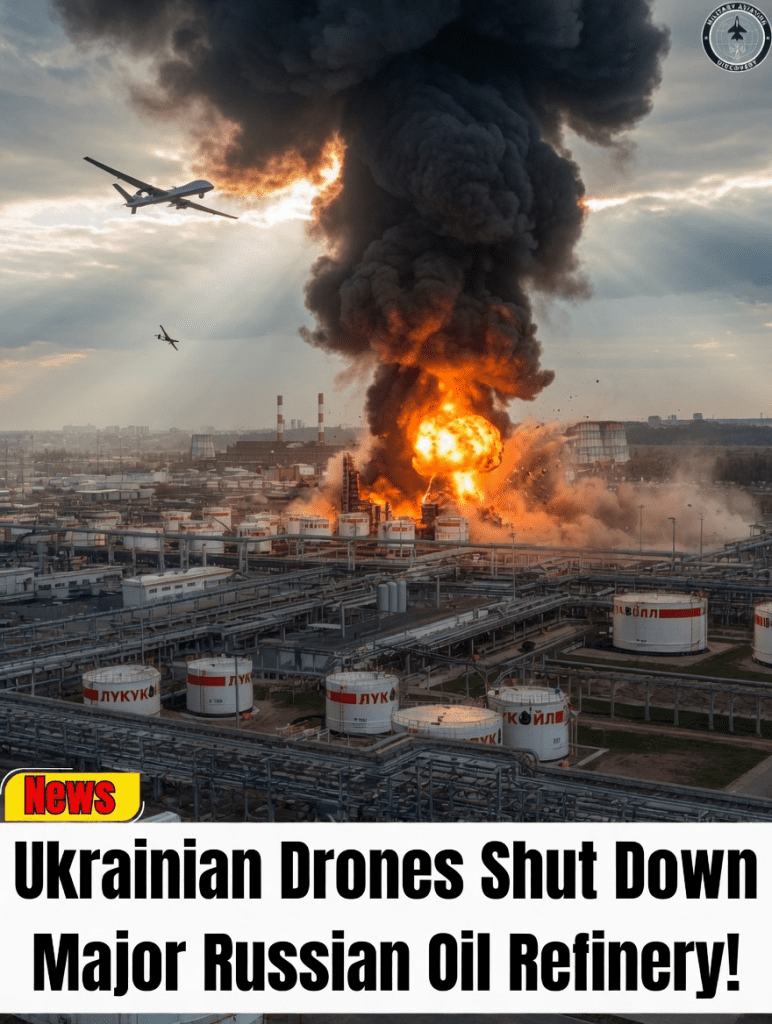
Ukrainian long-range drone strikes have forced the suspension of operations at one of Russia’s largest oil refineries. On May 7, 2026, drones targeted the Lukoil-owned Permnefteorgsyntez plant in Perm Krai. A follow-up strike hit the same facility and a critical oil pumping station on May 8.
The attacks reportedly damaged three major primary crude processing units and parts of the secondary facilities. One processing unit was already offline from a previous strike. Russian authorities confirmed the incidents and stated that emergency repairs are underway, with restoration expected to take several weeks.
Details of the Strikes on Perm Refinery
The Permnefteorgsyntez refinery is one of the largest and most technologically advanced facilities in Russia’s refining sector. In 2024, it processed approximately 12.6 million tons of oil, producing significant volumes of gasoline, diesel, and other petroleum products. These products supply both civilian markets and, according to various analyses, military logistics needs.
Ukrainian military sources stated that the strikes were carried out using long-range drones and achieved their objectives with precision. Russian officials reported that air defense systems were activated, but some drones reached the target area, causing fires and structural damage. Emergency services responded quickly to contain the fires, and operations at the refinery were fully suspended to allow for damage assessment and repairs.
A separate fire was also reported on May 13 at a major oil hub in neighboring Bashkortostan. While no direct link has been officially confirmed, the timing has drawn attention amid the pattern of strikes on Russian energy infrastructure.
Strategic and Economic Impact
The suspension of a major refinery like Permnefteorgsyntez has immediate and medium-term consequences for Russia’s fuel supply chain. Refineries are critical nodes in the country’s energy economy, and their disruption can lead to:
- Reduced domestic fuel availability
- Increased reliance on imports or other refineries
- Higher prices for gasoline and diesel
- Strain on military fuel logistics
Energy analysts estimate that repeated strikes on Russian refining capacity have already reduced overall output by a noticeable percentage in 2025–2026. Repairing complex industrial units is both expensive and time-consuming, often requiring specialized parts that are affected by international sanctions. Billions of dollars have reportedly been allocated to emergency repairs and enhanced security at energy facilities across Russia.
For Ukraine, targeting energy infrastructure is part of a broader strategy to reduce Russia’s ability to fund and sustain military operations. Oil and gas revenues remain a significant part of the Russian state budget. Disrupting refining capacity affects both export earnings and domestic supply, creating economic pressure without directly targeting civilian populations.
Pattern of Strikes on Russian Energy Infrastructure
The Perm incidents are part of a continuing series of Ukrainian long-range drone and missile operations against Russian oil refineries, storage facilities, and related infrastructure. Previous strikes have hit facilities in regions including:
- Bryansk
- Rostov
- Krasnodar Krai
- Bashkortostan
These operations demonstrate the expanding range and improved precision of Ukrainian unmanned systems. Ukraine has steadily increased domestic drone production and integrated advanced guidance technologies, allowing strikes deep inside Russian territory.
Russia has responded by reinforcing air defenses around energy sites, dispersing storage, and accelerating repairs. However, the vast size of Russia’s energy infrastructure makes comprehensive protection challenging. The cycle of strikes and repairs has become a significant feature of the current phase of the conflict.
Broader Military Context in May 2026
The strikes on Perm occur amid ongoing high-intensity fighting across multiple fronts in Ukraine, particularly in Donetsk Oblast. Both sides report daily engagements involving infantry, artillery, drones, and missile systems. The war has evolved into a prolonged war of attrition characterized by high consumption of equipment and munitions.
Logistics and energy supply remain critical factors. Russia relies on its refining capacity to support both civilian needs and military operations. Disruptions force adjustments in resource allocation and increase costs. Ukraine, meanwhile, continues to develop its long-range strike capabilities while defending key positions in the east and south.
Summer weather conditions in 2026 are expected to improve ground mobility and potentially increase the tempo of operations across the theater.
Humanitarian and Civilian Impact
Strikes on energy infrastructure can have indirect effects on civilian populations. Reduced refining capacity may lead to fuel shortages, higher prices, and disruptions in transportation and heating. In Ukraine, Russian strikes on energy facilities have previously caused widespread power outages and hardship, particularly during winter months.
Both sides have reported civilian casualties and infrastructure damage from the other’s operations. The prolonged conflict has created one of the largest humanitarian crises in Europe in recent decades, with millions displaced and significant needs in healthcare, housing, and reconstruction. International humanitarian organizations continue efforts to provide aid, though active combat zones severely limit delivery.
Protecting civilians and adhering to international humanitarian law remain critical priorities. Observers emphasize the importance of distinguishing between military and civilian targets.
Economic Implications for Russia
The Russian energy sector is a cornerstone of the national economy. Repeated strikes on refineries reduce processing capacity, affect export revenues, and increase domestic fuel prices. Repair costs run into the billions, diverting funds from other areas. Sanctions further complicate the procurement of specialized equipment needed for repairs.
These economic pressures add to the overall burden of the war, which has already significantly impacted Russia’s budget, currency stability, and long-term development prospects.
Technological Evolution in the Conflict
The Perm strikes highlight the growing role of long-range unmanned systems in modern warfare. Ukraine has demonstrated the ability to conduct precise attacks on strategic targets far from the frontline, forcing Russia to spread defensive resources thinly across a vast territory.
Both sides continue to invest heavily in drone technology, electronic warfare, and countermeasures. The competition in this domain is rapid, with new systems and tactics appearing regularly. Lessons from these operations are being studied by defense analysts worldwide and are likely to influence future military strategies.
International Monitoring and Diplomatic Outlook
The international community continues to monitor developments closely. Strikes on energy infrastructure are noted for their potential impact on global oil markets, regional stability, and escalation risks. Many governments and organizations have called for de-escalation and renewed diplomatic efforts to reduce civilian suffering.
While periodic discussions about ceasefires occur, significant differences persist on core issues such as territorial integrity, security guarantees, and accountability. Global attention also focuses on the conflict’s wider effects on energy prices and food security.
Looking Ahead
The situation regarding the Perm refinery and similar facilities remains fluid. Restoration efforts are underway, but full recovery may take weeks or longer. Further strikes could prolong disruptions and increase economic pressure.
As summer 2026 progresses, operational activity may increase across multiple fronts. The technological and logistical competition between the two sides is expected to intensify. Diplomatic and humanitarian efforts will continue in parallel with military developments.
The shared hope among many civilians and international observers is for eventual de-escalation and a negotiated resolution that can reduce suffering and address underlying security concerns while prioritizing civilian protection and long-term recovery.
This article is based on reports from Ukrainian military sources, Russian official statements, industry analyses, and international media coverage as of May 2026. Information from active conflict zones is often contested and should be cross-checked with multiple credible sources. Our thoughts remain with all civilians and families affected by the ongoing war in Ukraine and Russia.