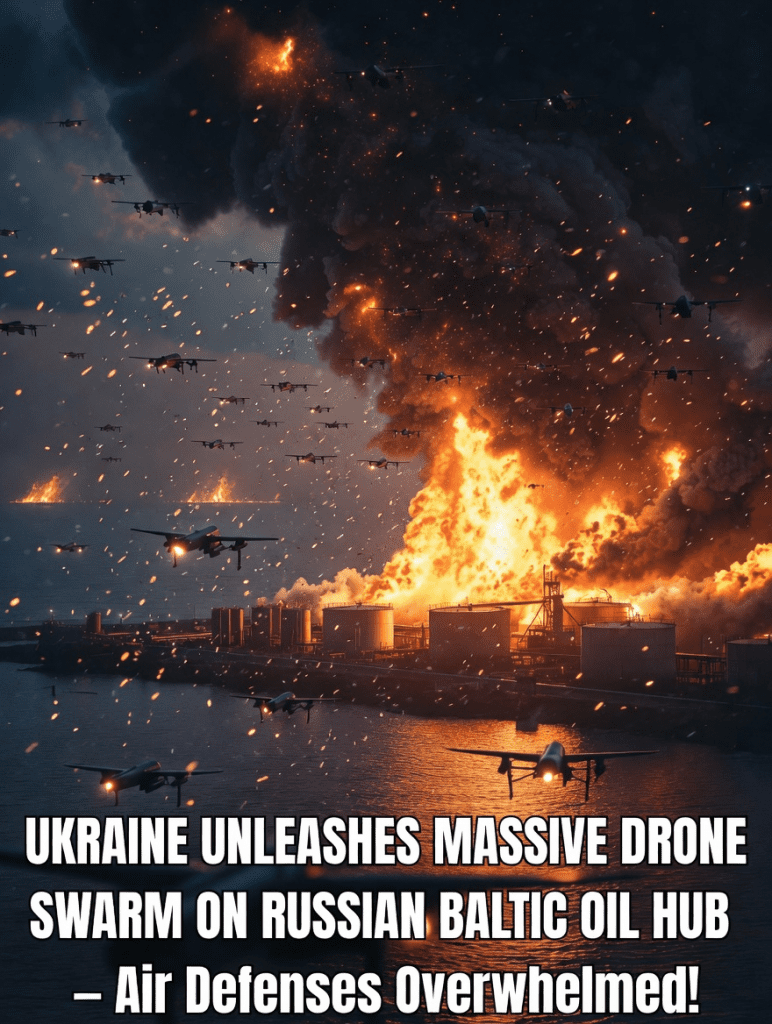
In a notable long-range operation, Ukrainian forces conducted a large-scale coordinated drone attack on Russia’s key oil export facility at Ust-Luga, located on the Baltic Sea coast approximately 1,700 kilometers from Ukrainian-controlled territory. The strike involved waves of drones, including decoys equipped with radar reflectors designed to overwhelm and confuse Russian air defense systems.
Russian authorities confirmed that several drones reached the port area, causing fires and damage to storage tanks and infrastructure. The incident highlights the increasing effectiveness of unmanned aerial systems in striking distant strategic targets and the challenges of defending large industrial facilities.
Details of the Ust-Luga Attack
According to available reports, the operation took place in early May 2026 and involved multiple waves of drones. Ukrainian forces reportedly used a mix of low-flying attack drones and decoy units with radar reflectors to saturate Russian air defenses. This “swarm” tactic forced defenders to expend resources on numerous false targets, allowing some strike drones to penetrate closer to the facility.
Fires were reported in the storage tank area of the Ust-Luga port complex. Russian emergency services responded quickly, and local authorities stated that the fires were contained. Damage assessments are ongoing, with Russian officials reporting that operations at the terminal were temporarily disrupted but not fully halted.
Ust-Luga is one of Russia’s largest oil export ports on the Baltic Sea, handling significant volumes of crude oil and petroleum products. The facility plays a critical role in Russia’s energy export strategy, particularly as Western sanctions have restricted access to other routes.
Tactical Innovation: Drone Swarms and Decoys
The use of decoys with radar reflectors represents a growing sophistication in Ukrainian drone operations. By overwhelming radar systems and air defense operators, these tactics increase the chances that actual strike drones can reach their targets. This approach mirrors techniques used in modern military doctrine to counter advanced integrated air defense networks.
Russian forces responded with surface-to-air missiles, fighter jets, and ground-based fire. While many drones were reportedly intercepted, the fact that several reached the port demonstrates the difficulty of providing comprehensive protection to large, spread-out industrial sites.
Both sides have rapidly adapted their drone and counter-drone strategies throughout the conflict. Ukraine has focused on low-cost, mass-produced systems and innovative tactics, while Russia has invested in layered air defenses, electronic warfare, and its own long-range strike capabilities.
Strategic Importance of Energy Infrastructure
Energy facilities have become primary targets in the Russia-Ukraine conflict due to their dual military and economic value. Strikes on oil refineries, export terminals, and storage depots aim to reduce an adversary’s ability to fund and sustain military operations while creating economic pressure.
For Russia, the Baltic Sea route through Ust-Luga has gained importance as alternative export paths face restrictions. Disruptions at the terminal can affect global oil supply chains, shipping schedules, and energy prices, though the overall market impact depends on the scale and duration of any outage.
Ukraine views these strikes as legitimate targeting of military-enabling infrastructure. Russia condemns them as attacks on civilian economic assets. This disagreement over what constitutes a legitimate target remains a point of contention in international discussions about the conflict.
Broader Pattern of Deep Strikes
The Ust-Luga operation fits into a wider pattern of Ukrainian long-range strikes on Russian territory that began intensifying in 2025 and continued into 2026. Previous targets have included oil refineries, airbases, ammunition depots, and railway infrastructure across multiple regions.
These operations demonstrate:
- Improved range and reliability of Ukrainian long-range drones
- Better intelligence gathering and targeting capabilities
- Growing domestic production capacity for unmanned systems
Russia has responded with its own deep strikes on Ukrainian energy infrastructure and military targets, creating a cycle of mutual attacks on rear areas. Both countries now face the challenge of protecting vast territories and critical infrastructure from drone threats.
Challenges in Defending Critical Infrastructure
The Ust-Luga incident underscores the difficulties of protecting large industrial complexes. Key challenges include:
- Vast physical area requiring coverage
- High cost of maintaining constant air defense readiness
- Sophisticated electronic warfare and decoy tactics
- Need to balance protection of military and civilian economic assets
Many countries worldwide are studying these events to improve their own critical infrastructure defense strategies, particularly for energy facilities, ports, and transportation hubs.
Economic and Energy Security Implications
Disruptions at major export terminals like Ust-Luga can influence regional energy security. While immediate global oil price spikes may be limited if alternative supplies are available, prolonged or repeated attacks could affect shipping patterns, insurance costs, and investor confidence in Russian energy projects.
For Russia, sustaining energy exports remains vital for government revenues during wartime. For Ukraine and its partners, reducing Russia’s ability to finance the conflict through energy sales is seen as a strategic objective.
Humanitarian and Civilian Considerations
Although the strike targeted an industrial port facility, operations in or near populated areas carry risks. Local residents near Ust-Luga reported hearing explosions and seeing smoke. Russian authorities stated there were no immediate reports of civilian casualties, but such incidents contribute to broader anxiety in regions previously considered far from the conflict zone.
In Ukraine, Russian strikes on energy infrastructure have caused widespread power outages and hardship for civilians, particularly during winter months. The mutual targeting of energy assets has created significant humanitarian challenges for populations on both sides.
The Evolving Nature of Modern Conflict
The events at Ust-Luga exemplify several trends in contemporary warfare:
- Proliferation of affordable drone technology — Small, relatively cheap drones can threaten expensive, high-value targets.
- Importance of electronic warfare and deception — Decoys and jamming play an increasingly central role.
- Extension of the battlefield — Rear areas hundreds or thousands of kilometers from the front lines are now active combat zones.
- High operational tempo and costs — Both sides face significant resource consumption and the need for rapid innovation.
Military experts worldwide are closely analyzing these developments, recognizing that lessons from the Russia-Ukraine conflict will influence future defense planning and procurement decisions.
International Monitoring and Regional Stability
NATO countries and other international actors continue to monitor the situation in the Baltic Sea region with concern. Any escalation affecting major shipping routes or energy infrastructure raises questions about broader regional stability and potential spillover effects.
Diplomatic channels remain active, though meaningful progress toward de-escalation or ceasefire negotiations has been limited. The conflict continues to affect global markets, food security, and international security arrangements.
Looking Ahead
As summer 2026 progresses, improved weather conditions may facilitate increased drone and missile activity from both sides. Russia is expected to strengthen defenses around key facilities, while Ukraine will likely continue developing new strike capabilities and tactics.
The situation at Ust-Luga and similar sites remains fluid. Further strikes or successful defenses could influence operational planning in other sectors of the conflict. Long-term outcomes will depend on each side’s ability to sustain operations, innovate technologically, and manage economic pressures.
This article is based on reports from Russian authorities, Ukrainian military sources, independent analyses, and international media coverage as of May 2026. Information from active conflict zones is often contested and should be cross-checked with multiple credible sources. Our thoughts remain with all civilians affected by the ongoing war.