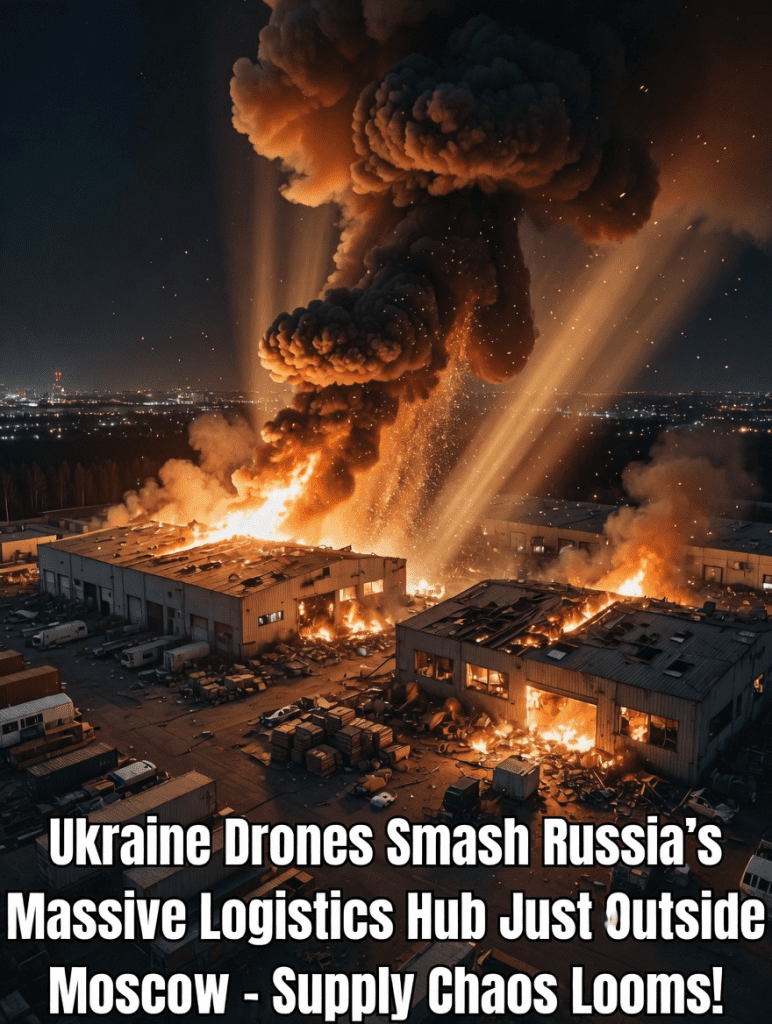
On the night of May 7, 2026, Ukrainian forces reportedly conducted a long-range drone operation targeting the Nara military logistics complex in Naro-Fominsk, located approximately 70 kilometers southwest of Moscow. The facility, spanning around 200 hectares, serves as a key automated hub for storing and distributing military cargo for the Russian armed forces.
Russian monitoring channels and open-source analysts reported strikes in the area, with Moscow authorities stating that air defenses intercepted multiple approaching drones. Emergency services responded to debris from intercepted threats. No official confirmation of damage at the Nara complex has been released by Russian authorities.
The incident occurred just days before Russia’s annual Victory Day celebrations on May 9, adding to heightened security concerns in the Russian capital region.
Strategic Importance of the Nara Logistics Complex
The Nara facility is part of Russia’s broader military logistics network. As an automated distribution center, it plays a significant role in managing supply flows of ammunition, equipment, spare parts, and other materiel to various Russian military units. Its location in the Moscow region places it within the country’s central logistical backbone, supporting operations across multiple fronts, including those in Ukraine.
Disrupting such a hub could potentially affect the efficiency of military resupply efforts. Even temporary interruptions in automated systems or damage to storage and distribution infrastructure can create bottlenecks in the supply chain, requiring rerouting and additional resources for repairs.
For Ukraine, targeting rear-area logistical facilities aligns with a strategy of imposing sustained pressure on Russian sustainment capabilities. By striking deep inside Russian territory, Ukrainian forces aim to force resource diversion toward defense and repair rather than offensive operations.
Context of Deep-Strike Operations
This reported strike fits into a pattern of expanding Ukrainian long-range drone capabilities observed throughout 2025 and 2026. Ukraine has steadily increased the range, precision, and volume of its unmanned systems, enabling operations far behind Russian lines.
Key elements of these operations often include:
- Coordinated waves of strike and decoy drones
- Advanced navigation to penetrate air defense networks
- Focus on high-value logistical, command, and infrastructure targets
- Integration of real-time intelligence for targeting
Russia has responded by reinforcing air defenses around Moscow and other critical regions, implementing stricter security protocols, and conducting its own long-range strikes on Ukrainian territory. The mutual deep-strike dynamic has become a defining characteristic of the current phase of the conflict.
Victory Day Preparations Under Security Pressure
The timing of the reported operation, just before Victory Day on May 9, contributed to noticeable adjustments in Russia’s commemorative events. The annual holiday, which marks the Soviet victory over Nazi Germany in World War II, traditionally features large military parades and public celebrations. In 2026, authorities implemented enhanced security measures across Moscow and other regions, including flight restrictions and scaled-back public displays in some areas.
These precautions reflect the practical challenges of conducting major national events amid ongoing long-range threats. The contrast between symbolic national commemorations and the reality of active military operations underscores the domestic impact of the extended conflict.
Technological Evolution in the Conflict
The reported Nara strike highlights the rapid advancement of unmanned aerial systems in modern warfare. Both Russia and Ukraine have invested heavily in drone technology, leading to significant innovations in:
- Long-range strike platforms
- Electronic warfare and counter-drone systems
- AI-assisted targeting and autonomous features
- Mass production techniques for cost-effective systems
Ukraine’s ability to reach targets near Moscow demonstrates improvements in range, survivability, and operational planning. Russia continues to adapt its air defense networks and dispersal strategies to counter these threats. The ongoing technological competition drives high consumption rates of equipment and requires constant innovation from both sides.
Military analysts worldwide are studying these developments, recognizing that lessons from the Russia-Ukraine conflict will likely influence future defense doctrines and procurement decisions globally.
Broader Military Context in May 2026
The incident near Moscow occurs alongside continued high-intensity fighting across multiple fronts in Ukraine, particularly in Donetsk Oblast. Both sides report daily engagements involving infantry, artillery, drones, and missile systems. Logistics, air defense, and manpower remain critical factors shaping operational capabilities.
Summer conditions in 2026 are expected to improve mobility for ground forces and potentially increase the tempo of aerial and drone operations. The conflict has evolved into a prolonged war of attrition, where sustainment and technological adaptation play decisive roles.
Russia maintains advantages in certain areas of manpower and industrial production, while Ukraine benefits from rapid innovation in unmanned systems and sustained international support.
Humanitarian and Civilian Safety Concerns
As drone operations extend into deeper rear areas and regions near major cities, risks to civilian populations increase. Strikes on or near military facilities can cause collateral damage, power disruptions, and anxiety among local residents. Russian authorities have reported civilian impacts from Ukrainian strikes, while Ukraine documents similar effects from Russian attacks.
Protecting civilians remains a major humanitarian priority. International humanitarian organizations emphasize the importance of adhering to international humanitarian law, including the principles of distinction, proportionality, and precaution in attacks.
Millions of people across Ukraine and affected regions of Russia continue to live with the daily threat of aerial operations. The prolonged conflict has created substantial humanitarian needs, including support for displaced persons, medical care, and reconstruction of damaged infrastructure.
Economic and Logistical Implications
Damage to key logistical facilities like Nara can create short-term disruptions in military supply chains. Repair work, rerouting of cargo, and enhanced protective measures add to the overall economic burden of the war. Sustaining high-intensity operations requires enormous resources, placing strain on both economies.
The high consumption rate of drones, missiles, and defensive systems further increases costs and logistical challenges for both sides. Economic resilience and industrial capacity are becoming increasingly important factors in the conflict’s long-term dynamics.
International Monitoring and Diplomatic Outlook
The international community continues to monitor developments closely. Incidents involving strikes near major population centers raise concerns about potential escalation and broader security implications. Many governments and organizations have called for de-escalation and renewed diplomatic efforts to reduce civilian suffering.
While periodic discussions about ceasefires and peace negotiations occur, significant differences persist on core issues such as territorial integrity, security guarantees, and accountability. Global attention remains focused on the humanitarian situation and the conflict’s wider effects on energy markets, food security, and international stability.
Looking Ahead
The situation following the reported strike at Nara remains fluid. Russian authorities are expected to maintain heightened security measures in the Moscow region and other critical areas. Ukraine will likely continue developing and deploying long-range capabilities as the technological competition intensifies.
As summer 2026 progresses, operational activity may increase across multiple fronts. The shared hope among many civilians and international observers is for eventual de-escalation and a negotiated resolution that can reduce suffering and address underlying security concerns while prioritizing civilian protection and regional recovery.
The conflict demonstrates how modern warfare increasingly depends on logistics, technology, and infrastructure resilience. Understanding these dynamics is essential for assessing potential future developments in the region.
This article is based on reports from Ukrainian military sources, Russian official statements, open-source monitoring channels, and international media coverage as of May 2026. Information from active conflict zones is often contested and should be cross-checked with multiple credible sources. Our thoughts remain with all civilians and families affected by the ongoing war in Ukraine and Russia.