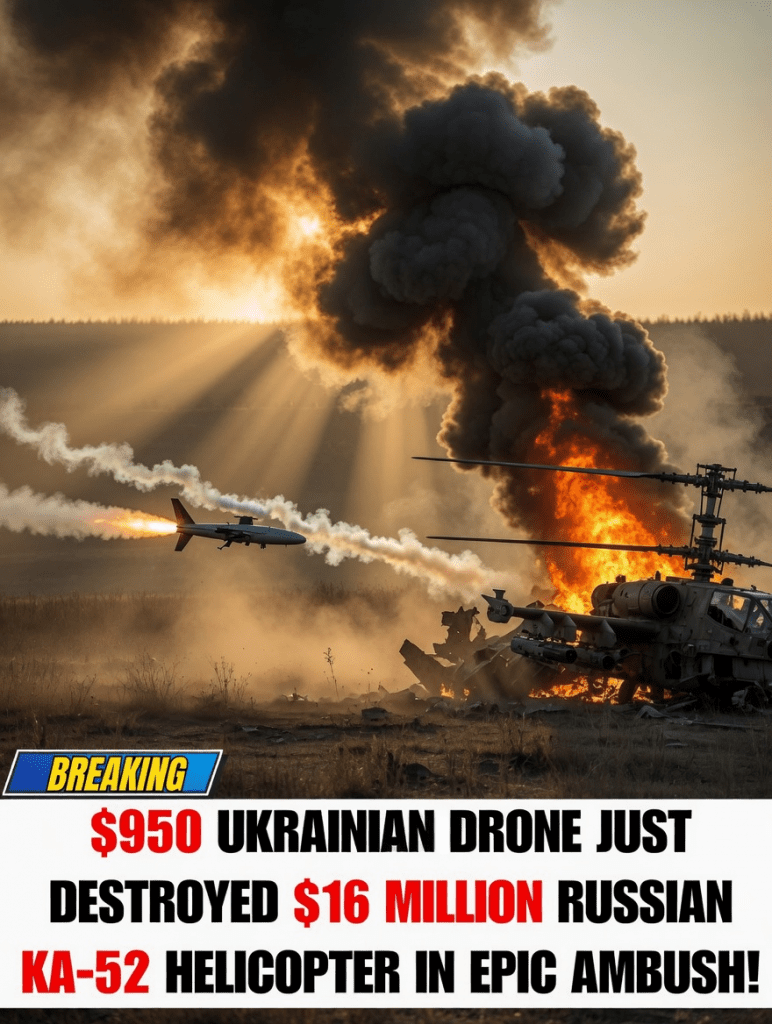
Ukrainian forces have released footage showing a fiber-optic guided FPV drone striking a Russian Ka-52 Alligator attack helicopter near the Pokrovsk front in Donetsk Oblast. The operation was carried out by operators from the Baltika crew, who used a drone equipped with an RPG warhead to target the helicopter.
This incident highlights the increasing use of fiber-optic guidance systems in drone warfare, which are designed to resist electronic jamming — a common Russian defensive tactic.
Details of the Incident
According to Ukrainian military sources, the drone maintained control via a thin glass fiber cable and successfully struck the Ka-52, triggering secondary explosions in the helicopter’s rocket pods. The Ka-52 is a twin-engine attack helicopter used by Russian forces for close air support and anti-armor missions. It is considered one of Russia’s more advanced rotary-wing aircraft.
The strike occurred in a contested area near Pokrovsk, one of the most active sectors on the eastern front. Pokrovsk and its surrounding areas have seen intense fighting throughout 2025 and 2026, with both sides committing significant resources to control key logistical hubs.
Russian authorities have not issued a detailed public confirmation of this specific loss, but open-source analysts and geolocated footage have corroborated the presence of Ukrainian drone activity in the area.
Technical Aspects of Fiber-Optic FPV Drones
Fiber-optic guided drones represent a significant adaptation in unmanned systems. Unlike traditional radio-controlled drones that can be disrupted by electronic warfare (jamming), fiber-optic versions maintain a physical data link through a thin optical cable unspooled during flight. This allows the operator to retain full control even in heavily jammed environments.
Key advantages include:
- High resistance to electronic interference
- Precise real-time guidance
- Relatively low production cost
- Ability to operate effectively against sophisticated air defense and jamming systems
Ukraine has invested heavily in developing and scaling production of such systems through domestic innovation initiatives. The Baltika crew’s operation demonstrates how these technologies are being integrated into frontline tactics, allowing small teams to engage high-value targets with relatively inexpensive munitions.
The Ka-52 Alligator in Russian Operations
The Ka-52 is a modern attack helicopter equipped with advanced avionics, anti-tank missiles, and rocket pods. Russian forces have used it extensively for fire support in Ukraine. However, the helicopter has proven vulnerable to man-portable air defense systems (MANPADS), drones, and ground-based threats when operating at lower altitudes.
Losses of Ka-52s are significant because the aircraft is complex and expensive to produce. Each incident reduces Russia’s close air support capacity and places additional strain on maintenance and pilot training resources.
Broader Context of Drone Warfare Near Pokrovsk
Pokrovsk remains one of the most contested areas in Donetsk Oblast. Russian forces have pursued incremental advances through small-unit assaults, glide bombs, and artillery, while Ukrainian defenders rely on layered defenses, drone interdiction, and mobile reserves.
Drone operations have become central to both sides’ tactics in this sector:
- Reconnaissance drones provide real-time intelligence
- FPV strike drones conduct precision attacks on vehicles, positions, and aircraft
- Fiber-optic and AI-assisted systems help overcome electronic warfare challenges
The high volume of drone usage has led to significant consumption rates, driving both nations to expand domestic production. Ukraine’s focus on low-cost, resilient systems has allowed it to maintain pressure despite resource constraints.
Challenges Facing Both Sides
Despite Ukrainian successes with fiber-optic drones, the conflict remains extremely demanding for both parties. Russia continues to field large numbers of troops and heavy equipment, while Ukraine faces ongoing challenges with manpower rotation, ammunition supply, and protection of its own forces.
Electronic warfare remains a critical battlefield domain. Russia has invested heavily in jamming systems, but Ukrainian adaptations — such as fiber-optic guidance — demonstrate the rapid pace of technological counter-adaptation.
Summer conditions in 2026 are expected to improve ground mobility, which could increase the tempo of operations and drone activity across multiple fronts.
Humanitarian and Civilian Impact
The fighting near Pokrovsk and other areas in Donetsk Oblast continues to affect civilian populations. Communities close to the front lines face daily risks from artillery, drones, mines, and unexploded ordnance. Many towns and villages have suffered extensive destruction, with residents displaced or living under severe hardship.
Both Ukrainian and Russian authorities have reported civilian casualties from the other side’s operations. The prolonged conflict has created one of the largest humanitarian crises in Europe in recent decades, with millions displaced and significant needs in healthcare, housing, and reconstruction.
International humanitarian organizations work to provide aid, but access remains severely limited in active combat zones. Protecting civilians and adhering to international humanitarian law remain critical priorities.
Economic and Logistical Dimensions
Each engagement consumes significant resources. Drones, munitions, and equipment losses add to the overall burden on both economies. Sustaining high-intensity operations requires robust industrial production and supply chains. Both nations face challenges in this regard, with international sanctions and aid flows playing important roles.
The long-term economic impact of the war will be substantial, particularly for reconstruction in Ukraine.
International Observations
The international community continues to monitor battlefield developments closely. The increasing sophistication of drone technology and its impact on traditional military assets are of particular interest to defense analysts worldwide. Many countries are studying the Russia-Ukraine conflict to inform their own military modernization programs.
Diplomatic efforts for de-escalation and peace negotiations remain limited, with significant differences persisting on core issues. Global attention also focuses on the conflict’s wider effects on energy markets, food security, and international relations.
Looking Ahead
The situation near Pokrovsk and across the broader front remains highly dynamic. Ukrainian forces continue to adapt their drone tactics, while Russia works to strengthen electronic warfare and air defenses. Summer 2026 may bring increased operational activity as weather conditions improve mobility.
The technological competition in unmanned systems is expected to intensify. The shared hope among many civilians and international observers is for eventual de-escalation and a negotiated resolution that can reduce suffering and address underlying security concerns while prioritizing civilian protection and long-term recovery.
This article is based on reports from Ukrainian military sources, open-source footage, and international media coverage as of May 2026. Claims regarding specific operational outcomes in active conflict zones are often difficult to independently verify and should be treated with appropriate caution. The situation remains fluid and subject to rapid change. Our thoughts remain with all civilians and families affected by the ongoing war in Ukraine and Russia.