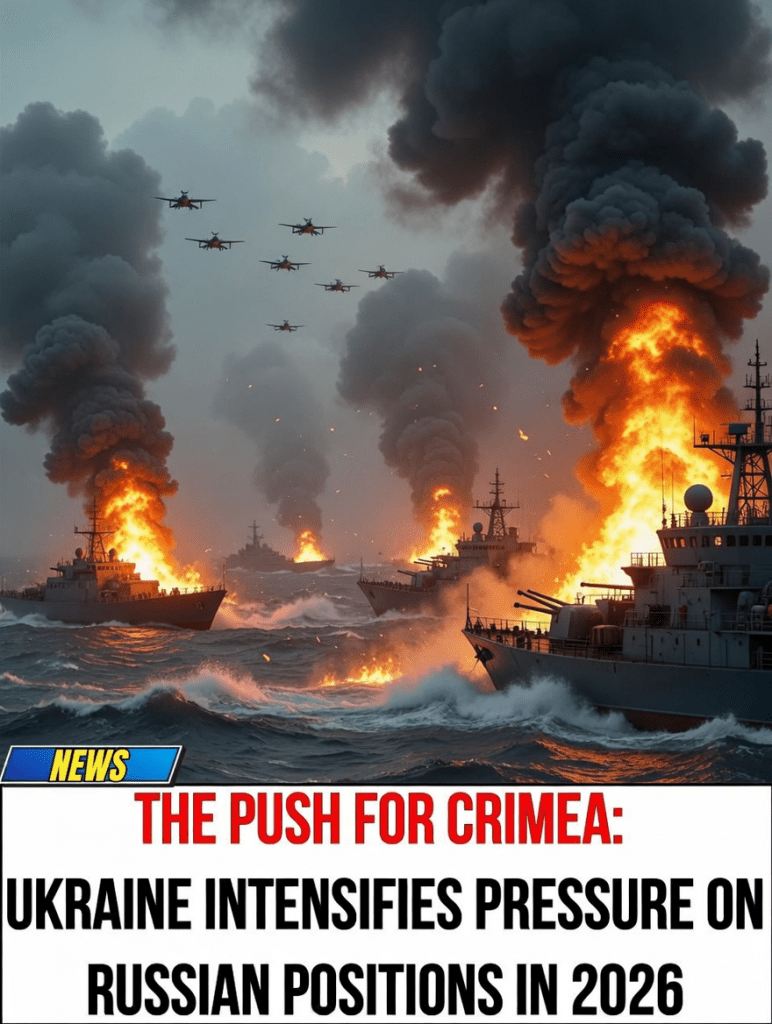
Ukrainian forces have increased the tempo of long-range operations against Russian-held positions in Crimea, focusing on military infrastructure, supply routes, air defense systems, and naval assets in the Black Sea region. Recent strikes have reportedly caused damage to key logistical targets, including elements of the Crimean Bridge and ferry connections, as part of an ongoing effort to isolate and degrade Russian military capabilities on the peninsula.
These operations reflect Ukraine’s strategy of using precision strikes and attrition to challenge Russian control over Crimea without large-scale ground offensives.
Crimea’s Strategic and Symbolic Importance
Since Russia’s annexation of Crimea in 2014, the peninsula has served as a critical military hub for Russian operations in the Black Sea. Its location provides Russia with a strategic foothold for naval forces, air bases, logistics depots, and troop concentrations supporting activities in southern Ukraine.
The Crimean Bridge, completed in 2018, has been a vital artery for transporting supplies, equipment, and personnel between mainland Russia and the peninsula. Ferry services have also played a significant backup role when the bridge has been damaged or under maintenance. Disrupting these connections forces Russia to rely on more vulnerable overland routes through occupied southern Ukraine or limited air transport, increasing logistical strain.
For Ukraine, regaining control or significantly weakening Russian presence in Crimea remains a core strategic objective. The peninsula’s control affects Black Sea shipping routes, regional security, and Ukraine’s access to its own territorial waters and coastline.
Nature of Ukrainian Operations in Crimea
Ukrainian strikes in the region have relied heavily on long-range drones and missiles, including domestically produced systems and Western-supplied weapons. Targets have included:
- Fuel and ammunition depots
- Air defense installations
- Naval vessels and port facilities
- Railway and road infrastructure
- Command and communication centers
These precision operations aim to degrade Russia’s ability to sustain forces on the peninsula and project power across the Black Sea. By focusing on logistics and rear-area assets, Ukraine seeks to impose unsustainable costs on Russian occupation over time.
Russian authorities have acknowledged some damage from these strikes and reported intercepting incoming threats. Both sides have released footage and statements regarding the engagements, though independent verification of exact damage levels remains challenging due to restricted access in the conflict zone.
Russia’s Defensive Challenges
Maintaining secure supply lines to Crimea has become increasingly difficult for Russian forces. Repeated strikes have forced adaptations such as:
- Increased use of electronic warfare and air defenses
- Dispersal of assets across multiple locations
- Greater reliance on alternative transport methods
- Heightened security measures around critical infrastructure
Despite these efforts, analysts note that sustaining large military deployments on the peninsula requires constant resupply, which becomes more expensive and complex under sustained pressure. The Black Sea Fleet has also faced significant losses and operational constraints, limiting its ability to dominate the region as it did earlier in the conflict.
Ukraine’s Evolving Defense Industry and International Support
Ukraine has made substantial progress in developing its domestic defense industry, particularly in drone technology and long-range strike capabilities. This self-reliance has been complemented by continued international financial and military assistance, allowing Ukraine to sustain operations despite the high costs of modern warfare.
New technologies, improved intelligence gathering, and better integration of systems have enhanced the effectiveness of Ukrainian strikes. Military experts highlight how these innovations allow a smaller force to challenge a larger adversary through asymmetric means.
Broader Context of the Black Sea Region
The Black Sea remains one of the most strategically important areas in the conflict. Control of Crimea influences grain exports, energy routes, and naval power projection for multiple countries. Disruptions in the region have global implications for food security and energy prices.
NATO members and other countries monitor developments closely, concerned about potential escalation or incidents involving international shipping. Turkey, which controls access through the Bosporus Strait, plays a particularly important diplomatic and regulatory role.
Humanitarian and Civilian Impact
Civilian populations in Crimea and surrounding areas continue to face risks from ongoing military operations. Strikes on infrastructure can lead to power outages, transportation disruptions, and shortages of essential goods. Both Ukrainian and Russian authorities have reported civilian casualties and damage to residential areas from cross-border strikes.
The prolonged conflict has created significant humanitarian challenges across the region, including displacement, economic hardship, and strain on medical and social services. International organizations work to provide aid where access permits, but active combat zones severely limit these efforts.
Tactical and Strategic Implications
The intensified operations in Crimea illustrate several key trends in the wider conflict:
- Logistics as a Center of Gravity: Both sides recognize that sustained operations depend on reliable supply lines. Attacking these lines has become as important as direct frontline engagements.
- Long-Range Precision Strike Dominance: Advances in drone and missile technology have extended the battlefield hundreds of kilometers, forcing constant adaptation in defensive measures.
- Attrition Warfare: Rather than seeking quick decisive victories, both sides are engaged in a prolonged contest of resources, innovation, and resilience.
- Naval and Air Domain Competition: The struggle for control over the Black Sea airspace and waters continues to evolve with new technologies and tactics.
Military analysts suggest that these dynamics may shape operational planning for the remainder of 2026, particularly as summer weather improves conditions for various types of military activity.
International Observations
Global observers, including governments, think tanks, and media outlets, continue to monitor the situation in Crimea and the broader Black Sea region. Developments there are seen as potentially influential on any future diplomatic initiatives or ceasefire discussions.
While periodic talks about peace negotiations occur, significant gaps remain between the positions of the involved parties. Issues such as territorial control, security guarantees, and reconstruction will likely require extended diplomatic engagement.
The Human Cost and Hope for Resolution
The conflict in Ukraine, now well into its fifth year, has caused immense suffering for millions of people on all sides. Families have been separated, communities destroyed, and economies severely damaged. Behind every strike and strategic decision are human stories of loss, resilience, and endurance.
As operations in Crimea and elsewhere continue, the shared hope among many civilians and international actors remains a negotiated resolution that can bring lasting peace, security, and reconstruction to the region.
The situation remains highly fluid, with new developments possible at any time. Accurate information and careful analysis are essential for understanding this complex and rapidly evolving conflict.
This article is based on reports from Ukrainian military sources, Russian official statements, independent analyses, and international media coverage as of May 2026. Information from active conflict zones is often contested and should be cross-checked with multiple credible sources. Our thoughts remain with all civilians and families affected by the ongoing war.