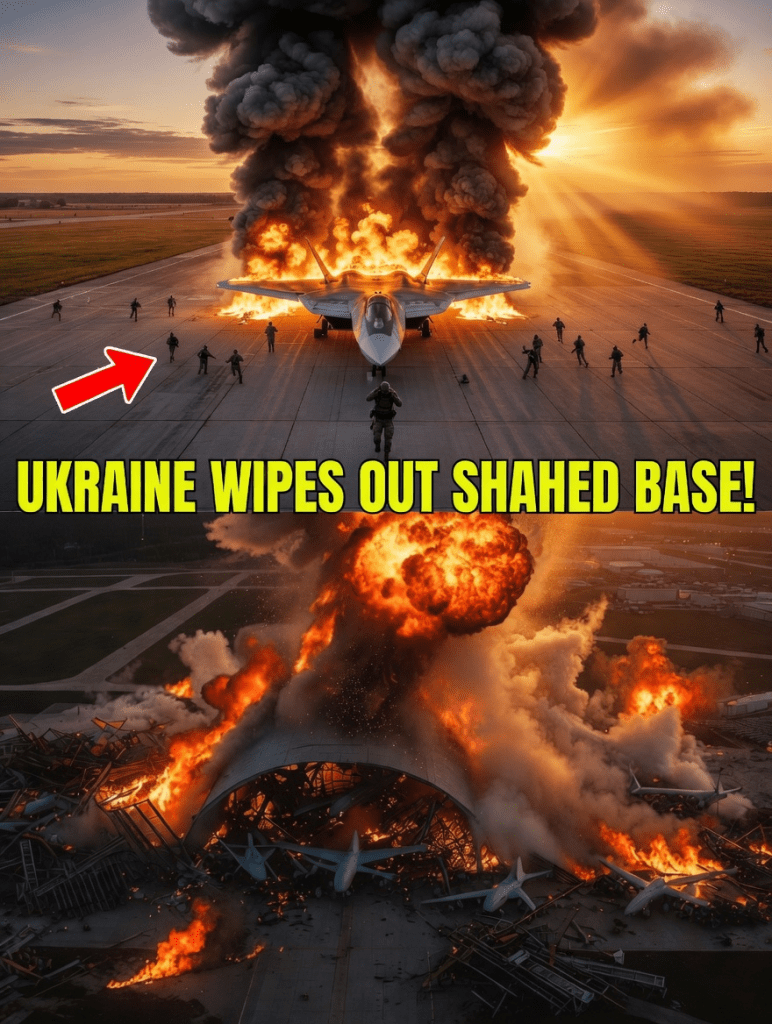
In a significant long-range strike operation, Ukrainian forces reportedly targeted a Russian facility used for storing, preparing, and launching Shahed-type attack drones at the occupied Donetsk Airport in eastern Ukraine. The attack, carried out with U.S.-supplied ATACMS ballistic missiles and French-British SCALP cruise missiles, caused large secondary explosions and substantial damage to the site, according to Ukrainian military sources.
This operation highlights the growing reach and precision of Ukraine’s deep-strike capabilities and the strategic importance of targeting enemy drone infrastructure far behind the front lines.
What Happened at Donetsk Airport
According to statements from Ukraine’s General Staff, the strike hit a key Russian site near Donetsk Airport that was being used as a hub for Shahed (Geran-2) drones. These Iranian-designed kamikaze drones have been a major component of Russia’s aerial campaign against Ukrainian cities and infrastructure.
The coordinated use of ATACMS and SCALP missiles allowed Ukrainian forces to engage the target with both ballistic speed and cruise missile accuracy. Footage released by Ukrainian sources showed large plumes of smoke and multiple secondary detonations, consistent with the destruction of fuel, ammunition, or stored drones.
While exact figures on destroyed assets vary and remain difficult to independently verify in real time, Ukrainian reports described significant damage to storage hangars, launch infrastructure, and associated equipment. The airport, which has been under Russian control since 2014 and heavily militarized, has been repaired and repurposed multiple times during the conflict.
Strategic Importance of the Strike
Shahed drones represent a low-cost, high-volume threat that Russia has used extensively to exhaust Ukrainian air defenses and strike energy facilities, cities, and civilian areas. Disrupting their storage, preparation, and launch sites reduces Russia’s ability to sustain large-scale drone barrages.
By targeting this facility, Ukraine aims to:
- Degrade Russia’s immediate drone launch capacity in the Donetsk sector
- Force Russia to disperse assets and invest more resources in protection
- Demonstrate the effectiveness of Western-supplied long-range weapons
Military analysts note that such strikes form part of a broader Ukrainian strategy to disrupt Russian logistics and rear-area operations, complementing defensive efforts on the frontline.
Background on Donetsk Airport
Donetsk International Airport was once a modern facility but became a symbol of the conflict after intense fighting in 2014–2015. Largely destroyed during the initial phases of the war, it has since been used by Russian forces as a military airfield and logistics hub. Its location makes it valuable for operations in Donetsk Oblast but also places it within range of Ukrainian long-range systems.
Repeated strikes on the airport underscore the challenges both sides face in securing and maintaining infrastructure in contested territory.
The Role of Long-Range Missiles in the Conflict
The use of ATACMS and SCALP missiles in this operation reflects Ukraine’s increasing integration of Western weapons systems:
- ATACMS — U.S.-provided ballistic missiles known for rapid delivery and cluster or unitary warheads.
- SCALP (Storm Shadow) — Anglo-French cruise missiles designed for precision strikes against hardened targets.
These systems have allowed Ukraine to reach targets previously beyond the range of most domestic weapons. Russia has responded by improving air defenses, dispersing assets, and launching its own long-range attacks on Ukrainian territory.
The combination of different missile types in a single operation demonstrates tactical sophistication and careful intelligence preparation.
Broader Context of the Ongoing Conflict
As of May 2026, the Russia-Ukraine war continues with intense fighting across multiple sectors, particularly in Donetsk Oblast. Both sides rely heavily on drones, artillery, and precision strikes, resulting in high consumption of equipment and ammunition.
Russia has used waves of Shahed drones alongside more advanced systems to pressure Ukrainian defenses. Ukraine, in turn, has focused on asymmetric responses, including deep strikes on logistics, command nodes, and air assets.
Civilian areas on both sides remain at risk. Drone and missile attacks have caused deaths, injuries, and damage to infrastructure far from the front lines, contributing to one of the largest humanitarian crises in Europe in decades.
Humanitarian and Civilian Impact
Strikes on military targets near populated areas inevitably raise concerns about collateral damage. Donetsk city and surrounding communities have suffered extensive destruction over more than a decade of conflict. Residents continue to face hardships, including limited access to utilities, healthcare, and safe housing.
International humanitarian organizations emphasize the need for all parties to minimize harm to civilians and adhere to international humanitarian law. Aid delivery remains challenging in active combat zones.
Implications for Modern Warfare
This strike exemplifies several trends in contemporary conflict:
- Precision and Intelligence — Success depends on accurate targeting data, often provided by drones, satellites, and human intelligence.
- Cost Asymmetry — Relatively expensive missiles are used to destroy lower-cost drone swarms, aiming to shift the overall balance of resources.
- Deep Strikes — The battlefield now extends hundreds of kilometers, forcing both sides to defend rear areas more actively.
- Adaptation — Both militaries continuously evolve tactics, with Russia dispersing assets and Ukraine refining strike coordination.
Lessons from these operations are being studied by defense analysts worldwide as indicators of future high-intensity conflicts.
Looking Ahead
The situation in Donetsk Oblast and across the broader front remains fluid. Summer conditions may increase mobility and operational tempo for both sides. Russia is expected to continue drone and missile campaigns, while Ukraine will likely sustain efforts to disrupt Russian logistics and command structures.
Diplomatic efforts for de-escalation have been limited, with both sides showing determination to achieve their objectives through military means. The human and economic costs continue to mount, reinforcing the need for eventual negotiated solutions that address security concerns and prioritize civilian well-being.
As developments unfold, independent verification and balanced reporting remain essential for understanding the complex realities of the conflict.
This article is based on official statements from Ukraine’s General Staff, verified open-source reports, and military analyses as of May 2026. Claims regarding exact numbers of destroyed assets are difficult to confirm independently and should be treated with caution. The situation remains dynamic, with information evolving rapidly. Our thoughts remain with all civilians affected by the ongoing war.