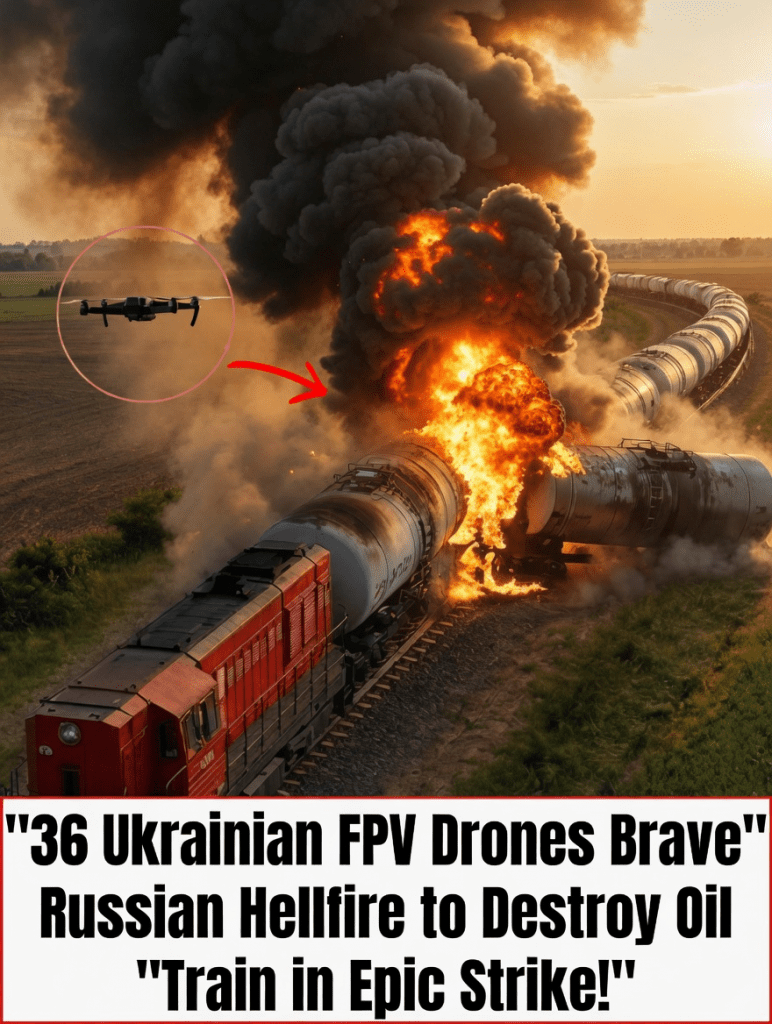
Ukrainian forces reportedly conducted a coordinated FPV (First-Person View) drone strike on a Russian oil train in occupied Luhansk region. The operation involved fiber-optic guided drones that successfully bypassed Russian electronic warfare systems, resulting in significant damage to the train carrying fuel supplies, along with secondary explosions and fires.
This incident highlights the growing use of low-cost, resilient unmanned aerial systems to target logistical assets deep behind front lines in the ongoing Russia-Ukraine conflict.
Details of the Reported Strike
According to Ukrainian military sources and open-source analysts, the strike targeted a Russian oil train in occupied Luhansk. Operators used fiber-optic guided FPV drones to maintain control despite intense Russian electronic jamming and artillery fire. The drones struck the train, causing fires and secondary explosions that reportedly destroyed or damaged multiple tanker cars carrying fuel.
The operation demonstrates the tactical advantages of fiber-optic guidance technology. Unlike traditional radio-controlled drones that are vulnerable to jamming, fiber-optic systems use a thin optical cable to transmit control signals, making them highly resistant to electronic warfare. This allows operators to guide the drones with precision even in heavily contested environments.
Russian authorities have acknowledged increased Ukrainian drone activity in the Luhansk region but have not released detailed official confirmation of damage to this specific train. Emergency services were reported to have responded to the scene to contain fires and assess the situation.
Strategic Importance of Logistical Targets
Oil trains and fuel convoys are critical components of Russian military logistics in eastern Ukraine. Fuel supplies are essential for maintaining armored vehicle operations, artillery movements, and overall sustainment of forces in Donetsk and Luhansk regions. Disrupting these supply lines can reduce operational tempo, limit mobility, and force Russia to divert resources toward protection and alternative routing.
Luhansk region has been under Russian control for several years and serves as a key rear-area logistical hub. Strikes on infrastructure and supply assets in this area contribute to a broader Ukrainian strategy of attrition, aiming to impose unsustainable costs on Russian sustainment capabilities without requiring large-scale ground offensives.
Evolution of Fiber-Optic Drone Technology
Fiber-optic guided FPV drones represent a significant advancement in unmanned systems. Key benefits include:
- Strong resistance to electronic jamming and spoofing
- Real-time, high-bandwidth video transmission
- Precise terminal guidance for attacking moving or defended targets
- Relatively low production cost, enabling mass deployment
Ukraine has invested heavily in developing and scaling this technology through domestic innovation initiatives and volunteer engineering groups. The ability to operate effectively against sophisticated Russian electronic warfare systems has increased the survivability and effectiveness of Ukrainian drone units.
Russia has responded by expanding its own electronic warfare capabilities and developing countermeasures, including new jamming systems and fiber-optic drones of its own. The technological competition in this domain remains intense and continues to evolve rapidly.
Broader Context of the Conflict in May 2026
The reported strike in Luhansk occurs amid ongoing high-intensity fighting across multiple fronts, particularly in Donetsk Oblast. Both sides report daily engagements involving infantry, artillery, drones, and missile systems. The war has evolved into a prolonged war of attrition characterized by high consumption of equipment and munitions.
Logistics and rear-area security have become critical factors. Russian forces rely on rail and road networks in occupied territories to supply frontline units, making these assets high-priority targets for Ukrainian operations. Ukraine, meanwhile, continues to defend key positions while conducting deep strikes to degrade Russian capabilities.
Summer weather conditions in 2026 are expected to improve ground mobility and potentially increase the tempo of operations across the theater.
Humanitarian and Civilian Impact
Military operations in Luhansk and other occupied regions affect civilian populations. Strikes on logistical targets, even when aimed at military assets, can cause collateral damage, power disruptions, and risks to nearby communities. Both Ukrainian and Russian authorities have reported civilian casualties and infrastructure damage from the other side’s operations throughout the conflict.
The prolonged war has created one of the largest humanitarian crises in Europe in recent decades. Millions remain displaced, and access to basic services such as electricity, clean water, and healthcare remains limited in many areas. International humanitarian organizations continue efforts to provide aid, though active combat zones severely restrict delivery.
Protecting civilians and adhering to international humanitarian law remain critical priorities.
Economic and Logistical Implications
Disrupting fuel supply trains adds to the overall costs of sustaining military operations. Repairing damaged rail infrastructure, replacing lost fuel, and enhancing convoy protection require significant resources. For Russia, maintaining reliable supply lines in occupied territories has become increasingly complex under sustained Ukrainian pressure.
Both economies face challenges from the high consumption of equipment and munitions. Economic resilience and industrial capacity are becoming increasingly important factors in the conflict’s long-term dynamics.
Technological Shifts in Modern Warfare
The use of fiber-optic FPV drones in the Luhansk strike exemplifies broader trends in contemporary conflict:
- Proliferation of low-cost, resilient unmanned systems
- Extension of the battlefield into deep rear areas
- Growing importance of electronic warfare and countermeasures
- Rapid innovation cycles driven by battlefield necessities
Defense analysts worldwide are studying these developments. The effectiveness of fiber-optic and other advanced guidance systems against traditional defenses is prompting reassessments of military doctrine and procurement strategies in many countries.
International Monitoring and Diplomatic Outlook
The international community continues to monitor the situation closely. Developments involving long-range and precision drone operations are noted for their potential to influence escalation dynamics and regional stability. Many governments and organizations have called for de-escalation and renewed diplomatic efforts to reduce civilian suffering.
While periodic discussions about ceasefires occur, significant differences persist on core issues such as territorial integrity, security guarantees, and accountability. Global attention also focuses on the conflict’s wider effects on energy markets, food security, and international relations.
Looking Ahead
The situation in Luhansk and across the broader front remains fluid. Both sides are expected to continue adapting their unmanned systems and countermeasures as the technological competition intensifies. Summer 2026 conditions may facilitate increased operational activity.
The shared hope among many civilians and international observers is for eventual de-escalation and a negotiated resolution that can reduce suffering and address underlying security concerns while prioritizing civilian protection and long-term recovery.
This article is based on reports from Ukrainian military sources, open-source analyses, Russian monitoring channels, and international media coverage as of May 2026. Information from active conflict zones is often contested and should be cross-checked with multiple credible sources. Our thoughts remain with all civilians and families affected by the ongoing war in Ukraine and Russia.