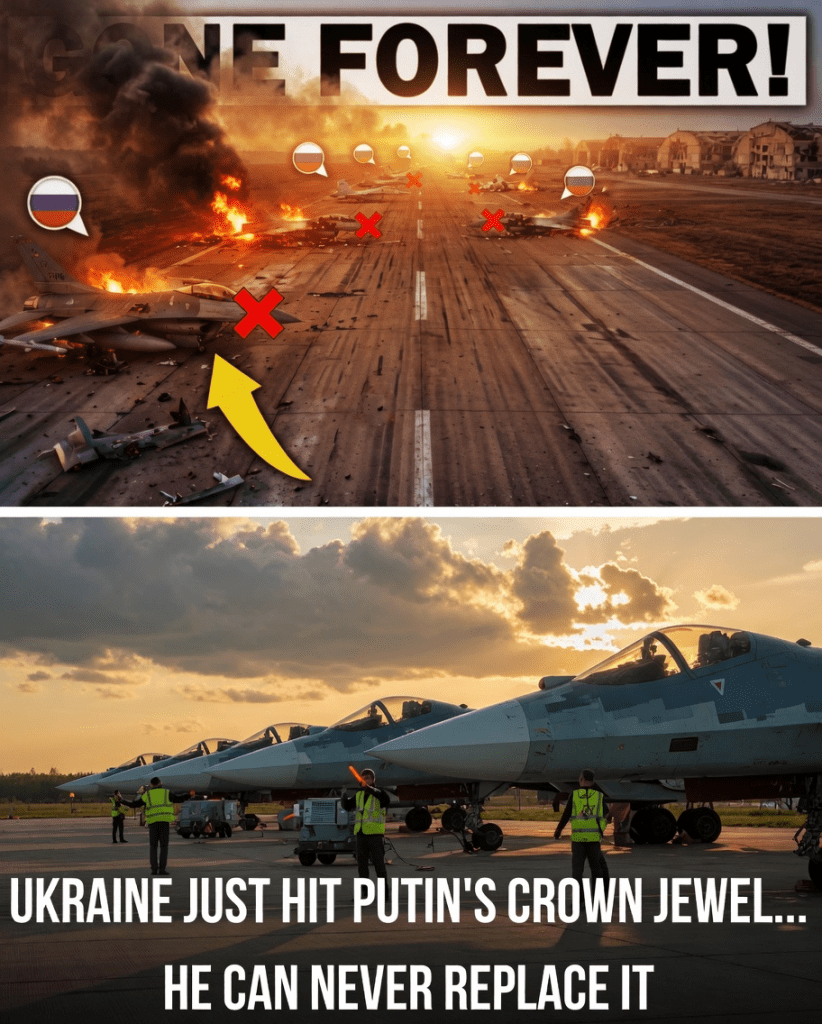
Ukrainian forces conducted a long-range drone operation targeting the Shagol airfield in Russia’s Chelyabinsk Oblast, located in the Ural Mountains approximately 1,700 kilometers from the Ukrainian border. The strike, which occurred on April 25, 2026, reportedly damaged several Russian aircraft, including Su-57 stealth fighters and a Su-34 fighter-bomber.
This incident represents one of the deepest confirmed Ukrainian strikes into Russian territory to date and highlights the expanding reach of Ukrainian unmanned aerial systems.
Details of the Strike
According to Ukraine’s General Staff and the Unmanned Systems Forces, drones struck multiple aircraft at the Shagol military airfield. Ukrainian sources reported damage to at least two Su-57 fighters, one Su-34 fighter-bomber, and one additional aircraft of an unidentified variant. Satellite imagery and statements from Ukrainian commanders later confirmed post-strike damage and the relocation of remaining aircraft.
Russian authorities acknowledged the attack but provided limited details on the extent of damage. The airfield, situated deep in Russia’s industrial heartland, had been used for testing and operational support of advanced aircraft. Some analysts suggest the targeted Su-57s may have included flight prototypes rather than fully operational frontline jets, given the concentration of serial-production Su-57s in other regions.
The operation demonstrates significant advancements in Ukrainian long-range drone technology, including improved navigation, range, and the ability to penetrate layered air defenses.
Strategic Significance of the Su-57 and Su-34
The Sukhoi Su-57 is Russia’s most advanced fifth-generation stealth fighter, intended to provide air superiority and multi-role capabilities. Russia has produced the aircraft in limited numbers, with estimates of around 40 in service as of 2026. Each unit is expensive and complex to manufacture, especially under international sanctions that restrict access to key components.
The Su-34 is a modern fighter-bomber used extensively for ground attack missions in Ukraine. Losses or damage to these platforms affect Russia’s ability to conduct long-range strikes and provide close air support.
Striking these assets deep inside Russia forces a reassessment of basing strategies. Previously considered relatively safe due to distance, facilities in the Urals are now within range of Ukrainian systems, compelling Russia to disperse aircraft, enhance defenses, and allocate more resources to rear-area protection.
Ukraine’s Advancing Long-Range Capabilities
The Shagol strike fits into a pattern of deepening Ukrainian long-range operations throughout 2025–2026. Key enablers include:
- Domestic development of long-range strike drones
- Integration of satellite imagery and intelligence for targeting
- Tactical innovations such as decoys and swarm elements
- Support from international technology partnerships
These capabilities allow Ukraine to impose costs on Russian military assets far from the front lines, disrupting logistics, maintenance, and operational planning without requiring large-scale ground offensives.
Russia has responded with its own long-range strikes on Ukrainian infrastructure and increased investment in air defense and electronic warfare. The ongoing technological competition between the two sides continues to evolve rapidly.
Impact on Russian Air Operations
Damage to advanced aircraft at Shagol may have short- to medium-term effects on Russian aviation readiness in certain sectors. Replacing or repairing these platforms requires significant time and resources, particularly for the Su-57 program, which has faced production challenges.
Analysts note that while the numerical loss may be limited, the psychological and strategic impact is notable. It demonstrates that even deeply rear-based assets are vulnerable, potentially forcing Russia to adjust force posture and divert resources from offensive operations.
Broader Context of Aerial and Drone Warfare
The conflict has become one of the most intensive environments for drone and precision-strike technology in modern history. Both sides deploy thousands of unmanned systems monthly for reconnaissance, strike, and interdiction missions.
Key trends observed in 2026 include:
- Mass production and deployment of low-cost drones
- Growing use of AI-assisted targeting and autonomous features
- Increasing importance of electronic warfare and counter-drone systems
- Extension of the battlefield through long-range capabilities
These developments are reshaping traditional concepts of air power and force protection. Many defense establishments worldwide are studying the Ukraine conflict for insights applicable to future conflicts.
Humanitarian and Civilian Considerations
Strikes on military airfields, even those located deep inside territory, carry risks of collateral damage. Operations near populated or dual-use areas can affect civilian infrastructure and safety. Both sides have reported civilian impacts from long-range strikes throughout the war.
The prolonged conflict continues to create significant humanitarian challenges across Ukraine and affected regions of Russia, including displacement, economic hardship, and strain on essential services. Protecting civilians remains a critical priority under international humanitarian law.
International organizations urge all parties to exercise maximum caution in targeting decisions and to facilitate humanitarian access where possible.
Economic and Logistical Implications
Each destroyed or damaged advanced aircraft represents a substantial financial loss. Beyond direct costs, such strikes disrupt maintenance cycles, training programs, and operational planning. Russia must balance the need to protect high-value assets with the demands of sustaining frontline operations.
The high consumption rate of equipment on both sides places ongoing pressure on defense industries, supply chains, and national budgets. Sustained technological adaptation and production capacity are becoming decisive factors in the conflict’s dynamics.
International Observations
The international community continues to monitor developments closely. Long-range strikes deep into Russia are noted for their potential to influence escalation dynamics and regional stability. Many governments and organizations emphasize the need for de-escalation and diplomatic efforts to reduce civilian suffering.
The conflict’s broader implications — for global security, energy markets, and food security — remain significant. Diplomatic channels stay active, though meaningful progress toward resolution faces substantial obstacles.
Looking Ahead
The situation following the Shagol airfield strike remains fluid. Russia is expected to implement enhanced protective measures for its aviation assets, while Ukraine continues to develop and deploy new long-range systems.
Summer 2026 conditions may facilitate increased aerial and drone activity across multiple fronts. The technological arms race in unmanned systems is likely to intensify, with both sides adapting rapidly to emerging threats and opportunities.
As the conflict enters its fifth year, the human and economic costs continue to accumulate. The shared hope among civilians and many international actors remains a negotiated path toward de-escalation and lasting stability that prioritizes civilian protection and regional recovery.
This article is based on reports from Ukrainian military sources, Russian official statements, satellite imagery analysis, and international media coverage as of May 2026. Claims regarding exact damage to specific aircraft are difficult to fully verify independently and should be treated with appropriate caution. The situation remains dynamic and subject to rapid change. Our thoughts remain with all civilians and families affected by the ongoing war.