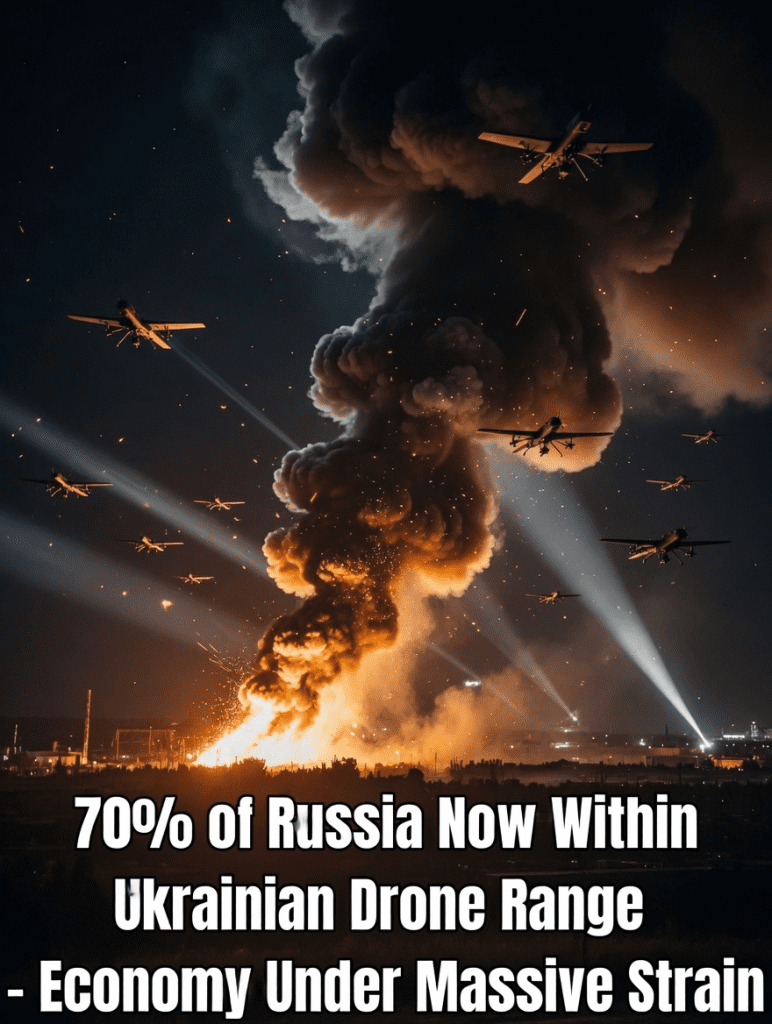
Ukrainian long-range drone capabilities have expanded significantly in 2026, with strikes now reaching deep into Russian territory, including the Ural Mountains more than 1,700–1,800 kilometers from the border. According to various assessments, this puts a substantial portion of Russia’s population and industrial base within range of Ukrainian unmanned systems.
These developments reflect the evolving technological and tactical dynamics of the Russia-Ukraine conflict, now in its fifth year, as both sides intensify efforts to target military and economic infrastructure far from the frontline.
Expanded Reach of Ukrainian Drone Operations
In late April 2026, Ukrainian drones conducted strikes in the Ural region for the first time, targeting areas near Yekaterinburg and Chelyabinsk. These operations mark a record distance, with some reports indicating ranges exceeding 1,800 km. Ukrainian President Volodymyr Zelenskyy has publicly stated that Ukraine now possesses the ability to strike targets more than 1,500 km inside Russia, bringing roughly a quarter of Russian territory — home to over 70% of the country’s 146 million people — within potential reach.
The strikes have primarily focused on military-industrial facilities, oil refineries, logistics hubs, and energy infrastructure. Russian officials, including former Defense Minister Sergei Shoigu, have acknowledged that no region in Russia is immune to such attacks, noting vulnerabilities in the Urals’ defense enterprises, rail networks, and energy assets.
This expansion is the result of sustained Ukrainian investment in domestic drone production, improved navigation systems, and better intelligence coordination. Long-range drones offer a relatively low-cost way to project power deep into enemy territory compared to traditional manned aircraft or ballistic missiles.
Russia’s Economic and Fiscal Challenges
The intensified strikes come as Russia faces mounting economic pressures. In early 2026, the Russian government reported a significant budget deficit, reaching approximately 4.6 trillion rubles (around $61 billion) by the end of March. To help finance this shortfall, the Central Bank of Russia has sold substantial amounts of gold reserves — reportedly around 22 tons in the first months of the year — a reversal from its long-standing policy of accumulation.
Other reported challenges include:
- Declining oil and gas revenues amid sanctions and fluctuating global energy prices
- Increased military spending, which has risen sharply year-on-year
- Higher taxes and reports of labor shortages in certain sectors
- Pressure on the shadow fleet used for oil exports
Russia has adapted its economy to wartime conditions through parallel imports, increased trade with non-Western partners, and a shift toward military production. However, analysts note that sustained high military expenditure combined with sanctions continues to create structural strains.
Geopolitical Shifts: Armenia’s Pivot Toward the EU
The conflict has also influenced Russia’s relationships with former allies. In May 2026, Armenia hosted a major EU summit and has taken visible steps toward closer integration with European institutions. Russian officials have criticized this shift, accusing Armenia of moving into the EU’s “anti-Russian orbit.” Tensions have grown following disagreements over security guarantees in the South Caucasus.
While Armenia maintains important economic and energy ties with Russia, public sentiment and government policy appear to be tilting westward. This development illustrates the broader ripple effects of the Ukraine conflict on Russia’s regional influence.
The Broader Military Context
Deep strikes form only one element of a highly complex battlefield. Intense fighting continues in Donetsk Oblast and other eastern regions, with both sides employing drones, artillery, and combined arms tactics. Russia maintains significant numerical advantages in certain areas, while Ukraine relies on technological innovation, Western-supplied systems, and defensive resilience.
The increased range of Ukrainian drones forces Russia to spread air defense resources more thinly across its vast territory. In response, Russia has conducted its own long-range attacks on Ukrainian infrastructure and cities, contributing to a cycle of mutual strikes that affects civilian populations on both sides.
Humanitarian Impact and Civilian Risks
As drone and missile operations expand deeper into both countries, civilian areas face heightened risks. Strikes on industrial and energy facilities can disrupt power supplies, water systems, and essential services. In Russia, regions previously considered safe from the war are now experiencing direct impacts. In Ukraine, Russian attacks on energy infrastructure have caused widespread blackouts and hardship during previous winters.
Millions of people remain displaced, and humanitarian needs continue across the region. International organizations stress the importance of minimizing harm to civilians and ensuring compliance with international humanitarian law.
Implications for the Future of the Conflict
The ability of Ukrainian forces to strike deep into Russia adds a new dimension to the war. It challenges Russia’s assumption of a secure rear and may influence operational planning on both sides. Summer 2026 could see increased activity as weather conditions improve mobility and drone operations.
At the same time, the conflict’s economic toll — on Russia through sanctions and military spending, and on Ukraine through destruction and displacement — continues to grow. Diplomatic efforts for de-escalation remain limited, with both sides focused on battlefield developments.
Global observers monitor these trends closely, recognizing that technological advancements in drones and long-range systems are reshaping modern warfare and will likely influence future conflicts elsewhere.
A Continuing Human Cost
Behind strategic calculations and military reports are millions of individual stories. Families in Russia and Ukraine live with uncertainty, economic hardship, and the fear of sudden strikes. The prolonged nature of the war has created deep societal and psychological impacts that will require years to address.
As developments unfold, accurate and balanced information remains essential. The situation on the ground and in rear areas remains fluid, with both sides adapting rapidly to new realities.
This article is based on reports from multiple sources including Bloomberg, Ukrainian official statements, Russian regional authorities, and independent analyses as of May 2026. Claims regarding exact damage and long-term economic impacts should be treated with caution due to the challenges of verification in active conflict zones. Our thoughts remain with all civilians affected by the ongoing war.