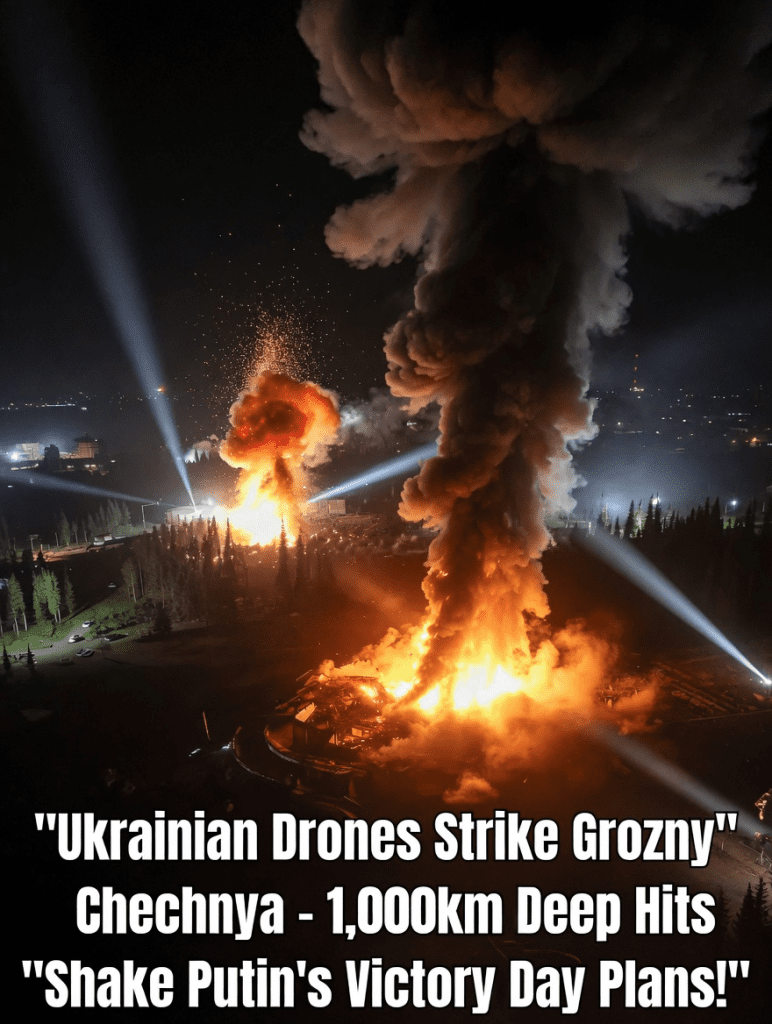
Reports indicate that Ukrainian long-range drones conducted strikes in Grozny, the capital of Chechnya, targeting areas near an FSB building and a Russian military division headquarters. This marks the third reported incident of this kind in the region this week. Additional strikes were reported on oil refineries and industrial sites in regions including Yaroslavl, Rostov, and Perm — some located up to 1,500 kilometers inside Russian territory — as well as facilities in occupied Crimea.
Russian officials stated that air defense systems were activated across multiple regions and claimed to have intercepted numerous incoming drones. The incidents coincide with heightened security measures ahead of Russia’s Victory Day celebrations on May 9, during which the traditional military parade in Moscow will feature no heavy equipment displays.
These developments highlight the expanding reach of Ukrainian unmanned aerial systems and the increasing pressure on Russian rear-area infrastructure.
Details of the Reported Strikes
According to open-source monitoring channels and Ukrainian military sources, drones struck targets in Grozny near facilities associated with the Federal Security Service (FSB) and a Russian military headquarters. Explosions were reported in the area, though Russian authorities have not released detailed damage assessments.
Similar operations were reported against oil refineries and industrial sites in Yaroslavl, Rostov, and Perm regions. Strikes in occupied Crimea were also noted, targeting logistical and military infrastructure. Russian defense officials confirmed air defense activations and claimed successful interceptions in several regions, but acknowledged that some drones reached their targets.
No independent verification of all damage claims is currently available due to restricted access in the affected areas. Both sides have released statements consistent with their respective positions on the operations.
The range of the strikes — exceeding 1,000–1,500 kilometers from Ukrainian-controlled territory — demonstrates significant advancements in Ukrainian long-range drone technology, including improved navigation, range, and the ability to penetrate or overwhelm air defense networks.
Heightened Security Ahead of Victory Day
The timing of these reported strikes comes just days before Russia’s annual Victory Day commemorations on May 9, which mark the Soviet Union’s victory over Nazi Germany in World War II. In 2026, Russian authorities have implemented stricter security measures across major cities, including Moscow. The traditional military parade in Red Square will notably lack heavy military equipment displays, a departure from previous years.
These precautions reflect the practical challenges of conducting large public events amid ongoing long-range drone threats. Similar adjustments have been made in other Russian regions, with some local events scaled back or canceled.
Strategic Implications of Deep Strikes
The reported operations underscore the evolving role of long-range unmanned systems in the conflict. By targeting rear-area facilities, command centers, and industrial sites, Ukraine aims to disrupt Russian logistics, intelligence operations, and military sustainment far from the frontline.
Key targets such as oil refineries and industrial complexes have dual military and economic importance. Disruptions can affect fuel supplies for Russian forces, reduce revenue from energy exports, and force Russia to divert resources toward protection and repair of infrastructure.
For Russia, defending vast territories against these strikes presents significant challenges. Maintaining comprehensive air defense coverage over thousands of kilometers is resource-intensive. The incidents have prompted increased deployment of air defense systems and electronic warfare assets in rear regions.
Evolution of Ukrainian Long-Range Capabilities
Ukraine has steadily expanded its long-range strike capabilities through domestic innovation and international partnerships. Key developments include:
- Improved drone range and payload capacity
- Enhanced navigation systems resistant to jamming
- Use of decoys and coordinated attack waves
- Integration of real-time intelligence for targeting
These systems allow Ukraine to conduct operations with relatively low-cost assets, creating cost asymmetry against more expensive traditional military infrastructure. Russia has responded with its own long-range strike campaigns targeting Ukrainian energy and military facilities, resulting in a mutual pattern of deep strikes that affects both military and civilian sectors.
Broader Context of the Conflict in May 2026
The strikes occur amid ongoing high-intensity fighting across multiple fronts in Ukraine, particularly in Donetsk Oblast. Both sides report daily engagements involving infantry, artillery, drones, and missile systems. The war has evolved into a prolonged war of attrition characterized by high consumption of equipment and personnel.
Summer weather conditions in 2026 are expected to improve ground mobility and potentially increase the tempo of operations. Logistics, air defense, and rear-area security remain critical factors influencing operational capabilities on both sides.
Russia maintains numerical advantages in certain areas, while Ukraine benefits from technological innovation and sustained international support. Discussions of short-term ceasefires have occurred, but military activity continues across the theater.
Humanitarian and Civilian Impact
Strikes on military and industrial targets, even when located deep inside territory, carry risks for civilian populations. Operations near populated areas can cause collateral damage, power outages, transportation disruptions, and anxiety among residents. Russian authorities have reported civilian impacts from Ukrainian strikes, while Ukraine documents similar effects from Russian attacks.
The prolonged conflict has created one of the largest humanitarian crises in Europe in recent decades. Millions remain displaced, and access to basic services such as electricity, clean water, and healthcare remains limited in many regions. International humanitarian organizations continue efforts to provide aid, though active combat zones severely restrict delivery.
Protecting civilians and adhering to international humanitarian law remain critical priorities for all parties involved.
Economic and Logistical Dimensions
Strikes on oil refineries, industrial sites, and logistical hubs add to the economic costs of the war. Repair work, enhanced security measures, and asset dispersal require significant resources. For Russia, maintaining energy exports and military supply lines under sustained pressure places additional strain on the economy.
Both nations face challenges from the high consumption of drones, missiles, and defensive systems. Economic resilience and industrial capacity are becoming increasingly important factors in sustaining long-term operations.
International Monitoring and Regional Implications
The international community continues to monitor developments closely. Strikes deep inside Russian territory, including in Chechnya and central industrial regions, are noted for their potential to influence escalation dynamics and broader security in the region.
Many governments and organizations have called for de-escalation and renewed diplomatic efforts to reduce civilian suffering. The Black Sea region, energy markets, and global food security remain indirectly affected by the ongoing conflict.
While periodic discussions about ceasefires take place, significant differences persist on core issues such as territorial integrity, security guarantees, and accountability.
Technological Shifts in Modern Warfare
The reported long-range strikes exemplify broader trends in contemporary conflict:
- Extension of the battlefield through unmanned systems
- Increasing vulnerability of rear-area infrastructure
- Growing importance of electronic warfare and resilient guidance technologies
- Cost asymmetry favoring mass-produced drones over traditional high-value assets
Defense analysts worldwide are studying these developments for insights applicable to future conflicts. The rapid evolution of drone technology is reshaping traditional concepts of territorial defense and force protection.
Looking Ahead
The situation remains highly fluid. Russian authorities are expected to maintain heightened security measures in the coming period, particularly around Victory Day events. Ukraine will likely continue developing and deploying long-range capabilities as the technological competition intensifies.
As summer 2026 progresses, operational activity may increase across multiple fronts. Diplomatic and humanitarian efforts will continue in parallel with military operations.
The shared hope among many civilians and international observers is for eventual de-escalation and a negotiated resolution that can reduce suffering and address underlying security concerns while prioritizing civilian protection and long-term recovery.
This article is based on reports from Ukrainian military sources, Russian official statements, open-source monitoring channels, and international media coverage as of May 2026. Information from active conflict zones is often contested and should be cross-checked with multiple credible sources. Our thoughts remain with all civilians and families affected by the ongoing war in Ukraine and Russia.