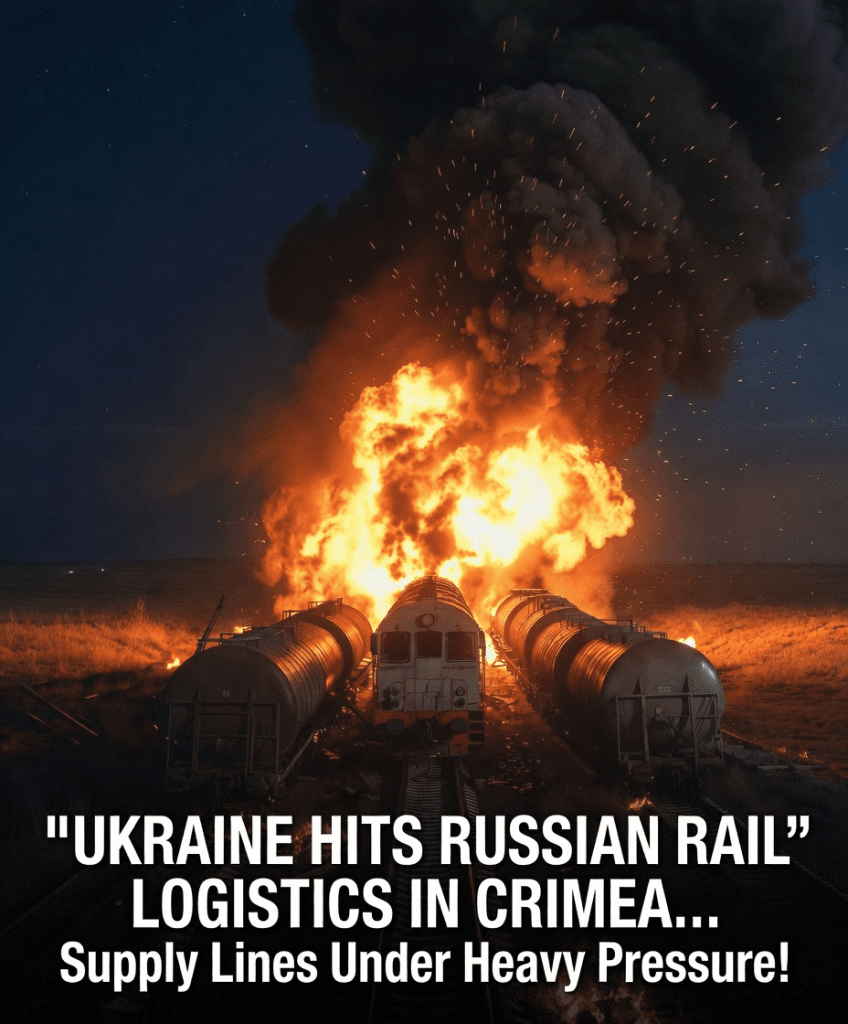
In a significant development in the ongoing Russia-Ukraine conflict, Ukrainian special forces have carried out multiple precision drone strikes targeting Russian railway infrastructure in occupied Crimea. These operations, conducted in April 2026 and publicly acknowledged in early May, highlight Ukraine’s growing capability to strike deep behind Russian lines and disrupt critical military supply networks.
The strikes focused on moving freight trains carrying military equipment, fuel, and other supplies essential for Russian operations in southern Ukraine and the Crimean peninsula. According to Ukraine’s Defence Intelligence (DIU), operatives from the special unit “Prymary” executed five successful hits on locomotives and a fuel tanker car while the trains were in motion.
Details of the Ukrainian Operation
On May 6, 2026, Ukraine’s Main Directorate of Intelligence released video footage showing the results of the April operation. The strikes set railway assets ablaze, with visible secondary explosions and fires reported along the targeted rail lines. Ukrainian sources described the attacks as part of a systematic campaign to degrade Russian logistics in temporarily occupied territories.
These drone operations demonstrate a shift toward targeting rear-area infrastructure rather than solely frontline positions. By hitting locomotives and fuel tankers, Ukraine aims to slow the flow of reinforcements, ammunition, and fuel to Russian forces stationed in Crimea and southern Ukraine. Russia has acknowledged logistical challenges in the region, though official statements from Moscow have been limited.
The Black Sea peninsula remains a strategically vital hub for Russian military operations. Crimea serves as a base for naval assets, airfields, and supply depots supporting forces in the Zaporizhzhia and Kherson regions. Disrupting rail connections adds pressure on alternative supply routes, including the Kerch Strait Bridge and overland paths through occupied southern Ukraine.
Strategic Importance of Crimea’s Railway Network
Railways play a crucial role in modern warfare, especially in sustaining large-scale military operations over long distances. For Russia, the rail lines in Crimea are lifelines that transport heavy equipment, fuel, and personnel that are difficult to move efficiently by road or sea alone.
Ukrainian strikes on these networks are not new but have intensified in 2026. Previous operations have targeted ferries, oil depots, air defense systems, and the Crimean Bridge itself. The latest drone campaign against moving trains represents a more dynamic approach — striking assets while they are operational to maximize disruption and psychological impact.
Military analysts note that such attacks force Russia to divert resources toward defending rear areas, potentially weakening offensive capabilities elsewhere. However, Russia continues to adapt by using alternative routes, repairing damaged infrastructure quickly, and increasing air defenses around key rail hubs.
The Growing Role of Drone Technology in the Conflict
Both sides have heavily invested in unmanned aerial systems (UAS) since the start of the full-scale invasion in 2022. Ukraine’s use of long-range strike drones and special operations units has allowed it to conduct precise, cost-effective attacks far from the front lines.
These operations showcase improvements in Ukrainian drone technology, including better range, accuracy, and resistance to electronic jamming. The ability to strike moving trains requires real-time intelligence, skilled operators, and coordination between reconnaissance and strike assets.
Russia, meanwhile, has deployed its own drone swarms and advanced air defense systems to protect supply lines. The cat-and-mouse game between Ukrainian strike capabilities and Russian defenses continues to evolve, with both sides learning and adapting rapidly.
Humanitarian and Civilian Considerations
While these strikes target military logistics, any damage to infrastructure in populated areas raises concerns about civilian safety. Crimea is home to hundreds of thousands of civilians, including many who were living there before 2014. Disruptions to rail services can affect daily life, supply chains for essential goods, and local economies.
International observers and humanitarian organizations continue to call for all parties to minimize harm to civilian populations and adhere to international humanitarian law. Both Ukraine and Russia have reported civilian casualties and infrastructure damage throughout the conflict, underscoring the heavy human and economic toll.
Broader Context of the Ongoing Conflict
As of May 2026, the Russia-Ukraine war remains one of the largest and most intense conflicts in Europe since World War II. Fighting continues across multiple fronts, with significant activity in Donbas, southern Ukraine, and along the border regions.
Ukraine has demonstrated increasing long-range strike capabilities, while Russia maintains numerical advantages in manpower and artillery in certain sectors. Diplomatic efforts for de-escalation and peace negotiations have been limited, with both sides showing resolve to continue fighting.
The conflict has far-reaching global implications, affecting energy markets, food security, and international security. Calls for diplomatic progress persist from various world leaders and organizations, though meaningful breakthroughs remain elusive.
Implications for the Future of the Conflict
The latest strikes on Crimea’s railway infrastructure add to the mounting pressure on Russian rear operations. Sustained disruption of supply lines could force Russia to reconsider its force posture in southern Ukraine and Crimea.
For Ukraine, these operations boost morale and demonstrate that even well-defended occupied territories are vulnerable. However, the war’s high costs — in lives, infrastructure, and economic damage — continue to mount on both sides.
Military experts suggest that the effectiveness of such deep strikes will depend on Ukraine’s ability to scale up production of long-range munitions and maintain intelligence superiority. Russia, in turn, will likely invest more in hardened supply routes, electronic warfare, and rapid repair capabilities.
A Call for Awareness and Hope for Peace
The people of Ukraine and Russia continue to bear the brunt of this prolonged conflict. Families on both sides have lost loved ones, homes have been destroyed, and entire communities have been displaced.
As developments in Crimea and other regions unfold, the international community watches closely. Humanitarian aid remains essential for civilians affected by the fighting, while diplomatic channels must stay open in hopes of eventual de-escalation and a negotiated resolution that brings lasting stability to the region.
The latest Ukrainian drone operations serve as a reminder of how modern technology is reshaping warfare. Yet behind every strike and strategic move are human stories of resilience, loss, and the enduring hope for peace.
This article is based on official statements from Ukraine’s Defence Intelligence, verified reports from multiple sources, and open-source analysis as of May 2026. The situation remains fluid, with information continuing to develop. Our thoughts remain with all civilians and affected communities across the region.