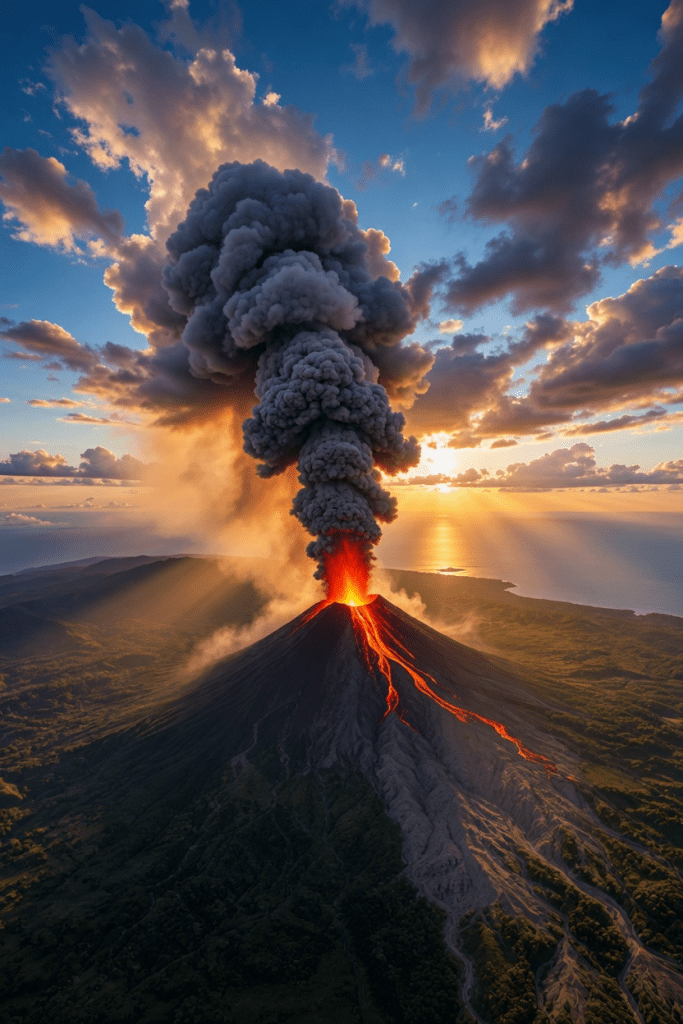
In a dramatic display of nature’s raw power, Mayon Volcano in the Philippines erupted violently on May 2, 2026, unleashing a fast-moving pyroclastic flow of superheated ash, gas, and volcanic debris down its slopes. The event, captured in striking footage, sent a massive ash column high into the atmosphere and blanketed nearby communities in Albay Province with falling ash, drastically reducing visibility and prompting urgent safety measures.
While the Philippines is no stranger to volcanic activity, this latest eruption at one of the world’s most perfectly cone-shaped volcanoes has captured global attention. It also raises a chilling hypothetical question for Americans: What if a similar event — or something far worse — occurred at Yellowstone National Park?
The Mayon Volcano Eruption: What Happened
On the evening of May 2, 2026, Mayon Volcano in Albay Province, southern Luzon, experienced a significant event. A collapse of lava material at the summit triggered a pyroclastic density current (PDC) — commonly known as a pyroclastic flow — that raced down the southwestern slopes along the Mi-isi Gully. These flows consist of extremely hot gases, ash, and rock fragments moving at speeds that can exceed 100 mph, destroying nearly everything in their path.
The Philippine Institute of Volcanology and Seismology (PHIVOLCS) reported that the pyroclastic flow traveled several kilometers from the crater. A dense column of ash and debris rose high into the sky, visible from miles away and even drawing international interest, with some imagery showing the dramatic plume from space. Ashfall affected multiple municipalities including Guinobatan, Camalig, and Ligao City, forcing authorities to reinforce the 6-kilometer Permanent Danger Zone around the volcano.
As of early May 2026, the volcano remains at Alert Level 3. Thousands of residents have been evacuated, with over 195,000 people affected and thousands sheltering in evacuation centers. Lava flows have also been observed reaching up to 3.8 kilometers in some drainages, accompanied by frequent rockfalls and volcanic earthquakes.
Mayon, often called the “perfect cone” due to its symmetrical shape, is one of the most active volcanoes in the Philippines. Its location in a densely populated agricultural region makes every eruption a serious threat to lives, homes, and livelihoods.
Understanding Pyroclastic Flows: One of Nature’s Deadliest Forces
Pyroclastic flows are among the most dangerous volcanic hazards. Unlike slow-moving lava, these flows are fast, turbulent, and incredibly hot — often reaching temperatures of 1,000°F (over 500°C). They can incinerate structures, vehicles, and vegetation almost instantly. The Mayon event serves as a sobering reminder of why authorities maintain strict no-go zones during heightened activity.
Local residents have described the scene as terrifying, with ash turning daylight into darkness and forcing people indoors. Schools have been affected, transportation disrupted, and farmers worry about crops damaged by ashfall, which can collapse roofs and contaminate water sources.
PHIVOLCS continues to monitor the situation closely, warning that sudden explosions or additional pyroclastic flows could occur with little notice. The 6-kilometer danger zone remains strictly enforced, with discussions underway about possibly expanding it further for safety.
The Hypothetical: What If This Happened at Yellowstone?
Now imagine a similar violent eruption — but at Yellowstone National Park in the United States. Yellowstone sits atop one of the world’s largest supervolcanoes, with a massive magma chamber beneath the surface. While a Mayon-style event is very different in scale from a full Yellowstone supereruption, even a smaller explosive episode there would have catastrophic consequences.
Yellowstone’s last major caldera-forming eruption occurred about 640,000 years ago. A repeat of that scale would be apocalyptic on a continental level. Pyroclastic flows could devastate everything within tens of miles, while thick ash would blanket the central United States, disrupting agriculture, air travel, and infrastructure across multiple states.
According to the U.S. Geological Survey (USGS), even a much smaller eruption at Yellowstone would send ash fallout across the country. Areas closest to the park in Wyoming, Montana, and Idaho could face immediate dangers from flows and ballistic projectiles. Power grids, highways, and airports would likely shut down under heavy ash. The economic impact would be measured in trillions of dollars, with recovery taking years or decades.
Fortunately, scientists emphasize that the chances of a supereruption in our lifetime are extremely low — roughly 1 in 730,000 per year. Yellowstone is one of the most closely monitored volcanic systems on Earth, with constant seismic, GPS, and gas monitoring by the Yellowstone Volcano Observatory.
Still, the Mayon eruption provides a vivid real-world example of the hazards that could occur even at less explosive volcanoes. It underscores the importance of preparedness, no matter where you live.
Why Volcano Preparedness Matters for Americans
While most Americans don’t live near active volcanoes like Mayon, the United States has its own volcanic threats. The Cascade Range in the Pacific Northwest includes Mount Rainier, Mount St. Helens, and others. Hawaii’s Kilauea and Mauna Loa erupt more frequently. Alaska also hosts numerous active volcanoes.
Key lessons from the Mayon event that apply universally include:
- Heed Official Warnings: Stay out of designated danger zones.
- Have an Emergency Plan: Know evacuation routes, pack a go-bag with masks (ash is hazardous to breathe), water, food, medications, and important documents.
- Protect Your Home: Reinforce roofs against ash weight if warned of heavy fallout.
- Stay Informed: Follow reliable sources like USGS, local emergency management, and the National Weather Service.
- Understand the Hazards: Learn the difference between lava flows, ashfall, pyroclastic flows, and lahars (volcanic mudflows).
Communities near U.S. volcanoes regularly conduct drills and education campaigns. The Mayon situation reminds us that being prepared is never wasted effort.
Global Volcanic Risks in 2026
2026 has already seen heightened activity at several volcanoes worldwide. Mayon’s ongoing unrest, combined with activity at other sites, highlights that Earth’s geological forces never rest. Climate change and population growth near volcanic areas only increase the potential impact of future eruptions.
International aid organizations and governments are supporting affected families in Albay. Relief efforts focus on providing shelter, food, clean water, and medical care for those displaced.
A Powerful Reminder of Nature’s Majesty and Danger
The striking images from Mayon Volcano — the towering ash plume, glowing lava, and racing pyroclastic flows — are both beautiful and terrifying. They showcase the incredible power beneath our feet and the resilience of people living in volcanic regions.
For those in the United States, Mayon’s eruption serves as an opportunity to reflect on our own volcanic neighbors and the importance of science-based monitoring and preparedness. While a Yellowstone-scale event remains highly unlikely in the near future, smaller eruptions are possible and demand respect.
As PHIVOLCS and local authorities continue managing the situation in the Philippines, our thoughts are with the thousands of families affected. Their experience highlights both the fragility of life near active volcanoes and the strength of communities that face these challenges.
This article is based on reports from PHIVOLCS, USGS, and verified news sources regarding the May 2026 activity at Mayon Volcano. Stay safe, stay informed, and respect the power of our planet.