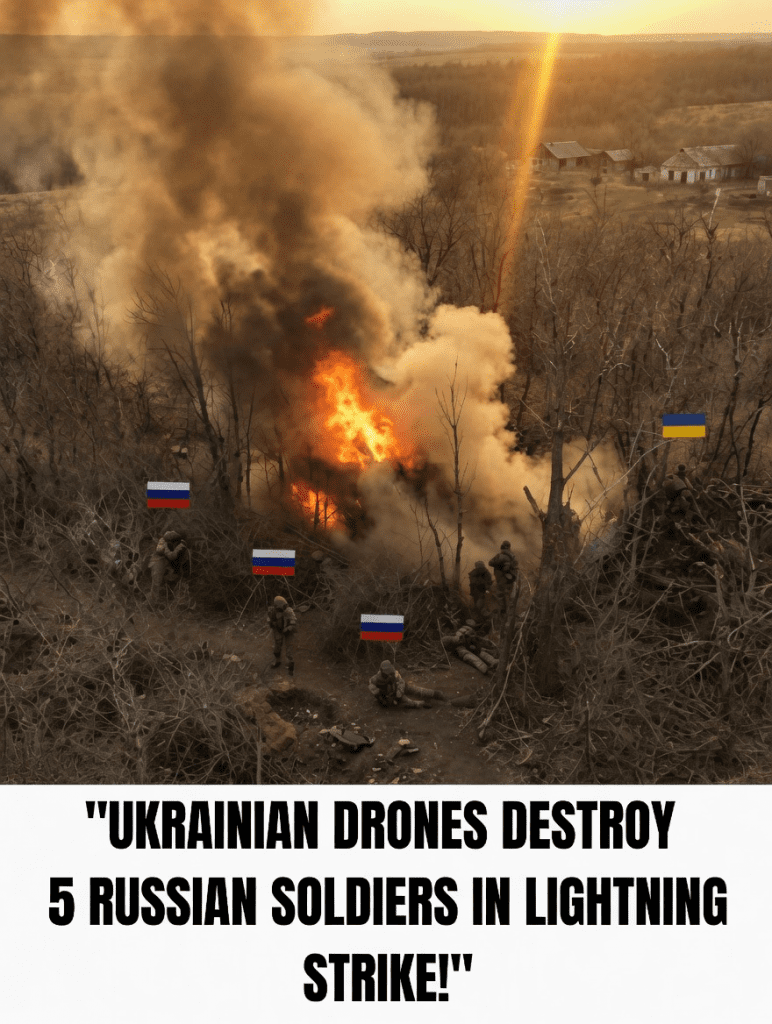
Ukrainian forces have released footage showing the elimination of a small Russian assault group near the village of Sopek in Sumy Oblast. According to Ukrainian military sources, five Russian soldiers launched a small-arms attack on positions held by Ukraine’s 33rd Assault Brigade. The group was quickly detected by Ukrainian reconnaissance drones and neutralized by precision munitions dropped from above.
Ukrainian troops reportedly withdrew safely from the trenches without casualties, while drone operators maintained control of the area to prevent further incursions. The incident, which occurred in early May 2026, illustrates the increasing tactical importance of unmanned aerial systems in the ongoing Russia-Ukraine conflict.
Details of the Incident
Open-source footage and statements from the 33rd Assault Brigade describe how the Russian soldiers advanced through a forest belt and opened fire on Ukrainian positions. Ukrainian reconnaissance drones detected the movement in real time. FPV (First-Person View) strike drones were then deployed, delivering munitions that eliminated the entire group.
The video shows the sequence of events from the Ukrainian perspective: initial detection, tracking, and precise strikes. Russian authorities have not issued a detailed public statement on this specific engagement, consistent with their general approach to reporting small-unit losses.
Sumy Oblast, located along the northeastern border with Russia, has seen increased activity in 2026. Russian forces have conducted cross-border raids and artillery strikes, while Ukrainian units maintain defensive positions and conduct counter-operations using drones and artillery.
The Growing Dominance of Drone Warfare
This incident is part of a broader trend in which drones have become one of the most decisive tools on the modern battlefield. Both sides deploy thousands of unmanned systems monthly, but Ukraine has demonstrated particular effectiveness in integrating reconnaissance and strike drones for rapid response.
Key advantages of drone operations include:
- Real-time intelligence gathering with minimal risk to personnel
- Precision strikes on small, mobile targets
- Cost-effectiveness compared to traditional artillery or manned aircraft
- Ability to operate effectively in contested or forested terrain
In the case near Sopek, the combination of reconnaissance and FPV strike drones allowed Ukrainian forces to neutralize a threat quickly and safely. This approach reduces exposure of ground troops and enables defenders to maintain control over key positions with lower risk.
Russia has also expanded its drone capabilities, particularly with long-range Shahed-type systems and various tactical UAVs. However, Ukrainian forces have adapted by developing better electronic warfare countermeasures, fiber-optic guided drones, and mobile interceptor systems.
Tactical Context in Sumy Oblast
Sumy Oblast has become an active frontier zone in 2026. Russian forces conduct regular cross-border operations, including small-unit raids, sabotage attempts, and artillery shelling. Ukrainian defenders rely heavily on drones, minefields, and mobile reserves to counter these incursions.
The reported success of the 33rd Assault Brigade highlights effective small-unit tactics and technological integration. By using drones for both detection and strike, Ukrainian forces can respond rapidly to threats without committing large numbers of troops to exposed positions.
Military analysts note that such engagements are typical of the current phase of the war — characterized by high-intensity, localized clashes rather than large-scale maneuvers. The high consumption of drones and munitions on both sides makes production capacity and supply chain resilience increasingly important.
Humanitarian and Civilian Impact
Even small-scale incidents like the one near Sopek contribute to the overall human cost of the conflict. Sumy Oblast has seen repeated cross-border attacks, leading to civilian casualties, damage to homes and infrastructure, and displacement of residents from border villages.
Civilians living near the frontline face daily risks from artillery, drones, and mines. Many have been forced to evacuate or live in difficult conditions with limited access to essential services. The psychological toll of constant threat is significant for both soldiers and civilians.
International humanitarian organizations continue to provide aid, but access to border areas remains restricted due to ongoing military activity. Protecting non-combatants and adhering to international humanitarian law remain critical concerns.
Broader Developments in the Russia-Ukraine War (May 2026)
The incident in Sumy Oblast occurs amid continued fighting across multiple fronts, with particular intensity in Donetsk Oblast. Both sides report daily engagements involving infantry, artillery, drones, and missile systems.
Key trends in 2026 include:
- Increased reliance on unmanned systems for reconnaissance and strike missions
- Growing importance of electronic warfare and counter-drone technology
- High consumption rates of equipment and munitions
- Persistent challenges with manpower rotation and logistics
Russia maintains numerical advantages in certain areas, while Ukraine benefits from technological innovation and international support. The conflict has evolved into a prolonged war of attrition, with significant human and economic costs on both sides.
Summer weather conditions are expected to improve ground mobility, potentially leading to heightened activity across the theater.
Economic and Logistical Dimensions
Each engagement consumes significant resources. Drones, munitions, and equipment losses add to the overall burden on both economies. Sustaining high-intensity operations requires robust industrial production and supply chains. Both nations face challenges in this regard, with international sanctions and aid flows playing important roles.
The long-term economic impact of the war will be substantial, with reconstruction needs in Ukraine estimated in the hundreds of billions of dollars.
International Observations
The international community continues to monitor the conflict closely. Developments in drone warfare and cross-border operations are noted for their potential to influence regional stability. Many governments and organizations have called for de-escalation and renewed diplomatic efforts to reduce civilian suffering.
While periodic discussions about ceasefires occur, significant differences persist on core issues such as territorial integrity, security guarantees, and accountability. Global attention also focuses on the conflict’s wider effects on energy markets, food security, and international relations.
The Human Reality Behind the Reports
Behind every military engagement are human stories. Soldiers on both sides face extreme conditions, while civilians bear the heaviest burden of the prolonged war. Families have been separated, communities destroyed, and entire generations impacted by trauma and loss.
The psychological and societal costs will require decades of recovery and support. Humanitarian needs remain acute, and efforts to provide medical care, shelter, and reconstruction assistance continue despite the challenges of active hostilities.
Looking Ahead
The situation along the border in Sumy Oblast and across the broader front remains fluid. Both sides are expected to continue adapting their tactics and technologies as the conflict progresses. Summer 2026 may bring increased operational activity as weather conditions improve mobility.
The shared hope among many civilians and international observers is for eventual de-escalation and a negotiated resolution that can reduce suffering and address underlying security concerns while prioritizing civilian protection and long-term recovery.
The conflict has already reshaped European security and demonstrated the resilience of the Ukrainian people. The coming months will continue to test the determination and adaptability of all parties involved.
This article is based on reports from Ukrainian military sources, open-source footage, and international media coverage as of May 2026. Information from active conflict zones is often contested and should be cross-checked with multiple credible sources. Our thoughts remain with all civilians and families affected by the ongoing war in Ukraine and Russia.