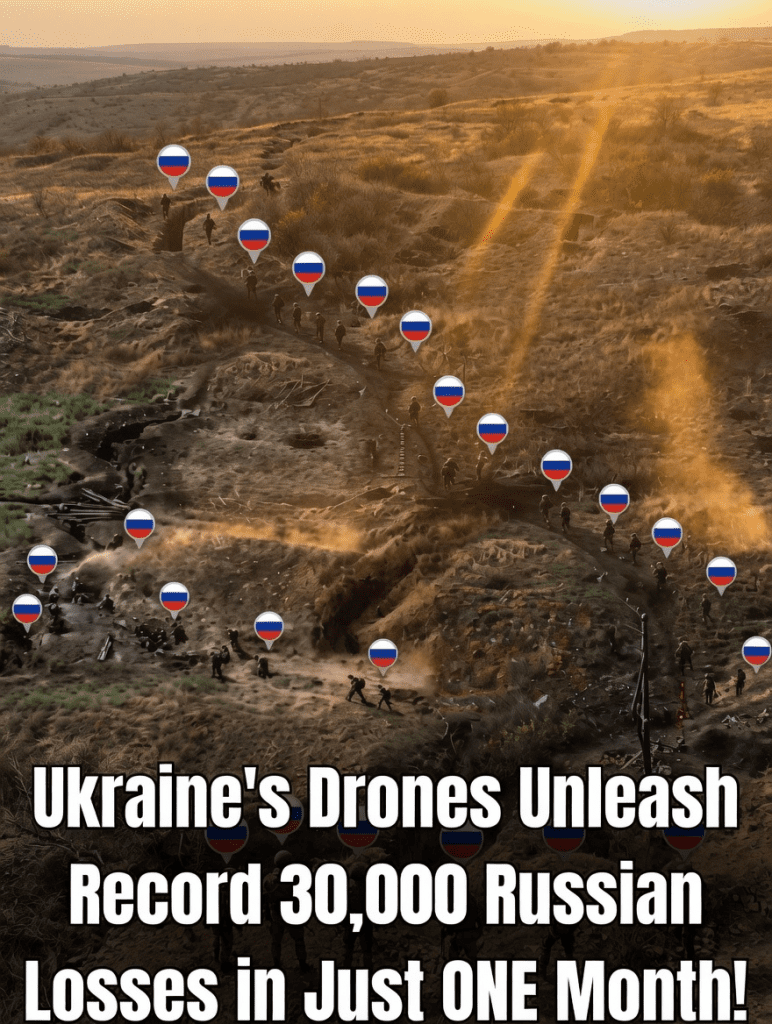
In March 2026, Ukrainian forces reportedly achieved notable results in countering Russian advances, with official Ukrainian sources claiming over 30,000 Russian personnel losses verified through advanced battlefield management systems such as DELTA. Precision drone operations played a central role, creating what Ukrainian commanders described as “kill zones” along key frontlines and disrupting Russian logistical and offensive efforts.
These developments reflect the growing importance of unmanned aerial systems in modern warfare and Ukraine’s ongoing efforts to scale up drone production and capabilities throughout 2026.
Reported Personnel Losses and Battlefield Impact
According to data released by the Ukrainian General Staff and analyzed through the DELTA situational awareness platform, Ukrainian units inflicted significant losses on Russian forces during March. The verified figure of over 30,000 personnel losses — if confirmed by independent assessments — would represent one of the higher monthly totals recorded in the conflict.
Precision drone strikes, combined with artillery and small-unit operations, reportedly targeted Russian troop concentrations, supply convoys, and forward positions. These operations were particularly effective in creating zones where Russian advances were slowed or halted due to sustained pressure on logistics and command structures.
The DELTA system, developed with Ukrainian and international support, integrates real-time intelligence, satellite data, and battlefield sensors to improve targeting accuracy and operational coordination. Its expanded use has allowed Ukrainian forces to respond more rapidly to Russian movements and optimize the employment of limited resources.
Ukraine’s Ambitious Drone Production Plans for 2026
Ukraine has announced plans to dramatically increase drone production in 2026, with targets reaching millions of units across various categories — from small FPV (First-Person View) drones to longer-range strike and interceptor systems. This expansion is supported by the Brave 1 defense innovation platform and partnerships with domestic manufacturers, volunteer groups, and international technology collaborators.
Key objectives include:
- Scaling output of both offensive and defensive drones
- Extending operational ranges to strike deeper into rear areas
- Integrating advanced features such as AI-assisted targeting and improved resistance to electronic warfare
- Developing specialized systems for maritime, aerial, and ground operations
This focus on unmanned systems allows Ukraine to offset some disadvantages in manpower and traditional heavy equipment by leveraging cost-effective, attritable technology. Military analysts note that the ability to produce and deploy drones at scale is becoming a decisive factor in sustaining long-term operations.
Evolving Role of Drone Technology in the Conflict
Drone operations have transformed the character of the Russia-Ukraine war. Both sides now rely heavily on unmanned systems for reconnaissance, strike missions, artillery correction, and logistical disruption. However, Ukraine has demonstrated particular innovation in integrating large numbers of low-cost drones into coordinated attacks.
In March 2026, Ukrainian drone units reportedly conducted thousands of sorties, targeting Russian supply lines, electronic warfare vehicles, and troop concentrations. These operations have forced Russian forces to adapt by increasing dispersal, enhancing air defenses, and investing in counter-drone measures.
The growing dominance of drones has several implications:
- Reduced effectiveness of traditional massed armored advances
- Increased importance of electronic warfare and camouflage
- Higher consumption rates of munitions and equipment
- Greater emphasis on rapid innovation and production capacity
Russia has also expanded its own drone programs, particularly with Shahed/Geran-type long-range systems and various tactical UAVs. The aerial domain has become a primary arena of technological competition, with both sides continuously developing new countermeasures and tactics.
Challenges Facing Both Sides
Despite Ukrainian successes with drones, the conflict remains highly challenging for both parties. Russia maintains numerical advantages in manpower and certain categories of artillery and missiles. Ukraine faces ongoing difficulties with manpower rotation, ammunition supply, and protection of critical infrastructure from Russian strikes.
Logistics continues to be a decisive factor. Both sides struggle to sustain high-intensity operations over extended periods, with supply lines, maintenance, and personnel fatigue presenting persistent problems. Manpower challenges are acute, with reports of recruitment difficulties and the need for effective rotation systems.
The war of attrition has placed enormous strain on economies, industrial bases, and societies on both sides. The high consumption of drones, missiles, and other modern weapons systems requires continuous investment in production capacity.
Humanitarian and Civilian Impact
The intensified use of drones and precision strikes has increased risks for civilian populations. Operations along frontlines and in rear areas can lead to collateral damage, disruption of essential services, and psychological stress for communities living under constant threat.
Millions of people remain displaced across Ukraine, with many more affected by power outages, infrastructure damage, and limited access to healthcare and education. International humanitarian organizations continue to provide aid where possible, but active combat zones severely restrict delivery.
Protecting civilians and adhering to international humanitarian law remain critical priorities. Both sides have reported civilian casualties from the other’s operations, underscoring the tragic human cost of the prolonged conflict.
International Observations and Broader Implications
The international community continues to monitor the conflict closely. Developments in drone technology and their impact on battlefield dynamics are of particular interest to defense establishments worldwide. Many countries are studying the Russia-Ukraine war to inform their own military modernization programs and strategies for future conflicts.
Diplomatic efforts for de-escalation and peace negotiations remain limited, with significant differences persisting on core issues such as territorial integrity, security guarantees, and accountability. Global attention also focuses on the conflict’s wider effects on energy markets, food security, and international stability.
The Future Role of Drone Technology in Modern Conflicts
The increasing prominence of drones raises important questions about the future of warfare. Affordable unmanned systems can challenge traditional military advantages, alter cost calculations, and extend the battlefield in ways previously unimaginable. As production scales and technology improves, the balance between offensive and defensive capabilities will continue to evolve.
Ukraine’s experience demonstrates how innovation and rapid adaptation can help a smaller force compete against a larger adversary. However, success also depends on logistics, manpower, international support, and economic sustainability.
As 2026 progresses, both sides are expected to further refine their unmanned systems and countermeasures. Summer conditions may facilitate increased operational activity, while technological competition in the aerial domain intensifies.
Looking Ahead
The situation on the battlefield remains highly dynamic. While Ukrainian drone operations achieved notable results in March, the overall strategic picture continues to be shaped by multiple factors, including manpower, logistics, and economic resilience.
The shared hope among many civilians and international observers is for eventual de-escalation and a negotiated resolution that can reduce suffering and address underlying security concerns. In the meantime, efforts to protect civilians, deliver humanitarian aid, and support long-term recovery remain essential.
This article is based on reports from Ukrainian military sources, open-source analyses, and international media coverage as of May 2026. Claims regarding personnel losses and operational results in active conflict zones are often difficult to independently verify and should be treated with appropriate caution. The situation remains fluid and subject to rapid change. Our thoughts remain with all civilians and families affected by the ongoing war.