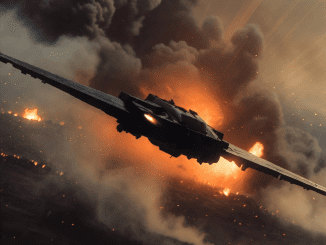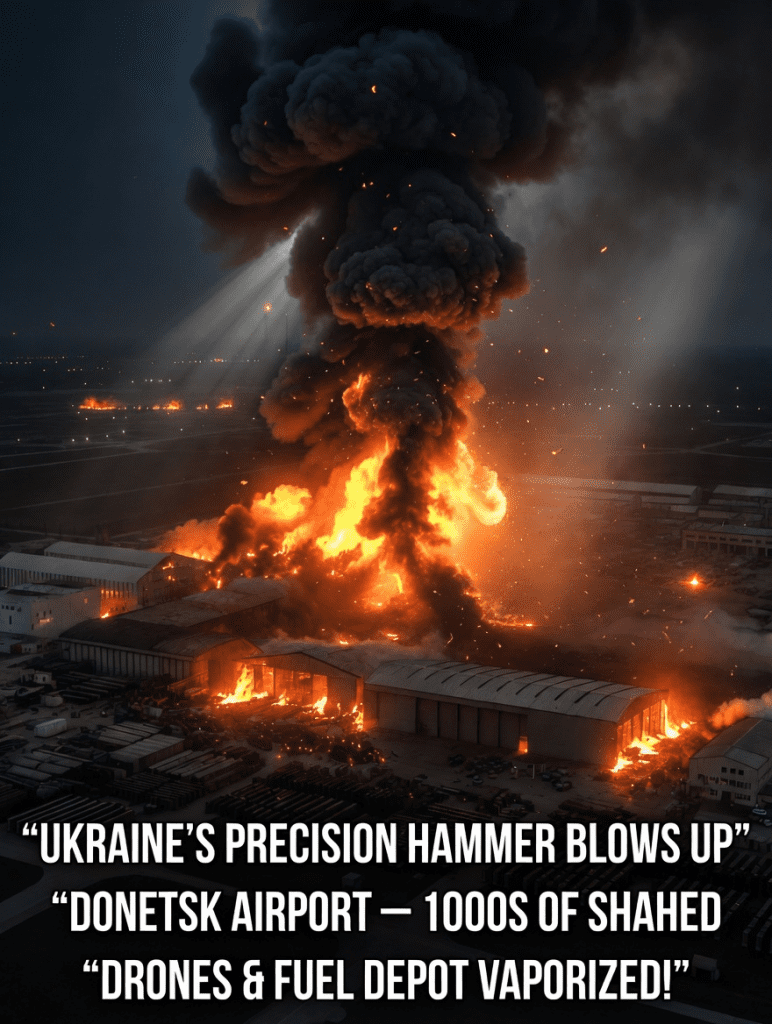
Ukrainian forces carried out a coordinated long-range missile strike on a Russian military facility at Donetsk Airport, using U.S.-supplied ATACMS ballistic missiles and French-British SCALP cruise missiles. The operation targeted infrastructure that Russian forces had been using as a hub for Shahed-type attack drones, fuel storage, ammunition, and helicopter assets.
This strike highlights the increasing role of precision long-range weapons in disrupting rear-area operations and the ongoing challenges of protecting key military infrastructure in contested territory.
Details of the Strike on Donetsk Airport
According to Ukrainian military sources, the strike hit a rebuilt facility at Donetsk Airport that was being used for drone preparation, refueling, and storage of military equipment. The combination of high-altitude ATACMS and low-level SCALP missiles reportedly created a series of explosions, damaging hangars, fuel depots, and other support infrastructure.
Donetsk Airport, once a modern civilian facility, has been under Russian control since 2014 and has been heavily militarized during the conflict. Russia had invested significant effort in repairing and repurposing the site as a forward logistics and aviation hub for operations in Donetsk Oblast. The latest attack appears to have caused substantial disruption to these capabilities.
Russian authorities confirmed the strike and reported that air defenses engaged incoming threats. Damage assessments are ongoing, with reports of destroyed or damaged Shahed drones, fuel supplies, and other assets. Independent verification of the full extent of damage remains limited due to restricted access in the area.
Strategic Importance of Donetsk Airport
The airport’s location in Donetsk Oblast makes it a valuable asset for Russian forces. It has served as a base for drone launches, helicopter operations, and logistical support for frontline units in the eastern theater. Disrupting such a hub can affect Russia’s ability to conduct sustained drone campaigns and provide air support in nearby sectors.
Shahed (Geran-2) drones, originally of Iranian design, have become a key component of Russian long-range strike strategy. They are used to target Ukrainian cities, energy infrastructure, and military positions. Reducing the operational capacity at sites like Donetsk Airport can limit the frequency and scale of these attacks in the short term.
For Ukraine, striking this target aligns with a broader strategy of targeting logistical and aviation assets to degrade Russian combat effectiveness without requiring large-scale ground operations in heavily fortified areas.
Capabilities of ATACMS and SCALP Missiles
The use of both ATACMS and SCALP systems in a single coordinated operation demonstrates tactical sophistication:
- ATACMS (Army Tactical Missile System): U.S.-provided ballistic missiles known for rapid delivery and the ability to strike targets at ranges exceeding 300 kilometers. They can deliver cluster munitions or unitary warheads with high accuracy.
- SCALP (Storm Shadow): Anglo-French cruise missiles designed for low-altitude, terrain-following flight, making them difficult to detect and intercept. They are particularly effective against hardened or protected targets.
The combination allows attackers to approach from different altitudes and trajectories, complicating air defense responses. This multi-axis strike approach has been increasingly used by Ukrainian forces as more Western long-range systems have been integrated into their operations.
Impact on Russian Operations in Eastern Ukraine
The strike is likely to have short- to medium-term effects on Russian drone and aviation activities in Donetsk Oblast. Loss of prepared drones, fuel, and maintenance facilities forces relocation of assets and diverts resources toward repairs and enhanced protection.
Military analysts note that such disruptions contribute to a pattern of logistical pressure. Russia must balance the need to protect rear areas with the demands of frontline operations, potentially slowing the tempo of offensives or requiring adjustments in force deployment.
However, Russia has demonstrated resilience in repairing damaged infrastructure and dispersing assets. The overall impact will depend on the speed of recovery efforts and Russia’s ability to shift operations to alternative sites.
The Growing Role of Long-Range Precision Strikes
This incident fits into a broader evolution of the conflict, where long-range precision weapons play an increasingly central role. Both sides have invested heavily in missiles, drones, and related technologies:
- Ukraine has expanded domestic drone production while integrating Western systems like ATACMS, SCALP, and HIMARS.
- Russia has increased production of Shahed drones, Iskander missiles, and other long-range platforms, while improving air defense networks.
The result is a high-tech contest in which rear-area infrastructure has become a primary battlefield. Strikes on airfields, fuel depots, command centers, and logistical hubs aim to impose unsustainable costs and degrade operational sustainability rather than achieve immediate decisive victories.
Challenges in Protecting Forward Bases
Defending facilities like Donetsk Airport presents significant difficulties. Key challenges include:
- Large physical footprint requiring comprehensive coverage
- Limited warning time for ballistic and low-flying cruise missiles
- High cost of maintaining layered air defenses
- Need to operate in proximity to active combat zones
These vulnerabilities have prompted both sides to adapt by dispersing assets, using mobile systems, and investing in electronic warfare and decoy measures. The cycle of strike and countermeasure continues to drive rapid innovation in military technology.
Broader Context of the Conflict in May 2026
The strike at Donetsk Airport occurs amid ongoing high-intensity fighting across multiple fronts, particularly in Donetsk Oblast. Both sides report daily engagements involving infantry, artillery, drones, and missile systems. The war has become a prolonged war of attrition characterized by significant material consumption and technological adaptation.
Summer conditions in 2026 are expected to improve ground mobility and potentially increase the tempo of operations. Logistics, air defense, and long-range strike capabilities will likely remain decisive factors in the coming months.
Humanitarian and Civilian Considerations
Military operations near populated areas carry inherent risks to civilians. Donetsk city and surrounding communities have already suffered extensive damage and displacement over more than a decade of conflict. Strikes on military infrastructure can indirectly affect civilian services, power supply, and daily life.
International humanitarian law requires parties to distinguish between military and civilian targets and take precautions to minimize harm to non-combatants. Both Ukraine and Russia have reported civilian casualties and infrastructure damage from the other’s strikes throughout the war.
Humanitarian needs across the region remain substantial, including support for displaced persons, medical care, and reconstruction planning. International organizations continue efforts to provide aid where access permits.
Implications for Modern Warfare
The coordinated use of ATACMS and SCALP missiles at Donetsk Airport offers several insights into contemporary conflict:
- Precision long-range systems can create disproportionate effects on high-value targets.
- Combining different weapon types increases the complexity of defensive responses.
- Protecting rear-area infrastructure has become as critical as frontline defense.
- Cost asymmetry between expensive missiles and lower-cost drones continues to shape tactics.
Defense analysts worldwide are studying these developments for lessons applicable to future conflicts. The proliferation of precision strike capabilities is changing traditional assumptions about territorial control and force protection.
International Monitoring and Diplomatic Outlook
The international community continues to monitor the situation in Ukraine closely. Developments involving long-range strikes are noted for their potential to influence regional stability and escalation dynamics. While periodic discussions about ceasefires and peace negotiations take place, significant differences persist on key issues such as territorial integrity and security guarantees.
Many global actors emphasize the need to reduce civilian suffering and maintain open diplomatic channels even during active hostilities.
The Human Cost of Prolonged Conflict
Behind every military operation are human stories of loss, resilience, and sacrifice. Soldiers, support personnel, and civilians on both sides continue to bear the burden of a war now entering its fifth year. The psychological, social, and economic impacts will require long-term attention and resources.
As technological capabilities advance, the importance of protecting human lives and pursuing sustainable resolutions becomes increasingly urgent.
Looking Ahead
The situation following the strike at Donetsk Airport remains fluid. Russia is expected to implement repair efforts and adjust force posture, while Ukraine will likely continue refining its long-range strike strategies. Summer 2026 may bring increased activity across multiple sectors as both sides adapt to evolving battlefield realities.
The conflict demonstrates how modern warfare increasingly depends on logistics, technology, and infrastructure resilience. Understanding these dynamics is essential for assessing potential future developments in the region.
This article is based on reports from Ukrainian military sources, Russian official statements, and open-source analyses as of May 2026. Information from active conflict zones is often contested and should be cross-checked with multiple credible sources. Our thoughts remain with all civilians and families affected by the ongoing war in Ukraine.