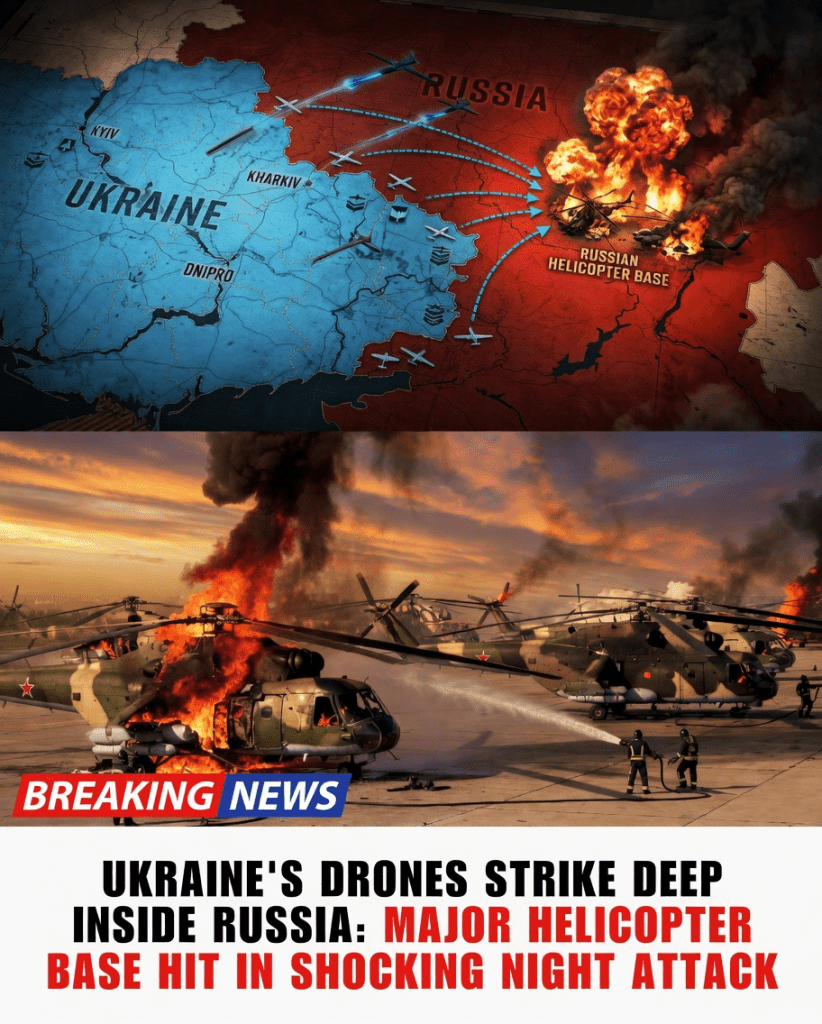
Ukrainian forces have conducted a long-range drone operation targeting a Russian helicopter refueling station in the Vorz area, located approximately 150 kilometers from the front lines. The strike reportedly destroyed or damaged several Russian helicopters, including Mi-28 gunships and Mi-17 transport helicopters, while they were being refueled.
This incident highlights the growing reach and precision of Ukrainian unmanned aerial systems and their increasing role in disrupting Russian rear-area operations.
Details of the Strike
According to Ukrainian military sources, the coordinated drone attack hit a key forward aviation support point in Vorz. The facility was being used for refueling and maintenance of Russian attack and transport helicopters. Footage and reports indicate secondary explosions and significant damage to aircraft on the ground.
The Mi-28 “Havoc” is a heavily armored attack helicopter used for close air support and anti-armor missions, while the Mi-17 is a versatile transport helicopter critical for troop movement and logistics. Losing even a small number of these high-value assets represents a notable material and operational setback for Russian aviation units in the region.
Russian authorities have acknowledged the attack and reported intercepting some incoming drones, but confirmed damage to helicopters at the site. Exact numbers of destroyed aircraft remain unverified independently due to the challenges of confirming battlefield claims.
Ukraine’s Expanding Deep-Strike Capabilities
This operation demonstrates continued improvement in Ukraine’s ability to conduct precision strikes deep behind Russian lines. Over the past year, Ukrainian forces have developed and deployed longer-range drones capable of reaching targets previously considered relatively safe.
Key factors contributing to these capabilities include:
- Advances in domestic drone production and engineering
- Better integration of intelligence, surveillance, and reconnaissance (ISR) assets
- Improved navigation systems that help drones evade or penetrate air defenses
- Tactical use of decoys and swarm elements to overwhelm defensive systems
By targeting rear-area aviation assets, Ukraine aims to reduce Russian air support for frontline operations, limit mobility, and impose high replacement costs on Russian forces.
Strategic Importance of Helicopter Operations
Helicopters play a vital role in modern mechanized warfare, particularly in the vast and varied terrain of eastern and southern Ukraine. Russian forces have relied heavily on Mi-28 and Mi-17 helicopters for fire support, medical evacuation, troop transport, and rapid resupply in areas where roads are contested or damaged.
Disrupting refueling and maintenance points forces Russia to relocate aviation assets farther from the front, reducing their operational effectiveness and increasing response times. This puts additional pressure on already strained Russian logistics networks.
Military analysts note that the loss of experienced pilots and maintenance crews can have longer-term effects than the physical destruction of aircraft, as training new personnel takes significant time and resources.
The Evolving Role of Drones in Aerial Warfare
The conflict in Ukraine has become a major laboratory for drone technology. Both sides now deploy thousands of unmanned systems ranging from small FPV drones to long-range strike platforms. Ukraine has excelled in developing low-cost, innovative solutions that challenge more expensive traditional military assets.
Recent trends include:
- Increased use of one-way attack drones against high-value targets
- Development of specialized interceptor drones
- Greater emphasis on electronic warfare to protect or disrupt drone operations
- Integration of AI-assisted targeting and autonomous features
Russia has responded by expanding air defense networks, deploying more mobile radar systems, and using its own long-range drones and missiles against Ukrainian targets. The constant cycle of innovation and counter-innovation defines much of the current aerial domain contest.
Broader Context in the Ongoing Conflict
As of May 2026, fighting continues across multiple sectors, with particularly intense activity in Donetsk Oblast. Operations in Zaporizhzhia, Kharkiv, and Kherson regions also see regular engagements involving drones, artillery, and small-unit maneuvers.
The war has evolved into a high-tech war of attrition. Both sides face significant challenges related to manpower, equipment sustainability, and economic costs. Russia maintains advantages in certain areas of industrial production and personnel numbers, while Ukraine benefits from technological adaptability and sustained international support.
Strikes on rear-area targets like the Vorz refueling station are part of a wider strategy aimed at degrading an adversary’s ability to sustain prolonged operations rather than seeking immediate large-scale territorial breakthroughs.
Humanitarian and Civilian Considerations
The expansion of long-range strikes increases risks for civilian populations on both sides. While military targets are the stated focus, operations near populated areas or dual-use infrastructure can lead to unintended damage and casualties.
Millions of people in Ukraine continue to live under the threat of drone and missile attacks, while certain regions in Russia are now also experiencing the effects of Ukrainian long-range operations. Humanitarian needs remain substantial, including support for displaced persons, reconstruction of damaged infrastructure, and medical care for those affected by the conflict.
International humanitarian organizations emphasize the importance of distinguishing between military and civilian targets and minimizing harm to non-combatants in accordance with international law.
Implications for Future Operations
The successful strike in Vorz raises questions about how both sides will adapt their aviation and air defense strategies in the coming months. Russia may increase dispersal of helicopter assets, enhance protective measures at forward bases, or accelerate production of replacement aircraft. Ukraine will likely continue refining its deep-strike tactics and expanding its drone inventory.
Summer weather conditions in 2026 may facilitate increased aerial activity from both sides. The effectiveness of drone operations will depend on factors such as electronic warfare capabilities, intelligence accuracy, and the ability to sustain high production rates of unmanned systems.
Military experts worldwide are studying these developments closely. The lessons from Ukraine regarding the cost-effectiveness of drones versus traditional manned aircraft are influencing defense planning in many countries.
Economic and Logistical Dimensions
Each destroyed helicopter represents a significant financial loss — modern military helicopters cost millions of dollars to produce and maintain. Beyond the immediate material cost, reduced aviation support can slow ground operations, increase risks to troops, and force changes in tactical planning.
Both Russia and Ukraine face the challenge of balancing offensive and defensive needs while managing limited resources. The high consumption rate of equipment in this conflict has placed considerable strain on supply chains and defense industries.
International Monitoring and Diplomatic Context
The international community continues to monitor the conflict closely. Developments in drone warfare and long-range strikes are noted for their potential impact on regional stability and future conflicts. While periodic discussions about ceasefires and peace negotiations occur, significant differences remain on key issues such as territorial control and security arrangements.
As the war enters its fifth year, the human and economic costs continue to accumulate. Many global actors express hope for a negotiated resolution that can reduce suffering and address underlying security concerns.
The Human Reality Behind the Reports
Behind every strike and tactical success are thousands of individuals — soldiers, operators, engineers, and civilians — whose lives are directly affected by the ongoing war. The psychological impact of constant drone threats, the loss of comrades, and the destruction of communities create lasting effects that extend far beyond the battlefield.
As technological capabilities advance, the importance of protecting human lives and seeking pathways to peace remains paramount.
This article is based on reports from Ukrainian military sources, Russian official statements, and independent open-source analyses as of May 2026. Claims regarding specific damage and losses in active conflict zones are often difficult to verify independently and should be treated with appropriate caution. The situation remains fluid and subject to rapid change. Our thoughts remain with all civilians and families affected by the ongoing war in Ukraine.