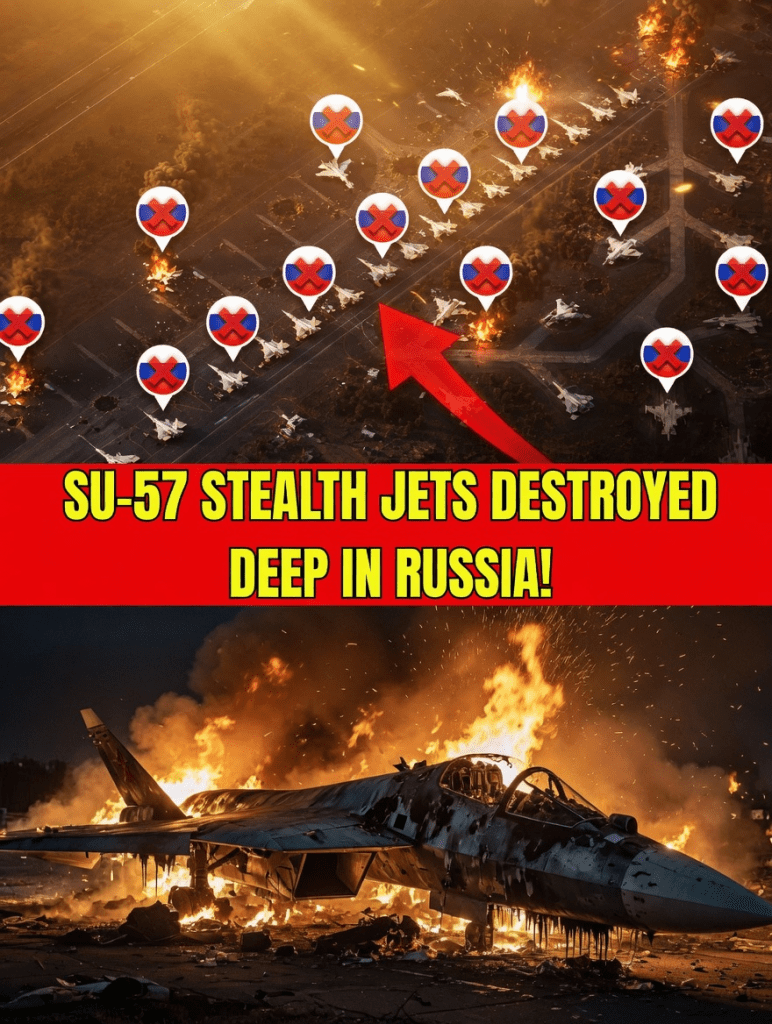
Ukrainian forces reportedly conducted a long-range drone operation targeting the Shagol airfield in Chelyabinsk Oblast, Russia, located more than 1,700 kilometers inside Russian territory. The strike, which occurred in late April 2026, is said to have damaged several Russian aircraft, including Su-57 fifth-generation fighters and at least one Su-34 fighter-bomber.
This incident represents one of the deepest Ukrainian strikes into Russian territory to date and underscores the expanding reach of unmanned aerial systems in the ongoing Russia-Ukraine conflict.
Details of the Strike on Shagol Airfield
According to Ukrainian military sources, multiple drones struck the Shagol military airfield. Reports indicate damage to parked aircraft, including advanced Su-57 stealth fighters and a Su-34 fighter-bomber. Satellite imagery analyzed by open-source researchers later showed signs of explosions and post-strike activity at the facility.
The Shagol airfield, situated in the Ural Mountains region, has been used for testing, training, and operational support of advanced Russian aircraft. Russian authorities acknowledged the attack and stated that air defense systems were activated, though they provided limited details on the extent of damage. Emergency services responded to the site, and some aircraft were reportedly relocated following the incident.
Independent verification of exact losses remains challenging due to restricted access and information controls in the area. Both sides have released statements consistent with their respective narratives of the event.
Significance of the Targeted Aircraft
The Sukhoi Su-57 is Russia’s flagship fifth-generation stealth fighter, designed for air superiority, multi-role missions, and advanced sensor capabilities. Production numbers remain relatively low, with estimates suggesting around 40 units in service or advanced testing as of 2026. Each aircraft is expensive and relies on sophisticated components that are affected by international sanctions.
The Su-34 is a modern fighter-bomber used extensively for ground-attack missions in Ukraine. Damage or destruction of these platforms affects Russia’s ability to conduct long-range strikes and provide close air support. Losses at a deep rear facility like Shagol raise questions about basing strategies and force protection for high-value assets.
Such strikes force Russia to reconsider the security of rear-area airfields previously considered relatively safe due to their distance from the front lines. This may lead to greater dispersal of aircraft, increased air defense deployments, and additional strain on maintenance and training resources.
Ukraine’s Growing Long-Range Strike Capabilities
The Shagol operation demonstrates significant progress in Ukraine’s development of long-range unmanned systems. Key advancements include:
- Extended operational range exceeding 1,700 km
- Improved navigation and stealth features to penetrate air defenses
- Better integration of intelligence, surveillance, and reconnaissance data
- Use of decoys and coordinated attack tactics
Ukraine has scaled up domestic drone production through initiatives involving engineers, volunteer groups, and international technology partnerships. These systems offer a cost-effective way to target high-value assets while minimizing risk to Ukrainian personnel.
Russia has responded by enhancing air defenses around strategic facilities, dispersing aircraft, and investing in electronic warfare systems. The technological competition between Ukrainian strike capabilities and Russian defensive measures continues to evolve rapidly.
Broader Military Context in May 2026
The strike at Shagol occurs amid ongoing high-intensity fighting across multiple fronts in Ukraine, with particularly intense activity in Donetsk Oblast. Both sides rely heavily on drones, artillery, and precision munitions in a conflict characterized by high material consumption and technological adaptation.
Summer conditions in 2026 are expected to improve ground mobility and potentially increase the tempo of aerial and drone operations. Logistics, air defense, and rear-area security have become critical factors influencing operational sustainability for both sides.
Russia maintains advantages in manpower and certain areas of industrial production, while Ukraine leverages innovation in unmanned systems and sustained international support to challenge these disparities.
Humanitarian and Civilian Impact
Although the strike targeted a military airfield, operations of this nature carry risks of collateral damage, especially when conducted near populated or dual-use areas. Local residents in the Chelyabinsk region may experience heightened security measures and anxiety following such incidents.
Across the broader conflict, civilian populations on both sides continue to face significant risks from drone and missile strikes. Power outages, infrastructure damage, and displacement remain widespread. International humanitarian organizations emphasize the need for all parties to adhere to international humanitarian law and take maximum precautions to protect non-combatants.
The prolonged war has created substantial humanitarian needs, including medical care, shelter, and long-term reconstruction support. Millions of people have been affected, with deep societal and psychological impacts that will require years to address.
Technological Shifts in Modern Warfare
The Shagol strike exemplifies several emerging trends in contemporary conflict:
- Extension of the battlefield through long-range precision systems
- Vulnerability of high-value assets even in deep rear areas
- Cost asymmetry between relatively affordable drones and expensive manned aircraft
- Rapid innovation cycles in unmanned technology and countermeasures
Defense analysts worldwide are closely studying these developments. The effectiveness of long-range drones against traditional air power is prompting reassessments of force structure, basing strategies, and air defense priorities in many countries.
Economic and Logistical Implications
Damage to advanced aircraft imposes significant financial and operational costs. Replacing or repairing Su-57 and Su-34 platforms requires substantial resources, especially under sanctions that limit access to key components. Beyond direct losses, such strikes disrupt training schedules, maintenance cycles, and operational planning.
Both economies face challenges from the sustained high consumption of equipment and munitions. Economic resilience, industrial capacity, and the ability to protect critical infrastructure are becoming increasingly important factors in the conflict’s long-term dynamics.
International Monitoring and Diplomatic Outlook
The international community continues to monitor the situation closely. Deep strikes into Russian territory are noted for their potential to influence escalation dynamics and regional stability. Many governments and organizations have called for de-escalation and renewed diplomatic efforts to reduce civilian suffering.
While periodic discussions about ceasefires and peace negotiations take place, significant differences persist on core issues such as territorial integrity, security guarantees, and accountability. Global attention remains focused on the humanitarian situation and the conflict’s wider effects on energy markets, food security, and international relations.
Looking Ahead
The situation following the reported strike at Shagol airfield remains fluid. Russia is expected to implement enhanced protective measures for its aviation assets, while Ukraine continues to develop and deploy new long-range capabilities. Summer 2026 may bring increased aerial and drone activity across multiple fronts.
The conflict, now in its fifth year, demonstrates the complex interplay of technology, logistics, and human factors. The shared hope among many civilians and international observers is for eventual de-escalation and a negotiated resolution that can reduce suffering and address underlying security concerns while prioritizing civilian protection and long-term recovery.
This article is based on reports from Ukrainian military sources, Russian official statements, open-source satellite imagery analysis, and international media coverage as of May 2026. Information from active conflict zones is often contested and should be cross-checked with multiple credible sources. Our thoughts remain with all civilians and families affected by the ongoing war in Ukraine and Russia.